THE blistering early-summer heatwave that’s brought life-threatening temperatures across much of the northern hemisphere is a worrying sign of things to come, UN weather experts said.
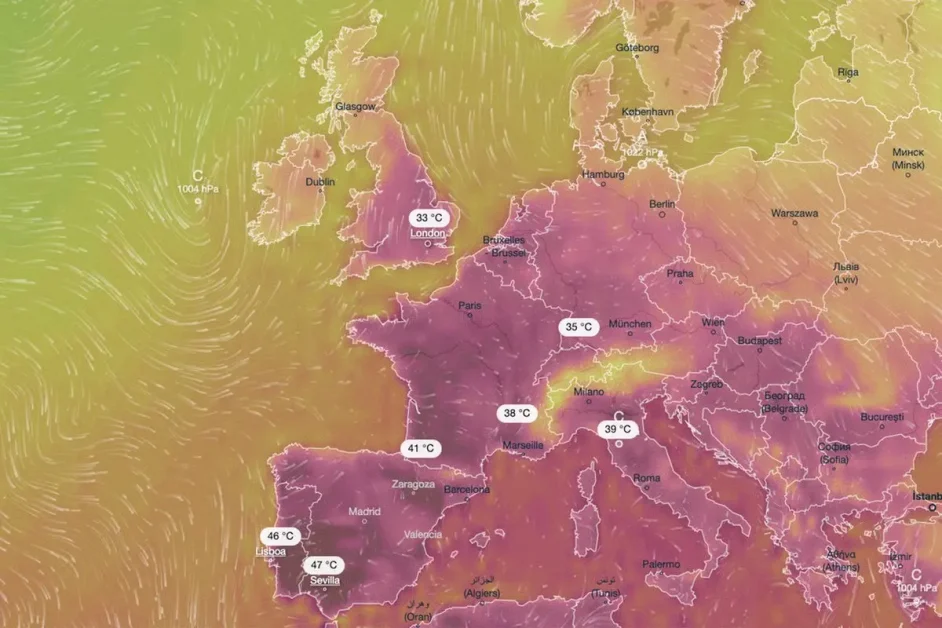
Three days after Spain’s national weather service confirmed a record 46°C reading in the southern town of El Granado, there has been little let-up in stifling day and night temperatures across the continent and beyond.
In Barcelona, a road sweeper reportedly died on Saturday after completing her shift, prompting an investigation and widespread public appeals to keep out of the sun wherever possible.
“Everybody is at risk,” insisted Clare Nullis, spokesperson for the World Meteorological Organisation (WMO): “If you go out without water in the middle of the day, to do jogging, have a bike ride, you will probably have health problems or even die.”
If part of the reason for Europe’s heat misery is because it is in the grip of a strong high-pressure weather front trapping hot air from northern Africa, Ms. Nullis noted that “human-induced climate change” is the source of these acute weather events.
Another part of the climate puzzle is that sea surface temperatures in the Mediterranean are exceptionally high for this time of year. “It’s the equivalent of a land heatwave”, the WMO spokesperson said.
“Extreme heat creeps up on you,” she added, while dangerously warm conditions are becoming “more frequent, more intense” because of global warming caused by burning fossil fuels.
“It’s something we have to learn to live with,” Ms. Nullis maintained, highlighting the importance of early warnings from national meteorological and hydrological services to prevent more deaths from extreme heat events – which are often “under-reflected” in official statistics.
According to the UN agency, night-time minimum temperatures and daytime maximum temperatures broke monthly station records for June in parts of Western and Southwestern Europe, partly explaining why the heatwave is so draining.
“The frequency and intensity of extreme heat events are increasing in Europe, and by 2050, about half the European population may be exposed to high or very high risk of heat stress during summer,” Ms. Nullis explained.
“What is exceptional – and I would stress exceptional, but not unprecedented – is the time of year. We are on 1 July and we are seeing episodes of extreme heat, which normally we would see later on.”
WMO insisted that warnings from national weather services and coordinated heat-health action plans are increasingly important to protect public safety and well-being.
The UN agency is promoting these efforts through its Early Warnings for All platform.
A key component is the WMO Coordination Mechanism (WCM), which supports crisis-prone and conflict-affected regions with advice. WMO curates authoritative weather, climate and water information from countries such as its WCM Global Hydromet Weekly Scan. – UN Multimedia Newsroom