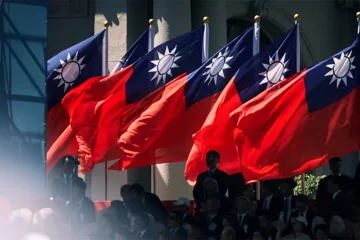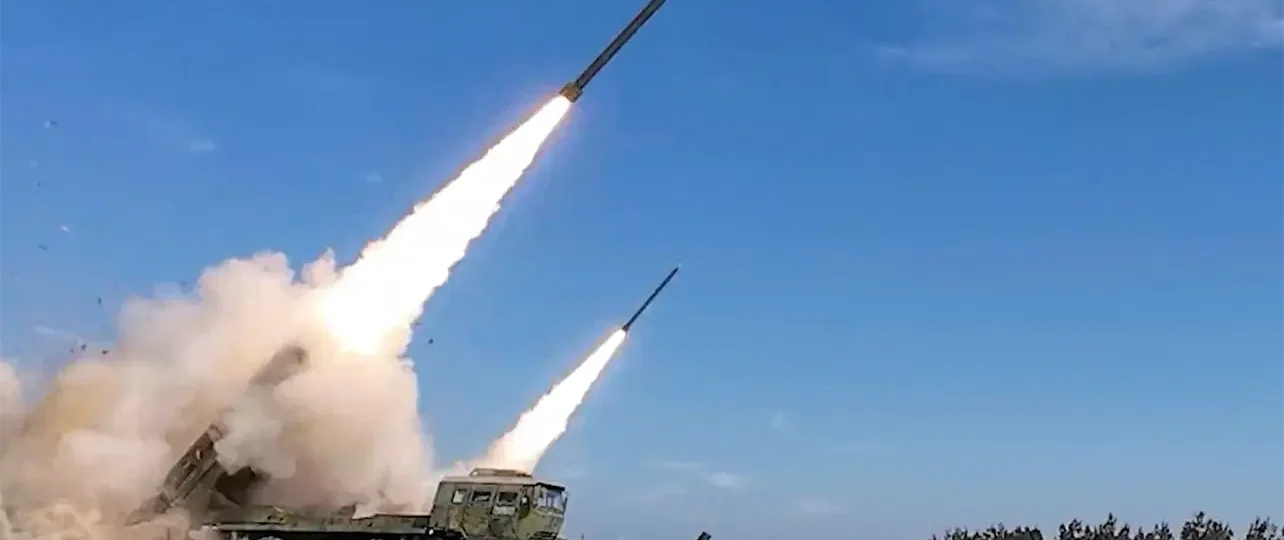

AS Chinese rockets splashed into waters surrounding Taiwan on Tuesday, the island nation found itself once again at the epicentre of an escalating strategic confrontation between Washington and Beijing – a role it never sought but cannot escape.
The “Justice Mission 2025” war games represent more than routine sabre-rattling. They are the latest move in a high-stakes competition where Taiwan has become both prize and proxy, its 23 million people living on terrain that U.S. and Chinese strategists view as critical to dominance in the Indo-Pacific.
The Arms Package That Triggered a Response
Beijing’s decision to launch its most extensive military drills to date came just 11 days after Washington approved an unprecedented $11.1 billion arms sale to Taiwan. The timing was no coincidence. Each American weapons delivery prompts Chinese military action, which in turn justifies further U.S. arms sales – a cycle that has accelerated dramatically since 2022.
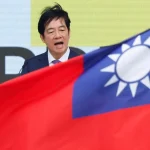
The pattern reveals Taiwan’s precarious position: dependent on American military support for survival, yet that very support provokes the aggression it aims to deter. President Lai Ching-te’s government must balance reassuring a nervous population while avoiding actions Beijing could exploit as pretexts for escalation.
Rehearsing Strangulation
China’s exercises simulate a blockade, not an invasion, targeting Taiwan’s economic lifelines rather than its beaches. The drills encircled the island’s vital ports at Keelung and Kaohsiung, through which flows the island’s connection to global commerce. Fourteen Chinese coastguard vessels prowled Taiwan’s contiguous waters while 130 military aircraft demonstrated Beijing’s ability to seal off the island’s airspace.
For Washington, Taiwan’s geographic position makes it indispensable. The island sits astride shipping lanes carrying $2.45 trillion in annual trade and serves as a potential barrier to Chinese naval expansion into the Pacific. It also produces over 60 percent of the world’s semiconductors, making it an economic chokepoint neither superpower can afford to lose.
The 2027 Question
A draft Pentagon assessment suggests China aims to achieve military readiness for a Taiwan operation by 2027 – the centenary of the People’s Liberation Army. Whether Beijing possesses genuine capability remains disputed, particularly given President Xi Jinping’s recent purge of eight generals for corruption and a reported 10 percent decline in defence industry revenue.
Yet the target date has focused minds in Washington and Taipei alike. The Biden administration has accelerated arms deliveries and strengthened unofficial ties with Taiwan’s government. Beijing responds with ever-larger military demonstrations, each testing Taiwan’s defences and international resolve.
An Unwinnable Arms Race
“Buying more weapons may sound like a silver bullet, but it’s far from that,” said Lyle Goldstein of Defence Priorities, a U.S. think tank. “This is an arms race Taiwan cannot possibly win.”
The arithmetic is stark. China outspends Taiwan on defence by roughly 25-to-1 and can sustain military pressure indefinitely. Taiwan’s strategy depends entirely on whether American forces would intervene in a conflict – a question Washington deliberately leaves ambiguous.
That ambiguity serves U.S. interests by deterring both Chinese aggression and Taiwanese moves toward formal independence. But it leaves Taiwan in permanent strategic limbo, its security guaranteed by neither formal alliance nor international recognition.
The Price of Being Strategic
Taiwan’s predicament illustrates the cost of strategic importance. The island’s democracy, technological prowess, and location make it valuable to Washington. Those same attributes make it intolerable to Beijing, which views Taiwan as a breakaway province that must be reunified.
As Sino-American competition intensifies across trade, technology, and military spheres, Taiwan finds itself with diminishing room to manoeuvre. Its government must somehow maintain stability and public confidence while serving as the physical manifestation of a superpower rivalry it cannot control.
The question is no longer whether Taiwan will remain caught between Washington and Beijing, but whether that position remains tenable as both powers grow less willing to accept the ambiguous status quo that has prevailed for decades.