FOR over a decade, the United Arab Emirates under Mohammed bin Zayed Al Nahyan cultivated an image as the Middle East’s indispensable power broker – a nimble operator whose military bases, proxy forces, and chequebook diplomacy punched far above the tiny nation’s weight. From the Horn of Africa to the Arabian Peninsula, Abu Dhabi’s fingerprints were everywhere: ports in Somalia, militias in Yemen, and a shadow network of influence that often operated independently of – and occasionally at odds with – its ostensible Saudi allies.
That carefully constructed empire is now collapsing with breathtaking speed.
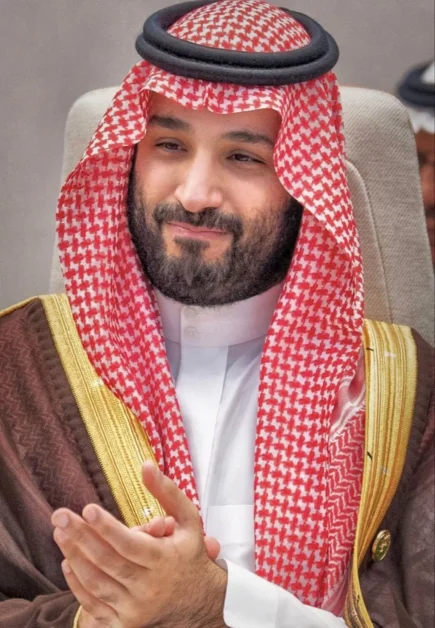
In what can only be described as a calculated dismantling, Saudi Crown Prince Mohammed bin Salman has spent the past ten days systematically unravelling a decade of Emirati regional architecture. The message from Riyadh is unmistakable: the Gulf’s power centre has shifted decisively back to Saudi Arabia, and the UAE’s freelancing days are over.
Somalia: The First Domino Falls
The rupture began in Mogadishu, where Somalia’s government abruptly terminated its security and economic agreements with the UAE, ordering the closure of Emirati military facilities that had served as forward operating bases for Abu Dhabi’s regional operations. The move represented a stunning diplomatic defeat for bin Zayed, who had invested heavily in Somalia as a strategic foothold overlooking critical Red Sea shipping lanes.
The timing was no coincidence. Somalia’s decision followed intensive Saudi diplomatic engagement, signalling Riyadh’s determination to consolidate influence across the Horn of Africa under its own banner. For years, the UAE and Saudi Arabia maintained parallel—and sometimes competing—operations in the region. Now, bin Salman has made clear he will tolerate no rivals, even among supposed allies.
The Turkish-Saudi Axis: A Geopolitical Earthquake
Perhaps even more consequential is the emerging defence partnership between Saudi Arabia and Turkey, two powers whose relationship has transformed from bitter antagonism to strategic alignment with dizzying speed. Turkish President Recep Tayyip Erdogan’s coordination with the resurgent Saudi crown prince spans the entire theatre of Emirati influence: Yemen, Somalia, the Red Sea corridor, and crucially, Sudan.
In Khartoum, a revitalised Sudanese government has returned to the capital after years of displacement, buoyed by Saudi-Turkish support and explicitly distancing itself from the UAE, which backed rival factions during Sudan’s brutal civil conflict. The reconsolidation of state authority in Sudan represents another blow to Emirati interests, which had sought to maintain influence through fragmentation.
The Turkish-Saudi rapprochement is particularly devastating for Abu Dhabi because it bridges the region’s major Sunni powers in a configuration that explicitly excludes the UAE. Where bin Zayed once positioned himself as the pragmatic counterweight to Turkish influence and the mediator of Saudi interests, he now finds himself outmanoeuvred on both fronts.
India’s Calculated Distance
Even India, long considered a reliable partner of the Emiratis, has recalibrated. New Delhi’s refusal to recognise Somaliland—the breakaway region where the UAE invested heavily in port infrastructure and cultivated separatist ambitions—represents a clear signal that India prioritises its relationship with Saudi Arabia over accommodation of Emirati preferences.
For the UAE, which has positioned itself as India’s gateway to the Gulf and a key economic partner, this diplomatic cooling is especially pointed. It suggests that even beyond the immediate region, major powers are reading the new configuration of Gulf power and adjusting accordingly.
Yemen: The Ten-Day Demolition
Nowhere has the Saudi onslaught been more surgical—or more humiliating—than in Yemen, where the UAE spent a decade building the Southern Transitional Council (STC) into a de facto state-within-a-state. The STC served as Abu Dhabi’s primary vehicle for projecting power in southern Yemen, controlling vital ports and effectively partitioning the country in ways that often undermined the Saudi-backed government in the north.
In a stunning ten-day campaign, Saudi forces and allied militias dismantled this entire apparatus. The STC has been dissolved, its military formations bombarded, and its remaining leadership compelled to surrender directly to Saudi authority. Former Emirati allies have turned themselves over to Riyadh, reading the unmistakable writing on the wall.
The speed and totality of the collapse are remarkable. What took the UAE ten years to construct—the networks, the loyalty, the infrastructure of influence—has been razed in little more than a week. It represents not merely a military defeat but a comprehensive political humiliation, demonstrating that Emirati proxies commanded no genuine loyalty when a more powerful patron came calling.
The Isolation of Mohammed bin Zayed
Perhaps most striking is what hasn’t happened: no regional power has stepped forward to mediate, to slow the Saudi advance, or to offer the UAE diplomatic cover. Bin Zayed, who cultivated relationships across the Middle East as insurance against precisely this scenario, finds himself friendless at the critical moment.
Egypt, often aligned with Emirati interests, has remained conspicuously silent. Jordan has said nothing. The smaller Gulf monarchies are keeping their heads down. Even Israel, with which the UAE normalised relations in the 2020 Abraham Accords, offers no regional political buffer against Saudi pressure.
This isolation is itself a message: Mohammed bin Salman has made clear that supporting the UAE in this contest carries costs that no regional actor is willing to bear. The Saudi crown prince, emboldened by rising oil prices, renewed American engagement, and successful domestic consolidation, is demonstrating that Gulf leadership flows through Riyadh—or not at all.
The Strategic Miscalculation
How did the UAE arrive at this precipice? The answer lies in a fundamental strategic miscalculation about the nature of Gulf politics and Saudi tolerance for Emirati independence of action.
For years, Abu Dhabi operated on the assumption that its wealth, military capabilities, and international connections granted it effective parity with Saudi Arabia—that the UAE could pursue its own regional agenda, even when that agenda diverged from or undermined Saudi interests, without facing decisive pushback from a sclerotic Riyadh.
That assumption was predicated on a Saudi Arabia paralysed by internal divisions, cautious leadership, and competing power centres. Mohammed bin Salman’s consolidation of power—however controversial internationally—created a unified Saudi decision-making apparatus capable of decisive action. The UAE failed to adjust its calculus accordingly.
Worse, the UAE’s strategy of cultivating proxies and separatist movements, while tactically effective in the short term, generated profound resentment among regional governments that value territorial integrity and state sovereignty. Somalia’s government chafed at Emirati support for Somaliland. Yemen’s internationally recognised government bristled at the STC’s de facto partition. Sudan’s authorities viewed the UAE’s backing for rival factions as prolonging the civil war.
When Saudi Arabia positioned itself as the champion of state sovereignty and territorial integrity—ironic given its own interventions—it found willing partners across the region, all nursing grievances against Emirati overreach.
What Comes Next?
The collapse of the UAE’s regional position is likely not complete. Abu Dhabi retains significant economic leverage, a capable military, and relationships—particularly in the economic sphere—that cannot be easily replaced. The UAE’s role as a global business hub, its airline networks, and its position in international finance provide resources that transcend immediate political setbacks.
But the era of the UAE as an independent regional power broker appears finished. Going forward, Abu Dhabi will operate within parameters defined by Riyadh, or it will face continued dismantling of its remaining positions. The question is whether Mohammed bin Zayed will accept this subordination gracefully or attempt a rearguard defence that could prove even more costly.
For Mohammed bin Salman, the past ten days represent a triumphant reassertion of Saudi primacy. The message to regional actors—and to the UAE specifically—is that the Gulf has one dominant power, and freelancing will not be tolerated. Whether this consolidation produces greater regional stability or simply concentrates dysfunction under a single authority remains to be seen.
What is beyond dispute is that the regional order has shifted decisively. The UAE’s decade-long experiment in building an independent sphere of influence has been systematically demolished in a fraction of the time it took to construct. In the Gulf’s unforgiving political arena, Mohammed bin Zayed has discovered that perceived weakness invites not sympathy, but obliteration.
The unravelling of the Emirati empire offers a stark lesson in the limits of ambition unmoored from sustainable power. In the end, the UAE’s reach exceeded its grasp—and the reckoning, when it came, was swift and merciless.