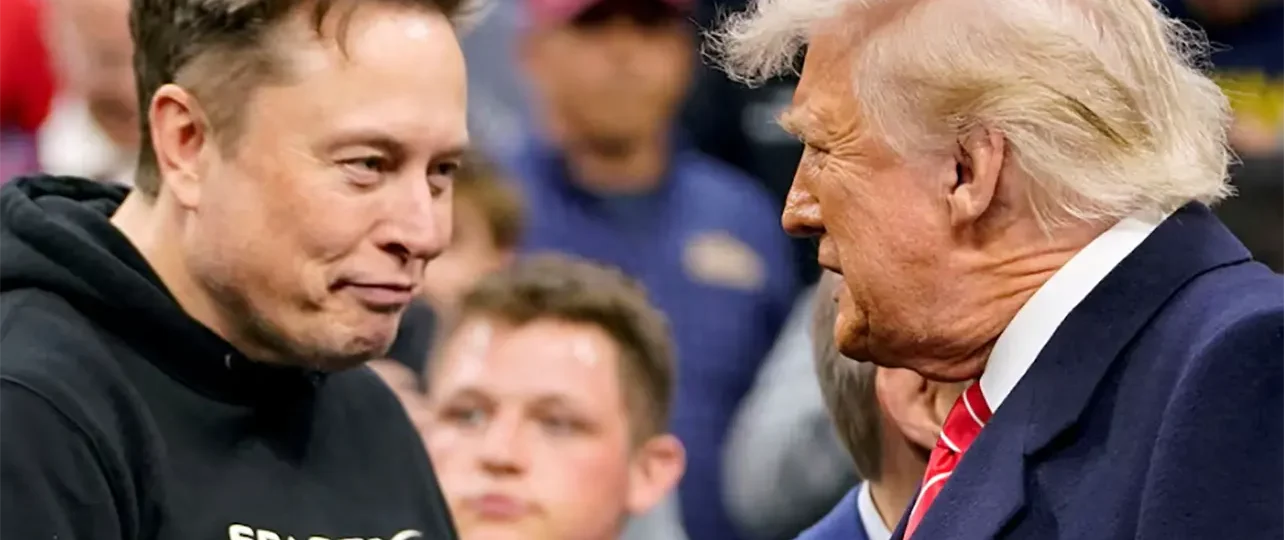

A once-powerful alliance between U.S. President Donald Trump and billionaire Elon Musk spectacularly collapsed into a public feud this week, sending Tesla’s stock into a historic tailspin and threatening to upend Republican political strategy ahead of next year’s midterm elections.
The rift burst into public view Thursday after Trump, frustrated by Musk’s vocal opposition to his sweeping tax-cut and spending bill, threatened to terminate lucrative government contracts with Musk’s companies. “The simplest method to conserve funds in our budget, saving billions, is to eliminate Elon’s governmental subsidies and contracts,” Trump posted on his Truth Social platform. Musk, who had been one of Trump’s top political donors and served as head of the Department of Government Efficiency (DOGE), fired back on X, suggesting Trump should be impeached—a move that stunned political observers and fueled a day of escalating hostilities.
The market reaction was swift and severe. Tesla shares plunged more than 14% on Thursday, erasing $152 billion in market value – the largest single-day loss in the company’s history. The sell-off reflected investor concerns over the potential loss of federal contracts and the broader uncertainty unleashed by the high-profile spat. Tesla’s stock rebounded slightly in premarket trading Friday, rising about 5% after news broke that the two men were scheduled to speak in an attempt to cool tensions.
The feud marks a dramatic reversal for two men who, until recently, had worked closely to advance Trump’s agenda. Musk was instrumental in Trump’s reelection campaign, contributing as much as $300 million and spearheading efforts to downsize the federal workforce. Their relationship soured as Musk publicly denounced Trump’s “big, beautiful” spending bill, arguing it would dangerously inflate the national debt, now at $36.2 trillion. Trump, initially silent, lashed out Thursday, saying he was “very disappointed” in Musk and accusing him of opposing the bill solely because it eliminated electric vehicle credits crucial to Tesla’s bottom line.
Musk responded with a series of pointed social media posts, declaring, “Without me, Trump would have lost the election,” and warning that lawmakers supporting the bill could face primary challenges. He also threatened to end SpaceX’s critical U.S. spaceship program, further raising the stakes.
The public spat has left Republican strategists deeply concerned. Musk’s financial support and Silicon Valley connections have been vital to the party’s recent successes. A prolonged feud could jeopardise GOP control of Congress if Musk withdraws his backing or actively campaigns against Trump’s allies. “Elon was indeed a crucial part of the ground game this past election cycle,” said a Republican strategist with ties to both camps.
Meanwhile, Musk’s growing political activism has sparked protests at Tesla facilities and added to worries about his divided attention as CEO.
White House aides have scheduled a call between Trump and Musk for Friday, hoping to defuse the situation and prevent further economic and political fallout. Trump, when asked about the feud, attempted to downplay the rift: “Oh, it’s okay,” he told reporters, insisting his administration was “never done better”.
Yet, with both men trading public insults and threatening each other’s core interests, the future of their relationship—and its impact on U.S. politics and business—remains highly uncertain.
“This conflict does not alter our optimistic outlook on Tesla and its autonomous capabilities, but it certainly complicates the regulatory landscape under Trump moving forward.” — Dan Ives, Wedbush Securities.
As the world watches, the outcome of Friday’s call could determine whether this is a temporary flare-up or the beginning of a lasting political and economic rupture.