
Chapter 1: The Breaking Point
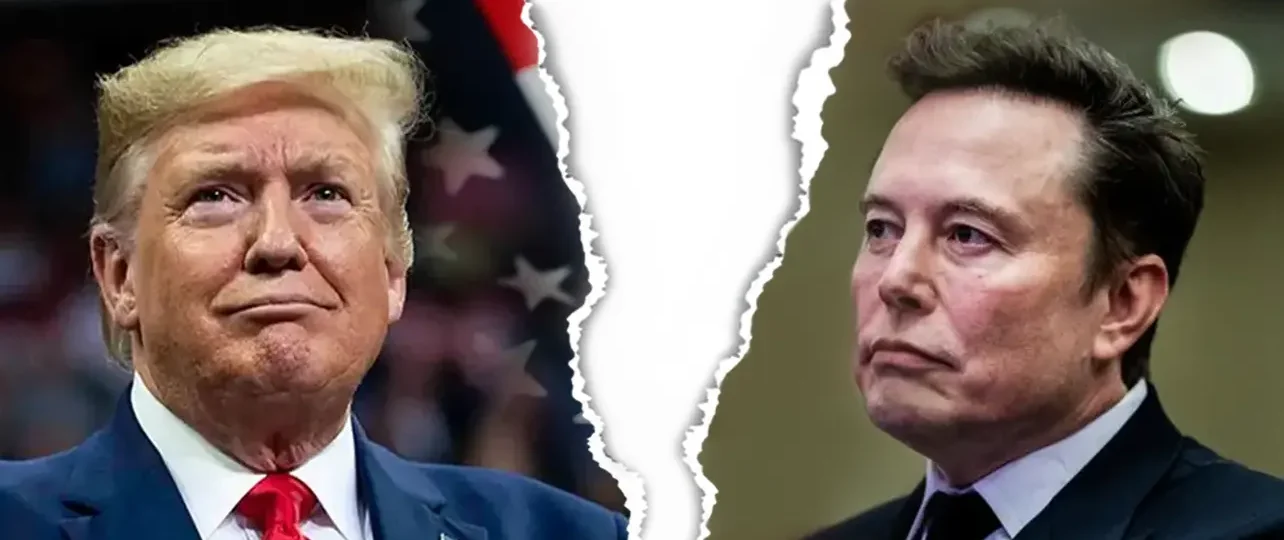
THE marble halls of the Capitol had witnessed many betrayals, but few as spectacular as what was about to unfold between two men who once called each other allies.
Elon Musk stood in his Austin office, his fingers dancing across multiple screens as the markets closed. Outside, the Texas sunset painted the sky in shades of amber, but inside, storm clouds were gathering. The richest man in the world was about to declare war on the most powerful politician in America.
“Sir,” his aide ventured carefully, “the President’s people are calling. They want to know if you’ll reconsider your position on the bill.”
Musk’s laugh was bitter. “Tell them the PORKY PIG PARTY can go to hell.”
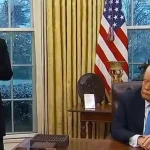
Three thousand miles away, in the Oval Office, Donald Trump slammed his phone down so hard it cracked the screen. The man he’d once praised as a “super genius” had just publicly eviscerated his signature legislation, calling it a “disgusting abomination” to his 200 million followers.
“He thinks his money makes him untouchable,” Trump muttered to his chief of staff. “We’ll see about that.”
Chapter 2: The Alliance That Was
It hadn’t always been this way. Just eighteen months earlier, Musk had been Trump’s golden boy, the tech visionary who’d transformed himself into a political kingmaker. The $350 million he’d pumped into Trump’s campaign had been the largest individual political donation in American history.
They’d shared stages, traded jokes, and plotted the future of American governance. Musk had even agreed to lead the Department of Government Efficiency – DOGE, as they’d playfully called it – slashing through federal bureaucracy with the zeal of a Silicon Valley disruptor.
But power, as Musk was learning, was more intoxicating and more corrupting than any drug. And Trump, for all his political genius, had never learned to share it.
The first cracks had appeared when Musk began questioning the massive spending in Trump’s tax cut package. Five trillion dollars added to the national debt – it went against everything DOGE was supposed to represent. When Musk raised concerns privately, he was dismissed. When he went public, he was marked for destruction.
Chapter 3: The Ultimatum
“You know what DOGE is,” Trump had said to reporters, his voice dripping with menace. “DOGE is the monster that might have to go back and eat Elon.”
The threat was clear enough. Trump had created DOGE, and he could destroy its creator. He’d done it before to others who’d crossed him – governors, senators, business leaders who’d thought themselves too big to fall.
But Elon Musk wasn’t just anyone. He was the man who’d revolutionised electric vehicles, conquered space, and rewired global communications. He had resources Trump couldn’t touch and a platform Trump couldn’t silence.
That night, Musk made a decision that would reshape American politics.
Chapter 4: Nuclear Options
The breaking point came during a White House press briefing that would be replayed endlessly across social media. When a reporter asked Trump directly about deporting Musk, the President’s response sent shockwaves through Washington.
“We’ll have to take a look,” Trump said with a predatory smile. “We might have to put DOGE on Elon. You know what DOGE is? DOGE is the monster that might have to go back and eat Elon. Wouldn’t that be terrible?”
The threat was breathtaking in its audacity – using the very department Musk had created to destroy him. But Trump wasn’t finished.
“He gets a lot of subsidies… Elon’s very upset that the EV mandate is going to be terminated. But he could lose a lot more than that. I can tell you right now. Hey, Elon could lose a lot more than that.”
The implicit threat hung in the air like a toxic cloud. Within minutes, clips of Trump’s ominous remarks were spreading like wildfire across social media platforms.
Musk’s response came just hours later, a single tweet that made Washington insiders’ blood run cold:
“So tempting to escalate this. So, so tempting. But I will refrain for now.”
Those who remembered Musk’s earlier deleted tweet about Trump being “in the Epstein files” understood the implication immediately. The billionaire still had ammunition – dangerous, potentially career-ending ammunition – and Trump’s deportation threats had pushed him to the brink of using it.
Chapter 5: The America Party
By midnight, Musk had made his decision. The announcement came at 3:47 AM, prime time for his nocturnal social media habits:
“The America Party is born. For the 80% in the middle who’ve been abandoned by the Democrat-Republican uniparty. Real change starts now. Some people have forgotten that I don’t bluff.”
The final sentence sent another chill through political circles. Everyone knew what Musk was really saying: he had nuclear options, and Trump’s threats had made him willing to consider using them.
Chapter 6: Mutually Assured Destruction
What followed was unlike anything American politics had ever seen. Two titans with unlimited resources, massive egos, and potentially career-ending secrets about each other, each convinced of their own righteousness, unleashing everything in their arsenals.
Musk’s America Party recruited candidates in 47 states within six weeks. His war chest grew daily as tech billionaires, fed up with traditional politics, poured in hundreds of millions. His social media army – larger than most countries’ populations – became a propaganda machine that dwarfed anything seen before.
But the real weapon remained holstered. Every day, political insiders waited to see if Musk would follow through on his implicit threats about what he knew. The phrase “So, so tempting” had become a rallying cry among his supporters and a source of sleepless nights for Trump’s inner circle.
Trump fought back with the full power of the presidency, but more carefully now. The deportation threats had been walked back by staff, though the damage was done. Federal contracts were reviewed, tax investigations launched, and regulatory agencies suddenly found new interest in everything Musk-related. But everyone knew this was a dance around a powder keg.
The Justice Department, while maintaining its independence, found itself caught between a president demanding action and the terrifying possibility that any aggressive move against Musk might trigger the release of information that could bring down the entire administration.
Chapter 7: The Stakes
As the war escalated, America watched in fascination and horror. Markets gyrated wildly as investors tried to predict which titan would emerge victorious – or whether both might destroy each other in a mutually assured destruction scenario that would take half of Washington with them.
International allies wondered if American democracy could survive such a concentrated clash of personalities, power, and potentially explosive secrets. Intelligence agencies from friendly nations quietly began contingency planning for what might happen if certain long-buried information suddenly became public.
Thomas Massie, the Kentucky Republican who’d become an unlikely symbol of resistance to Trump’s spending, found himself at the centre of the storm. Musk’s support had made him a hero to fiscal conservatives, but Trump’s super PAC was spending millions to destroy him.
“This isn’t about me,” Massie told reporters as protesters surrounded his office. “This is about whether we still have a democracy or just a battle between kings who know each other’s darkest secrets.”
The reference wasn’t subtle. Everyone in Washington understood that this fight had moved beyond policy disagreements into something far more dangerous – a battle where both sides possessed information that could destroy the other, and where one miscalculation could bring down institutions that had stood for centuries.
Chapter 8: The Reckoning
The 2026 midterms would be the first test of strength. Musk’s America Party had fielded candidates in 200 races, many of them well-funded tech entrepreneurs and military veterans with no political experience but unlimited resources.
Trump’s machine, meanwhile, had been working for months to ensure loyalty. The President’s approval ratings, despite the chaos, remained solid among his base. They saw the fight with Musk not as a liability but as proof that Trump couldn’t be bought or bullied, even by the world’s richest man.
Election night was a bloodbath. The America Party won 47 House seats and 3 Senate seats – an unprecedented showing for a third party, but far short of Musk’s ambitious predictions. More importantly, several Trump-backed candidates lost to Democrats in purple districts, weakening the President’s position.
Epilogue: The New Reality
In the aftermath, America found itself fundamentally changed. The two-party system, already strained, had cracked. A third force had emerged, bankrolled by Silicon Valley and powered by a new generation of voters who trusted tech more than tradition.
Musk had proven that money could indeed buy political influence, but not control. Trump had shown that even presidents had limits when facing truly independent wealth. Neither had won decisively, but both had transformed the landscape forever.
In his penthouse office, Musk planned the next phase. 2028 was just two years away, and he’d learned valuable lessons about the difference between disrupting markets and disrupting democracy.
In the White House, Trump plotted his own comeback. He’d faced down the richest man in the world and survived. But he’d also created a new enemy with unlimited resources and a very long memory.
The war between the titans was far from over. If anything, it had just begun.
“When elephants fight,” an old African proverb says, “it is the grass that suffers.”
In America, 330 million people were about to learn what that meant.