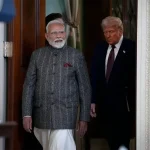
THE world’s economic architecture shuddered this week as President Donald Trump delivered an ultimatum that could reshape international trade for decades: any nation aligning with BRICS policies will face an immediate 10% tariff penalty, with no exceptions.
The declaration, delivered through Trump’s characteristic social media bluntness, targets the coalition of Brazil, Russia, India, China, and South Africa – along with their expanding circle of partners – representing nearly half of humanity and 40% of global economic output. The move comes as Washington races against a self-imposed July 9 deadline to finalise trade agreements with nearly 100 countries.
“Any country aligning itself with the anti-American policies of BRICS will be charged an ADDITIONAL 10% tariff,” Trump announced, framing the coalition as fundamentally hostile to American interests. The stark language signals a dramatic departure from traditional diplomatic norms, replacing nuanced trade negotiations with binary choices: align with Washington or face economic consequences.
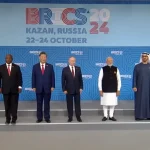
The timing is no coincidence. As BRICS nations gathered in Rio de Janeiro to chart their economic future, Trump’s announcement landed like a diplomatic thunderbolt, forcing world leaders to choose sides in what increasingly resembles a new Cold War fought with tariffs instead of missiles.
Defiance from the Global South
The response from BRICS leadership was swift and unified in its rejection of American economic coercion. Brazilian President Luiz Inácio Lula da Silva delivered perhaps the most pointed rebuke: “The world changed. We don’t need an emperor.” His words captured the sentiment of leaders who view Trump’s ultimatum not as legitimate policy but as the desperate overreach of a declining hegemon.
China’s foreign ministry struck a more diplomatic tone while firmly rejecting the premise, emphasising that BRICS promotes “win-win cooperation” rather than the zero-sum competition Washington perceives. Russian officials echoed this sentiment, insisting their collaboration “never aimed against third nations” – a pointed reminder that not every international partnership revolves around American interests.
The official BRICS communiqué condemned “unilateral tariff and non-tariff barriers” that violate World Trade Organisation principles, positioning the coalition as defenders of the international rules-based order that America helped create but now appears willing to abandon when it serves its purposes.
Markets Tremble, Economies Brace
Financial markets responded with the nervous energy of investors confronting a fundamentally altered landscape. Asian indexes tumbled as traders calculated the implications: India’s NIFTY 50 fell 0.1%, China’s Shenzhen Component dropped 0.7%, and Hong Kong’s Hang Seng index declined 0.23%. These numbers, while seemingly modest, represent billions in vanished value and signal deeper anxieties about the stability of global trade.
The economic modelling paints a sobering picture of potential consequences. Economists project that escalating tariffs could slash U.S. GDP by $432 billion while raising consumer prices by 1.6% – a double blow of reduced prosperity and increased costs that ordinary Americans would feel in their daily lives. BRICS nations, particularly China, would face even steeper economic hits, creating a spiral of mutual economic destruction.
Global supply chains, already strained by years of pandemic disruption, face new fractures as companies scramble to navigate a world where trade routes are increasingly determined by political alignment rather than economic efficiency.
The New Great Game
Behind the immediate economic calculations lies a broader struggle for global influence. Trump’s tariff threat represents more than trade policy – it’s an attempt to force the world’s emerging economies back into an American-dominated system they’ve spent decades trying to escape.
BRICS nations are already exploring alternatives: increased intra-bloc trade, alternative financial arrangements, and reduced reliance on the U.S. dollar. These aren’t merely economic adjustments but the building blocks of a parallel global system that could permanently diminish American influence.
The coalition’s leaders speak of reforming global institutions that have been dominated by Western powers since World War II. They envision a multipolar world where no single nation dictates terms to others – a vision fundamentally at odds with Trump’s America First approach.
The Crossroads Ahead
As Washington dispatches letters to nearly 100 countries outlining new tariff rates and urging last-minute deals, the world faces a stark choice between economic integration and fragmentation. The Trump administration’s approach assumes that American market access remains so valuable that nations will abandon their strategic partnerships to maintain it.
But the BRICS response suggests a different calculation. These nations may be willing to accept short-term economic pain to build long-term strategic autonomy. If they succeed, Trump’s tariff ultimatum could accelerate the very de-Americanization of the global economy it was designed to prevent.
The coming weeks will reveal whether the world’s economic future lies in continued American dominance or in the emergence of a truly multipolar trading system. Either way, the comfortable assumptions that have governed international trade for the past three decades are crumbling, replaced by a more volatile world where economic policy and geopolitical strategy are increasingly inseparable.
The age of economic empires may be ending, but the struggle to shape what comes next has only just begun.