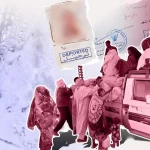
ACCORDING to official US data, between 20 January and 29 April, 142,000 individuals were removed from the US. In particular, the fate and whereabouts of at least 245 Venezuelans and some 30 Salvadorans who were removed to El Salvador remain unclear.
Many of them were deported under the Alien Enemies Act as alleged members of specific criminal groups. They have reportedly been detained in the maximum-security “Centre for Terrorism Confinement” (CECOT) in El Salvador, a facility where detainees are treated particularly harshly, without access to legal counsel or their relatives, or other contact with the outside world.
“The UN Human Rights Office has information from family members and lawyers regarding more than 100 Venezuelans believed to be held in CECOT. These reports indicate that many of the detainees were not informed of the US Government’s intention to deport them to be held in a third country, that many did not have access to a lawyer and that they were effectively unable to challenge the lawfulness of their removal before being flown out of the US,” UN Human Rights Office spokesperson Liz Throssell said.
“This situation raises serious concerns regarding a wide array of rights that are fundamental to both US and international law – rights to due process, to be protected from arbitrary detention to equality before the law, to be protected from exposure to torture or other irreparable harm in other States, and to an effective remedy,” Throssell told the biweekly press briefing in Geneva.
“To date, no official lists of the detainees have been published by the US or Salvadoran authorities, and their legal status in El Salvador remains unclear. Family members interviewed by the UN Human Rights Office voiced deep distress at not knowing where, and in what circumstances, their loved ones are detained,” she said.
“Lawyers don’t know where they are. In fact, no one knows where they are for certain, and we don’t know the legal basis. So that is raising huge human rights concerns.”
“And in some cases, the families were contacted by their loved on and asked them to please come to Caracas, please come to see me there. And of course, when the plane arrived, no one disembarked. This added to the uncertainty, the fear of the families.” Throssell said.
“Families we have spoken to have expressed a sense of complete powerlessness in the face of what has happened and their pain at seeing their relatives labelled and handled as violent criminals, even terrorists, without any court judgment as to the validity of what is claimed against them,” she added.
“The manner in which some of the individuals were detained and deported – including the use of shackles – as well as the demeaning rhetoric used against migrants, has also been profoundly disturbing,” Throssell stated.
UN High Commissioner for Human Rights Volker Türk welcomed the essential role that the US judiciary, legal community and civil society are playing in ensuring the protection of human rights in this context.
He has called on the US Government to take the necessary measures to ensure compliance with due process, to give prompt and full effect to the determinations of its courts, to safeguard the rights of children, and to stop the removal of any individual to any country where there is a real risk of torture or other irreparable harm. – UN Multimedia Newsroom