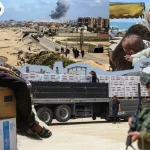
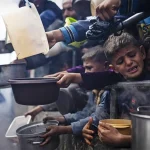
THE story of Gaza’s humanitarian crisis is one of desperation, urgency, and repeated pleas from the United Nations for meaningful action. As Israel’s controversial aid distribution plan began, UN agencies sounded the alarm, demanding not just a trickle but a “surge” of life-saving supplies to prevent starvation and further catastrophe.
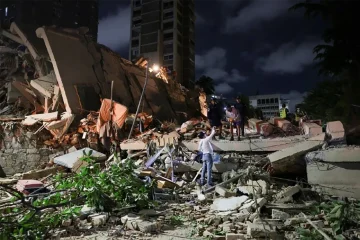
For nearly three months, Gaza endured a complete blockade. The United Nations Office for the Coordination of Humanitarian Affairs (OCHA) described the aid that finally entered as “vastly insufficient.” “The speed and scale of the killing and destruction are unlike anything seen in the [Gaza] Strip in recent history,” OCHA declared, emphasizing that “this latest appeal targets the entire population of Gaza — some 2.1 million people — all of whom need humanitarian assistance after 14 months of brutal hostilities”.
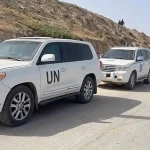
Jens Laerke, spokesperson for OCHA, insisted, “We have not stopped operating,” referencing the UN staff still inside Gaza, risking their lives to coordinate with Israeli authorities and retrieve whatever limited supplies were allowed through Kerem Shalom. But he was unequivocal: “It is a distraction from what is actually needed, which is a reopening of all the crossings into Gaza, a secure environment within Gaza and faster facilitation of permissions and final approvals of all the emergency supplies that we have just outside the border; [aid] needs to get in.”
Laerke detailed the dangers and obstacles facing humanitarian teams: “We are not always able to collect what is being dropped off on the other side because of the insecure routes that are being assigned to us by the Israeli authorities to use.” He warned against selective aid, underscoring, “The bottom line again is that we are talking about a vastly insufficient amount of aid that eventually enters Gaza at the moment. That’s why we need [the] opening of more crossings, we need all types of aid, not that aid that is cherry-picked by the Israeli side that we are allowed to get in.”
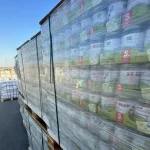
The United Nations Relief and Works Agency for Palestine Refugees (UNRWA) painted an even bleaker picture. “No supplies whatsoever” prepared by the agency have reached Gaza since the Israeli siege began on 2 March. Over 3,000 trucks carrying food and medicines, readied in Jordan and Egypt, risk spoiling as they wait in vain. Juliette Touma, UNRWA Director of Communications, explained, “We have clinics, we have pharmacies that the agency runs, and there we normally would distribute medicines against chronic diseases…but also basic medicines, things like paracetamol and then childhood diseases, and these are the medicines that we’re running out of”.
UN Secretary-General António Guterres, addressing the world, did not mince words: “Palestinians in Gaza are enduring what may be the cruellest phase of this cruel conflict. For nearly 80 days, Israel blocked the entry of life-saving international aid…all the aid authorised until now amounts to ‘a teaspoon of aid when a flood of assistance is required.’” He revealed that, although almost 400 trucks were cleared for entry through Kerem Shalom, supplies from only 115 trucks could be collected, and nothing reached the besieged northern Gaza.
The crisis is not just about numbers. It is about children, women, and the elderly facing famine and disease. The Integrated Food Security Phase Classification (IPC) warned that the entire population of Gaza faces a critical risk of famine, with over a million people in the Emergency phase and nearly half a million facing catastrophic levels of acute food insecurity.
OCHA has repeatedly called on Israel to “take immediate and effective measures to ensure that the essential needs of civilians are met to implement the full scale of what is urgently needed, including lifting all impediments to aid and fully facilitating humanitarian operations, including the distribution of essential goods to Palestinians in need”.
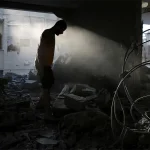
The UN’s message is clear and urgent. “There is no time to waste to meet the shelter needs of the people of Gaza,” said Laerke. “Hunger is widespread, people are homeless; disease, injuries are rampant. Children are separated and there’s a cloud of deep psychological trauma hanging over Gaza that needs to be dealt with”.
As the world watches, the United Nations continues to demand not just access, but an immediate and massive escalation of aid, a flood, not a teaspoon, to save lives and uphold the most basic standards of humanity.