By Tammam Aloudat
HUMANITARIAN agencies and organisations are some of the few actors with any power left who have not yet been fully compromised by complicity in Israel’s atrocities in the Gaza Strip. It falls on them now to move beyond attempting to provide aid and issuing denunciations. They must do everything in their power to try to stop what is plainly a genocide.
Through their cowardice and complicity, Western states have betrayed every humanitarian principle they once espoused by allowing and enabling Israeli crimes. Mainstream media outlets have not only abdicated their responsibility to speak the truth and hold power to account, but also helped manufacture consent for Israel’s actions.
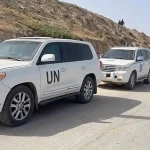
Humanitarian organisations have tried to provide aid to Palestinians in Gaza for the past 21 months, but they have failed. Israeli obstruction and violence have made it impossible for them to do their work, and they have been entirely ineffective at finding other ways of stopping the massacres.
Standard humanitarian advocacy and diplomacy have not moved the needle in any meaningful way. Those who have not spoken out clearly against the genocide in Gaza – like the International Committee of the Red Cross (ICRC) – have doomed themselves to irrelevance. Their judgment is left to history, as The New Humanitarian argued in an editorial last December.
Those who have spoken with moral clarity must now go beyond denunciations and act, as uncomfortable and as risky as that might be.
Humanitarian organisations must form a wide alliance to challenge the complicity of the governments in the countries where they are headquartered, and which are their biggest donors, not only with words but also with legal action. They also must consider taking direct action, such as trying to break the siege on Gaza by attempting to bring in aid by land and sea in defiance of Israel and complicit neighbouring governments, like Egypt, that have helped enforce the blockade.
Failing to do so will not only render humanitarian actors irrelevant to Gaza, but it will further compromise the normative framework, including International Humanitarian Law, that allows humanitarianism to exist. The reverberations of the resulting lawless world – which we can already see coming into view – are unimaginable.
The imperative to act
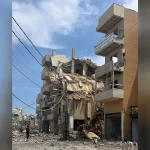
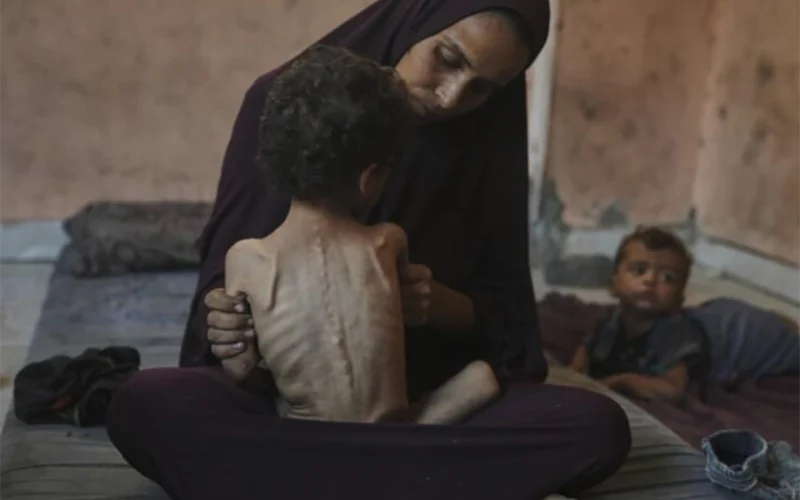
At this point, Israel’s killing of Palestinians seeking aid in Gaza can only be described as systematic, and Israel is clearly wielding starvation as a weapon of war to further render Palestinian life impossible in the occupied Strip. Nearly 60,000 Palestinians have been killed by Israeli forces, and the true death toll – counting those who have died from denied medical care, disease, starvation, and other effects of Israel’s campaign – is likely many times higher.
The documentation of war crimes, crimes against humanity, and ethnic cleansing is voluminous, and a wide range of rights groups and experts – from Amnesty International, Human Rights Watch, and UN special rapporteurs to Israeli genocide scholars, like Amos Goldberg, Omer Bartov, and Raz Segal – have all concluded that what Israel is perpetrating in Gaza is the crime of crimes.
Yet, the legal obligation to prevent genocide contained in the 1948 convention is muddled by the legalistic argument that a court must first declare that one is taking place. That process was set in motion by South Africa at the International Court of Justice (ICJ), the UN’s top court, in December 2023, but the proceedings in that case will take years to conclude. By that point, what will be left of Gaza and its inhabitants?
That is why it is incumbent on humanitarian organisations, who clearly see what is taking place, to pressure state signatories to the convention – which include the US, the UK, Germany, France, and all of Israel’s other major Western allies – to fulfil their treaty obligations before it is too late.
At the same time, it is not enough to rely on states – all of whom have shown that they are unwilling to do what is necessary to stop the atrocities – to act.
Standard operating procedures
“There are no humanitarian solutions to political problems” is a mantra often quoted with different purposes. It can mean that humanitarianism can only do so much when the political will to resolve conflict is absent. It can also be seen as a call for humanitarians to break out from their apolitical imaginary and understand that, unless they tackle the political causes of humanitarian problems, they become a humanitarian alibi.
From the beginning, humanitarian aid, and the organisations that provide it, have been used as an alibi by Western government to justify their continued enablement of Israel’s crimes in Gaza. Time and time again, the US and European countries have used advocacy for improvements in aid access – and the insufficient and temporary results those have yielded – as an excuse to not take meaningful action to push for the one thing every humanitarian expert has said is needed to avert catastrophe: a permanent ceasefire.
Now, the gravity of the situation on the ground in Gaza has made speaking out a low and insufficient bar.
For their own part, humanitarian organisations have attempted to balance access and speaking out during the Gaza genocide in different ways.
Some, like the ICRC and the rest of the Red Cross and Red Crescent Movement, have consistently refused to identify Israel as the perpetrator of any of the atrocities committed in Gaza – even when Israel has massacred their own volunteers.
The argument used to justify the silence is neutrality, which the ICRC maintains is the only way to do humanitarianism. But that position has been thoroughly contested for a long time by a wide range of academics, policymakers, and practitioners. Under the current circumstances, interpreting neutrality as equating to silence, and justifying it with the argument of the need to maintain access when humanitarian operations have been thoroughly crushed, is cynical at best and outright complicit at worst.
Other organisations, like Médecins Sans Frontières, among others, have been less shy to name the perpetrator and have spoken out with increasing intensity, beginning with calling for a ceasefire in the early days to recently declaring what is happening in Gaza a genocide – a rare full-throated denunciation from the aid sector.
Some, like Oxfam, have avoided using the word genocide, calling it an “annihilation campaign” instead. And most recently, 109 organisations issued a strongly worded statement about the Israeli-imposed mass starvation in Gaza.
But in the face of what is taking place, even this is not enough. Now, the gravity of the situation on the ground in Gaza has made speaking out a low and insufficient bar.
A radical proposition
In his 1999 book The Red Cross and the Holocaust, Jean-Claude Favez wrote about the ineffectiveness and moral failure of the ICRC’s actions during the Nazi genocide against the Jews. He castigated the preeminent humanitarian organisation of the time for not taking “the supreme risk of throwing the full weight of its moral authority into the scales on behalf of these particular victims”.
Then as now, this is the question facing the preeminent humanitarian organisations of our time: Will they throw the full weight of their moral authority into the scales on behalf of the Palestinian population of Gaza? The weight of history demands that they do.
In practical terms, this means that humanitarian organisations, particularly in the West, should take the governments of the countries where they are based, as well as EU institutions, to national courts, the European Court of Human Rights, and even to the ICJ, the basis for the cases is the fact that Western states have: continued to arm Israel; provided it with diplomatic cover, and failed to act in accordance with their obligations under international humanitarian law to use all of their levers of power to stop the genocide unfolding in plain sight.
This is the question facing the preeminent humanitarian organisations of our time: Will they throw the full weight of their moral authority into the scales on behalf of the Palestinian population of Gaza?
This legal action should not be done sporadically but as a wide, coordinated alliance simultaneously across multiple jurisdictions in order to have maximum effect.
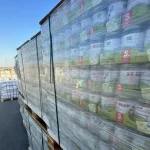
Additionally, international humanitarian actors should attempt to break the siege of Gaza. Thousands of tonnes of humanitarian supplies are positioned within reach of Gaza’s borders and are being prevented from entering and being distributed by Israel. It is time for humanitarian organisations to challenge the clearly illegal actions of the states imposing the blockade on Gaza by acting outside of their standard operating procedures.
Efforts to break the blockade have so far only been attempted by activist civil society groups, and they have been small and doomed to fail. They should now be undertaken and backed by large coalitions of established humanitarian actors who can leverage the weight of their reputations, experience, and moral authority to give them a better chance of succeeding. A coalition of organisations should assemble a massive aid flotilla and attempt to break the siege.
With all other actors abdicating responsibility, humanitarians must take the historical responsibility of halting this genocide. They need to stop allowing themselves to be used as a fig leaf, stop pretending to be out of politics, and act like their lives – not only those of victims of conflicts – depend on it.
–––––
The New Humanitarian puts quality, independent journalism at the service of the millions of people affected by humanitarian crises around the world. Find out more at www.thenewhumanitarian.org.