MORE than two weeks after a devastating 6.0 magnitude earthquake struck eastern Afghanistan, women and girls who make up the majority of victims face a deepening crisis as international aid efforts clash with Taliban restrictions on female humanitarian workers.
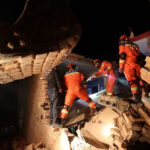
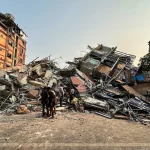
At least 2,200 people died when the shallow quake hit Kunar province at midnight on August 31, collapsing houses built on steep hillsides. Women and girls accounted for more than half of those killed and injured, and represent 60% of the missing, according to UN Women.
“While the major aftershocks have passed, women in affected areas are facing a long-term disaster without more urgent assistance,” Susan Ferguson, UN Women’s Special Representative in Afghanistan, told journalists in Geneva on Friday.
The humanitarian response has been severely hampered by the Taliban’s September 5 ban on Afghan women staff and contractors entering UN compounds in Kabul, though female aid workers can still operate in earthquake-affected areas.
Ferguson described meeting survivors living in basic tents in Chawkay district, where women who fled their collapsed village in the middle of the night told her they had lost everything. “As one woman said to me, ‘Now we have nothing,'” Ferguson recounted.
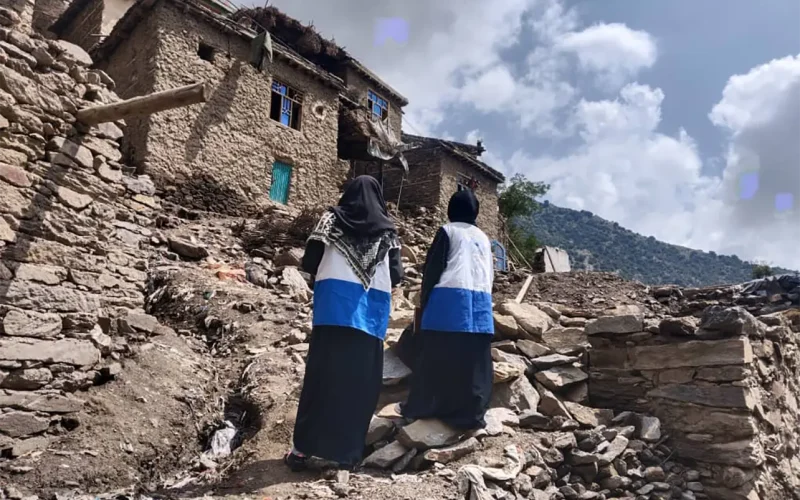
The disaster has created unique challenges in Afghanistan’s conservative cultural context. Female rescue workers, supported by UN Women, described “scrambling along the sides of mountains, dodging falling rocks every time there was an aftershock.” In some areas, cultural norms prevented male rescuers from providing assistance to women, making female humanitarian workers essential.
Satellite imagery reveals the scale of destruction: more than 649,000 tonnes of debris, equivalent to 40,500 truckloads, still needs clearing. The UN Development Programme estimates that at least 23,000 people have been displaced from their homes.
As temperatures begin to drop, shelter remains a critical need. Many survivors continue living in tents or in the open, while the destruction of basic infrastructure has forced women and girls to travel further for water and sanitation, exposing them to increased risks of violence and landmines.
“In everyday life, in this cultural context, these women already face an uphill battle every day to survive and support their families,” Ferguson said. “Now, in the disruption and chaos following the earthquake, these women will find it exponentially harder to feed their children and find a safe place to stay.”
The earthquake struck one of Afghanistan’s most remote and mountainous regions, with rescue teams often travelling on foot through extremely challenging terrain to reach isolated communities where houses cascaded down hillsides during the midnight tremor.