UNDER section 14(c) of the U.S. Fair Labor Standards Act of 1938, some people with disabilities can legally be paid pennies an hour. A new rule proposed by the Department of Labor would end the practice. In a proposal released last week, the federal government would stop issuing new certificates that allow companies to pay a subminimum wage to disabled workers while phasing out old certificates over a three-year period.
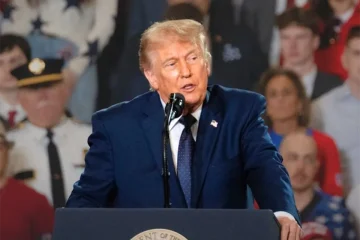
The proposal is a first step toward fulfilling one of President Joe Biden’s longstanding campaign promises. But before it can take effect, the rule will have to go through a public comment period, expected to conclude on January 17, just days before President-elect Donald Trump takes office. While many executive actions taken by the Biden administration will likely be overturned or ignored under Trump, opinions in conservative circles about the subminimum wage for people with disabilities are mixed — and the disability community may very well see progress on the issue under a Republican president and Republican-controlled Congress.
The regulation’s advancement may depend on Trump’s pick for Secretary of Labor, Lori Chavez-DeRemer. During her time in Congress, no legislation on disabled subminimum wage made it to a vote, so her position is unclear. Multiple sources who work on disability policy on the Hill noted that Chavez-DeRemer wasn’t opposed to ending the practice, nor did she hold especially strong beliefs on the issue, and they see a real possibility for progress under her leadership. Chavez-DeRemer could not be reached for comment.
In Congress, Republicans like Rep. Cathy McMorris Rodgers of Washington and Sen. Steve Daines of Montana have been the biggest opponents of subminimum wage. For McMorris Rodgers, the issue is personal: Her son, Cole, has Down syndrome and she has spoken in interviews about the importance of including people with disabilities in society. Others, like Sen. Tom Cotton of Arkansas, are vocal supporters of disabled subminimum wage because they see it as a way to ensure more people can still work, even if they can’t get jobs at market rates.
“There isn’t much on the record indicating what the Trump administration might do,” said Rachel Barkley, director of Able Americans, one of the only conservative think tank projects dedicated entirely to disability policy. It is housed within the National Center for Public Policy Research, one of many conservative organizations that contributed to the development of Project 2025.
Barkley sees opposition to subminimum wage for people with disabilities as a conservative issue, albeit a minor one.
“I think, first and foremost, you look at the dignity of the individual, which is a core conservative principle. When people talk about the right to life, for example, you look at the dignity of the whole person and equal rights under the law. We’ve got to have equality under the law for everyone, no exceptions for people with disabilities,” she said.
In August, Able Americans released a report on conservative approaches to disability policy that did not take a position for or against subminimum wage. When asked why, Barkley responded that fewer people are entering disabled subminimum wage workplaces and the workforce is aging. The impacted population is small and if it keeps shrinking, the issue may simply become moot. In 2010, around 300,000 disabled workers were legally receiving a subminimum wage, according to a report from the Federal Government Accountability Office. According to the same report, in 2019, there were 122,000 disabled subminimum wage workers. In 2024, an estimated 37,000 disabled subminimum wage workers remain.
“That’s 0.006 percent of the entire disabled population in the U.S. I think there are larger employment issues such as flexibility in the workplace and wraparound services like transportation and health care that need to be addressed when we think about how to help people with disabilities enter, stay and advance in the workplace,” she said.
Barkley previously worked as senior staff for McMorris Rodgers and was involved in the congresswoman’s efforts to ban the practice. She feels that the end of disabled subminimum wage is inevitable.
“Today, if you have a child with a disability, they are integrated in their education when they’re a young child all the way through and seen as part of the community. Cultural views have really changed expectations for work in the labour market for people with disabilities,” Barkley said.
Ordinary conservatives are also split on the issue if they are aware of it at all. It is not possible to know how many support or oppose disabled subminimum wage due to lack of polling. However, conservatives who have disabilities themselves may be more likely to oppose it.
Maryann Denning, 67, has been part of a push to end the practice in Ohio. Over a dozen states have passed legislation phasing out the program. Ohio is not yet one of them.
Denning has been blind since birth and while she never worked in a subminimum wage environment, she has friends from school who did. She considers the issue not only about human dignity but about equality of opportunity and the desire for less government spending.
“I think that my goal is for any disabled person who wants to be employed to have that opportunity. If those of us with disabilities are fully employed, then we become tax-paying citizens. We become more able to participate in the American Dream,” Denning said.
She also pointed out that if people with disabilities make more money themselves, they will have less need for government support.
“I believe we should work to get as many people off of government benefits as much as we can,” she said.
Shelbi Hindel, 61, another blind advocate in Ohio opposed to disabled subminimum wage, acknowledges that many of the people she works with on the issue are more liberal or progressive, but she doesn’t see that as a barrier or contradiction to her beliefs.
“I feel like my religious beliefs inform my worldview more,” Hindel said.
Denning and Hindel were split on whether they believe a second Trump administration will advance regulations and legislation to end disabled subminimum wage.
“Some of the things that Trump has said in the past about people with disabilities have been very negative. I don’t know what he’s ultimately going to do,” Denning said.
Hindel thought Trump just needed to be more informed on the issue.
“I think he’s got a compassionate heart, but I think that it has to be brought to his attention. I don’t think this is going to be intuitive to him. He may not even realize people are being paid a subminimum wage,” Hindel said.