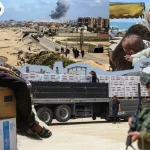
FOR once, hundreds of thousands of Palestinians—spared from the devastation caused by US-supplied Israeli tanks, drones, and automatic gunfire—are flocking back to their former neighbourhoods.
Everything has been lost in almost 16 months of sheer annihilation, characterized by the death of more than 47,000 Palestinians, including approximately 19,000 children, along with scores of journalists, media workers, paramedics, doctors, and UN employees. Nothing and no one was spared.
The remnants of Gaza alone are enough to trigger waves of personal and collective anxiety, endless fear of potential siege resumption, wanton destruction, and apparent international indifference. Traumatized children and their relatives, who have lost loved ones during what South Africa and other nations describe as genocide, will remain mentally scarred for the rest of their lives.
The much-anticipated truce between Israel and Hamas, heavily sponsored by the US, continues to hold despite worrying murmurings from Tel Aviv about a swift return to conflict. Israeli Prime Minister Benjamin Netanyahu, buoyed by Donald Trump’s potential return to the White House, knows the new Washington administration could be a license to act with impunity in the occupied territories and throughout the Middle East.
Nonetheless, the people of Gaza are sighing with relief, while remaining cognizant of the lingering threat posed by the current Israeli government.
South Africa has stood head and shoulders above other nations in defending and protecting the beleaguered Palestinians, particularly those in Gaza who remain trapped under the rubble of destroyed towns and villages.
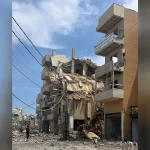
The initial pause in bombardment, triggered by the planned return of Israeli hostages kidnapped by Hamas fighters during their October 7, 2023 operation, was initially earmarked to last at least 42 days. The UN estimates that last month alone, “69% of the buildings in Gaza, including some 245,000 homes, were damaged or destroyed” by the Israeli Defense Force (IDF). For many Palestinians, the memory of “home” is now only a picture of heaps of rubble.
What concerns peace-loving nations is that despite the ceasefire that took effect on January 19, the IDF continues to breach it under the pretext of “emerging threats”. The IDF is already wreaking havoc in Jenin, in the occupied West Bank, where dozens of people were killed in deadly raids on a refugee camp this week, triggering mass displacement.
As peace seemingly looms in Gaza, the Netanyahu regime appears unable to stop. They have found—in their opinion—an acceptable excuse to start a new operation elsewhere, ensuring Palestinians know no peace.
The international community remains incapable of intervention. History will surely judge them harshly. Palestinians feel abandoned, forgotten by civilization. When it comes to Palestinian statehood and the two-state solution, the interests of the powerful consistently supersede those of the weak and vulnerable.
Palestine epitomizes the darker side of Western civilization. US hegemony reveals numerous fault lines, and the Palestinian issue has exposed the dangers of global power centralization.
As Trump continues to assert his administration’s influence, he would do well to demonstrate empathy by “showing mercy” to the Palestinians, as one bishop implored. During his inauguration, Trump expressed a desire to be remembered as a man of love and peace. The Palestinian question provides him the perfect opportunity to “walk the talk,” as Shakespeare observed: “By their actions shall ye judge them.”
*Abbey Makoe is Founder and Editor-in-Chief: Global South Media Network.