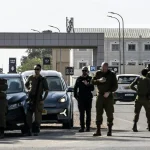
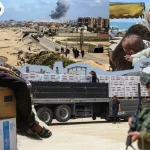
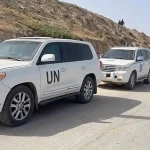
A freeze on aid entering the Gaza Strip, imposed by Israel last week, means once again tons of urgent medical supplies and medicines are stuck at the border, with delivery uncertain.
However, supplies are only one part of the picture, and their usefulness is limited without trained healthcare workers who know how to treat and care for patients.
Healthcare workers are the most critical component of any health system. Despite being protected under international law, they have been killed and injured at alarming rates in Gaza since October 7 2023.
There is also growing evidence of inhumane treatment and abuse of healthcare workers in Israeli detention. This has serious implications for the health of Palestinians, in both the short and long term.
What is the state of the healthcare system?
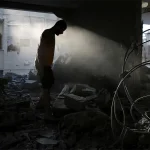
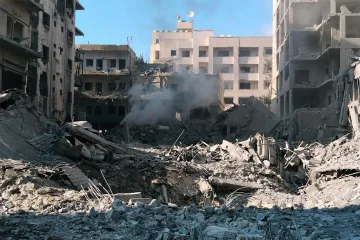
The health system in the Gaza Strip is in ruins. The Israeli Defence Force has carried out at least 670 attacks on health services and facilities since October 7 2023.
The most recent World Health Organization update in February reported only 50% of hospitals were partially functional, and 41% of primary healthcare facilities (for example, general practice clinics and pharmacies) were functional.
The latest report by the United Nations Relief and Works Agency for Palestine indicates only four out of the 22 health centres it runs are operational.
This widespread and systematic destruction of health infrastructure and equipment puts health professionals and their patients in immediate danger. Shortages of medical supplies and a lack of reliable electricity and water make it harder for healthcare workers to provide care.
What about health-care workers?
More than 1,000 healthcare workers – including nurses, surgeons and other clinicians, paramedics, pharmacists and technicians – have been killed in Palestinian territories in the last 17 months, according to estimates by the United Nations and Palestinian monitoring group Healthcare Workers Watch.
In September last year, a UN inquiry found Israeli security forces have deliberately killed, wounded, arrested, detained, mistreated and tortured medical personnel and targeted medical vehicles.
The latest report from Healthcare Workers Watch documents 384 cases of unlawful detention of healthcare workers in Palestine since the current war began, 339 of them from Gaza.
Of these, 96 have provided testimonies of inhumane treatment. At least 185 are known to remain in detention and 24 are missing after hospital invasions.
Physicians for Human Rights Israel and The Guardian have also documented testimonies of medical personnel released from Israeli detention. Many say they were detained while carrying out medical duties.
They report being subjected to interrogations without legal representation, medical neglect and starvation, abuse and torture.
One senior consultant surgeon, Dr Issam Abu Ajwa, told journalists from The Guardian and Arab Reporters for Investigative Journalism he was arrested while performing surgery and then detained for months without charge.
He alleges prison guards were given instructions to deliberately damage his hands: “They said they wanted to make sure I could never return to work”.
The Israeli Defence Forces (IDF) did not respond to the individual allegations but told The Guardian that “suspects of terrorist activities” have been arrested and detained during fighting in the Gaza Strip. In a statement, the IDF said: “Those who are not involved in terrorist activity are released back to the Gaza Strip as soon as possible”.
The UN High Commissioner for Human Rights Volker Türk has said Israel’s claims hospitals are being used for military purposes are vague, unsubstantiated and “in some cases, they appear to be contradicted by publicly available information”.
What does this mean for people in Gaza?
Before October 7, Gaza’s health system was already unable to meet the needs of its population. The escalation of those needs due to the bombardment and reduced sanitation in a shattered health system is catastrophic.
Losing health-care workers – whether they are killed, injured or incarcerated – further depletes an overburdened system. As a result, ordinary people have reduced access to skilled and qualified personnel. And so do junior medical staff, meaning they miss out on opportunities to learn from the experience of senior staff.
All residents of Gaza, including healthcare workers and their families, face serious threats to their health. A lack of adequate sanitation, nutritious food and safe water compounds other issues, such as increased risk of respiratory and diarrhoeal diseases, as well as complications during pregnancy and birth.
The UN estimates 50,000 women are currently pregnant in the Gaza Strip, with about 5,500 due to give birth in the next month. About 1,400 of these will require a caesarean section.
What about the long term?
Israel’s freeze on humanitarian aid, and the threat of resuming aerial bombardments, make the planning and delivery of health services increasingly difficult.
In a population of 2.1 million, there are large unmet needs from pre-existing conditions. The UN estimates that 45,000 people in Gaza have heart disease, 650,000 have high blood pressure, more than 2,000 are diagnosed with cancer each year and more than 485,000 have mental illnesses.
Many more diseases will emerge in the aftermath of war. We have already seen a resurgence of polio in Gaza.
Without enough health staff, there is reduced capacity for public health surveillance and control – for example, routine screening services and immunisation programs – and this increases the risk of disease outbreaks.
Health workers also play a vital role in training the next generation of health professionals. Disrupting this chain makes it harder to rebuild the health workforce and the health system more generally.
The impacts of war can’t simply be calculated in terms of fatalities, injuries and damaged healthcare centres or facilities.
What’s also damaged is a shared commitment to humanitarian principles and respect for human rights and international law.
Tania King, Associate Professor in Social Epidemiology, The University of Melbourne;
Fiona Stanley, Perinatal and Pediatric Epidemiologist; Distinguished Professorial Fellow, The Kids Research Institute Australia;
Guy Gillor, Honorary Fellow, School of Population and Global Health, The University of Melbourne; Rob Moodie, Professor of Public Health, The University of Melbourne,
and
Tilman Ruff, Honorary Principal Fellow, School of Population and Global Health, The University of Melbourne
- This article is republished from The Conversation under a Creative Commons license. Read the original article.