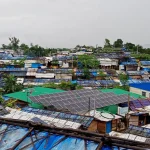
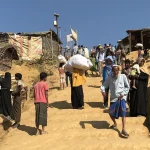
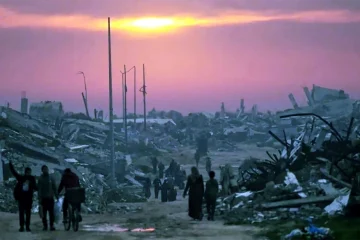
THE United Nations and humanitarian partners have issued a desperate plea to the global community not to forget the more than 1.18 million Rohingya refugees who remain trapped in Bangladesh as funding collapses to crisis levels, threatening to strip life-saving services from one of the world’s largest refugee populations.
The warning comes as the Rohingya humanitarian crisis enters its ninth year, with refugees growing increasingly vulnerable to natural disasters, disease, and desperation amid catastrophic declines in global support.
The UN and its partners launched a scaled-down 2026 Joint Response Plan seeking $710.5 million to meet the most critical needs of Rohingya refugees in Cox’s Bazar camps and on Bhasan Char, plus 307,000 vulnerable Bangladeshi host community members.
The appeal represents a 26% reduction from 2025, reflecting severe global humanitarian pressures and competing crises worldwide. Yet even this reduced target faces a critical $610 million shortfall – the bare minimum required for life-saving and protection interventions.
“Population numbers and humanitarian needs are rising dramatically, while available funding declines amid global humanitarian pressures and competing crises,” the UN warned.
Bangladesh Home Minister Salahuddin Ahmed has made urgent appeals to international donors to resume aid, warning that the drastic decline in global assistance is endangering one of the largest refugee groups globally.
“Bangladesh cannot bear the responsibility of housing such a large number of people without global assistance,” Ahmed stated during meetings with UN officials in early May.
The minister emphasized that the Rohingya crisis must not be overshadowed by other global emergencies, urging the United Nations to keep the issue high on the agenda of international forums.
Children Pay Highest Price
More than half of the refugee population is children — approximately 590,000 young lives — with over 235,000 refugee children estimated to be out of school, exposing them to child labor, trafficking, and gender-based violence.
The funding crisis has already forced severe cuts:
- Food assistance was reduced by 50% after the United States slashed its budget allocation
- World Food Programme cuts in April affected hundreds of thousands of refugees
- Health services, education programs, and cooking fuel distribution are already scaling back
In April 2026, an overcrowded boat carrying Rohingya seeking refuge in Malaysia sank while departing from Cox’s Bazar, killing at least 250 people — a tragic indicator of growing desperation.
UN High Commissioner for Refugees Filippo Grandi recently completed a four-day visit to Bangladesh, visiting the Kutupalong refugee camps near Cox’s Bazar, where he witnessed firsthand the highly challenging circumstances refugees face.
“With the passing of time and in the absence of a solution for Rohingya refugees for now, mobilizing resources remains both challenging and a priority,” Grandi said, explicitly urging partners not to forget Rohingya refugees.
The refugees themselves have made their position clear: “Rohingya refugees in Bangladesh do not want to rely on humanitarian aid forever; they want to return to Myanmar when they can do so voluntarily, safely and with full rights and dignity. Until then, the world cannot forget their plight.”
Both Bangladesh and UNHCR maintain that safe, dignified and voluntary repatriation of the Rohingya remains the only durable solution to the crisis.
However, the prerequisites for ensuring safe, voluntary, and dignified repatriation are currently lacking in Myanmar, where ethnic cleansing by Myanmar authorities in August 2017 forced approximately 750,000 Rohingya to flee. Beginning in early 2024, more than 100,000 additional Rohingya fled to Bangladesh due to the ongoing conflict between Myanmar’s army and the Arakan Army.
Bangladesh has welcomed 150,000 newly arrived Rohingya refugees over the last 18 months, bringing the total to over 1.2 million refugees.
“With the acute global funding crisis, the critical needs of both newly-arrived refugees and those already present will be unmet, and essential services for the whole Rohingya refugee population are at risk of collapsing,” UNHCR warned.
Call for Sustained Support
UNHCR Representative in Bangladesh Johannes van der Klaauw emphasized the urgency: “The Rohingya response is facing a severe funding crisis, illustrated by two recent cuts in food assistance. There is an urgent need to invest in collective efforts to allow Rohingya to become self-reliant as they cannot, and do not wish to, remain dependent on humanitarian aid.”
The crisis highlights how ongoing displacement situations can become secondary concerns in international politics despite growing humanitarian needs — a systemic failure putting more than one million individuals, including half a million children, in jeopardy.
As the key question facing the over 1.18 million Rohingya in Cox’s Bazar concerns whether their status will be considered an emergency situation or simply an unavoidable reality, UNHCR and partners make their plea clear: the world must not forget.