IN Gaza, ongoing Israeli military operations and the aid blockade have continued to add to daily fears and hardships confronting those in the devastated enclave, the UN Mine Action Service, UNMAS, has said.
“What people are doing currently right now is they’re scared,” said Luke Irving, Chief of the Mine Action Programme in the Occupied Palestinian Territories (OPT). “They are concerned that word for their safety, they’re focusing on that day-to-day, survival, if you like, on how they would stay safe, how they stay fed, how they stay watered. This is the reality in Gaza at the moment.”
Escalating Israeli bombardment of Gaza between 3 and 8 April has killed 287 Palestinians and injured 912, according to Gazan health authorities.
Between 7 October 2023 and 8 April 2025, the same authorities say that at least 50,810 Palestinians have been killed and 115,688 Palestinians injured.
The UN Humanitarian Affairs Office (OCHA) meanwhile reported that rockets were fired from Gaza on 3 and 6 April towards Israel including one which struck the city of Ashkelon, injuring at least 12 Israelis.
Aid workers continue to be killed in Gaza; since 7 October 2023, the number has risen to 412. In recent weeks, Israeli forces targeted and killed 14 staff on duty in Rafah from the Palestine Red Crescent Society, Palestinian Civil Defence and one worker from the UN Palestine refugee agency, UNRWA, prompting widespread condemnation from UN senior officials.
“It is a very, very, very challenging time and evidence would show me that we’re not protected at the moment,” said Luke Irving, Chief of the Mine Action Programme in the Occupied Palestinian Territories (OPT).
Speaking to UN News, he appealed for the protection of colleagues trying to help others in an active combat zone “because the people need it, civilians need it”.
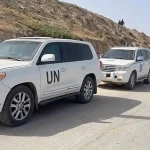
UNMAS provides specialist support to keep humanitarians safe and its teams were doing so while carrying out an assessment mission after a UN-marked guesthouse was hit in Deir Al-Balah, central Gaza last month.
“On 19 March, they were doing exactly that. They were reviewing a UN-notified building that was hit the night before and they were checking it was safe from any unexploded ordnance and people could return to that structure. Unfortunately, at some point, there was an incident when they were carrying out that mission, which was an explosive weapon and it caused a death and injury to UN personnel.”
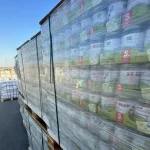
It is now five weeks since Israeli authorities stopped all commercial and humanitarian relief supplies from reaching Gaza.
Medicines and other medical provisions “are rapidly running out”, with blood units and other supplies for maternal and child health at critically low levels, UN aid teams report.
“There has been no humanitarian aid getting in and the situation is becoming – already is dire – it’s becoming increasingly dire and serious,” Mr. Irving said.
“It’s been a blockade, so no humanitarian aid whatsoever is getting in. Also, we’re very limited on movements because of the risk it poses to go out and do our missions, et cetera, this is across the UN agencies.”
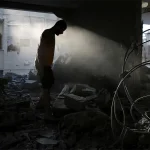
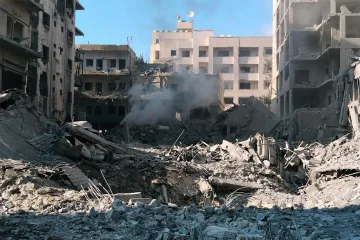
Unexploded weapons remain a major threat across Gaza and have added to the hardships caused by the total ban on relief entering the Strip.
“We come across, you know, rockets, bombs, grenades, all these types of items that fail to function when they are used in conflict,” Mr. Irving said. “We’ve got these different ways that unexploded ordnance will materialize. It’ll be very, very important when we start doing rubble removal, reconstruction, recovery, that we can locate these items, to warn people – which we can do now – but down the line we want to destroy these munitions. We want to dispose of these munitions. We want to get rid of them.”
Making Gaza safe is crucial if the enclave’s people are to return to their fields, the UNMAS officer said: “Sixty, 70 per cent, I understand, of Gaza’s exports before the conflict was agriculture. So, obviously, there’s a lot of that activity going on again in peacetime, in ceasefire time. So, when they return to the fields there could be unexploded ordnance in those fields; they need to understand that risk and understand that they shouldn’t be touching it.”