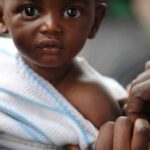
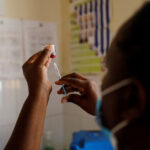
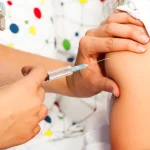
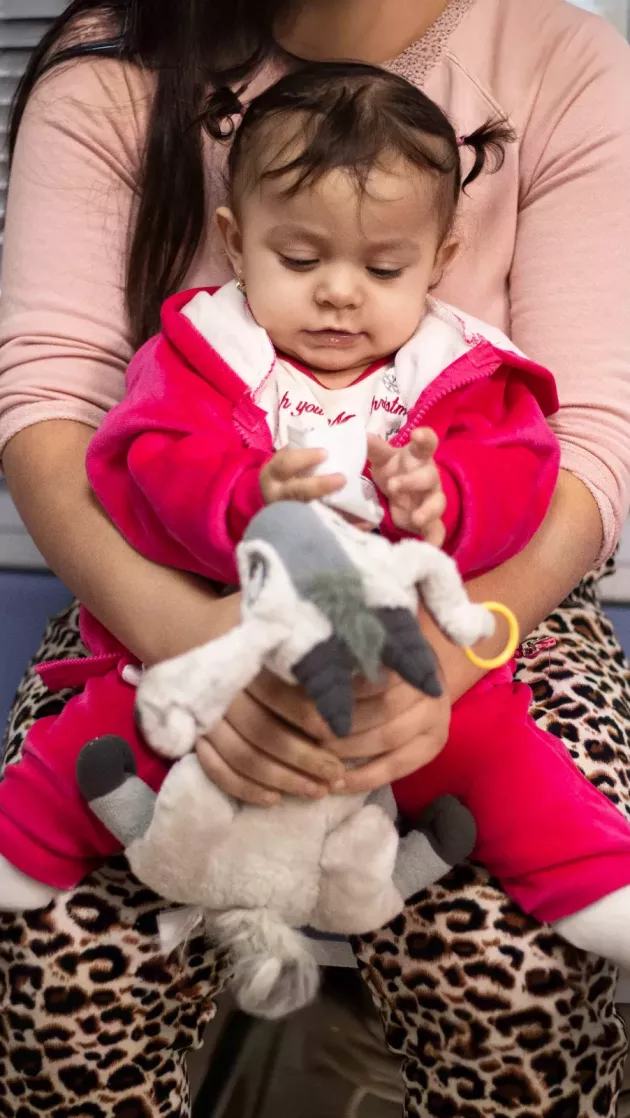
KHRYSTYNA, a mother of two, lives in Zakarpattia, Ukraine. Her youngest daughter, Mariana, recently turned one. At her local primary healthcare centre, she received an important free gift – the combined vaccine against measles, mumps and rubella, serious infectious diseases that can be prevented through timely immunisation.
“I had no doubt that Mariana needed to be vaccinated,” s“We followed the immunization schedule with my older child as well. But back then, I was very anxious about how my child’s body would react, and I didn’t have anyone around who could answer all my questions.”
This time, family nurse Lesia Tytychko was waiting for Khrystyna and Mariana at the health centre. She knows the family well since she regularly visits them at home, as part of a joint programme run by Ukraine’s Ministry of Health and UNICEF.
Ukraine’s ‘Home Visiting Programme’ provides families with care from nurses like Lesia directly to households. The nurses offer crucial parenting support for both children and their parents in a familiar and comfortable home setting.
UNICEF

UNICEF

UNICEF
“I always pay special attention to immunisation – providing details about each vaccine and answering parents’ questions about possible reactions,” says Lesia. “This helps to dispel doubts and fears, ensuring children are protected from serious illness.”
Each home visit lasts around an hour and a half. During this time, the nurse discusses immunisation, assesses the child’s physical health and development, and offers guidance on breastfeeding and the introduction of solid foods. These visits also provide valuable support for doctors.
“I only have 20 minutes per appointment, which often isn’t enough to explain the importance of immunisation properly,” says Ruslana Symchyna, a paediatrician at a primary healthcare centre in Mukachevo. “However, I’ve noticed that after the nurse’s visits, parents are far more informed about how to protect their children from infectious diseases.”
The ‘Home Visiting Programme’ supports children from birth to four years of age. During this period, babies are particularly vulnerable to infections, and parents often have many questions about childcare, nutrition and health. Thanks to the guidance of family nurses, parents can receive reliable information and timely assistance, contributing to the healthy and safe development of their children.

UNICEF


The ‘Home Visiting Programme’ was adopted as a core part of the national healthcare system at the start of the year and is implemented by the Ministry of Health in partnership with UNICEF, with additional support from the Government of Japan, the German Federal Ministry for Economic Cooperation and Development (BMZ) via the German Development Bank (KfW), and Citi.
The programme is currently being implemented in 15 regions across Ukraine. Nurses from nearly 250 primary healthcare facilities are conducting home visits for over 18,000 children under the age of four, providing support to at least 30,000 parents and caregivers.