“ALL we see is a desperate need at all times,” declared Dr. Margaret Harris, World Health Organisation spokesperson, her voice carrying the weight of countless testimonies from field workers across Gaza. “In the health sector, we’ve not seen aid diversion to Hamas. These accusations simply don’t match reality.”
As Israeli strikes across Gaza claimed at least 64 more lives, UN officials stood firm against claims that humanitarian assistance was being redirected to Hamas militants—allegations being used to justify a crippling blockade that has lasted more than ten weeks.
“If you had been in a coma for the last three years and you woke up and saw this for the first time, anyone with common sense would say this is insane,” said Jens Laerke, spokesperson for the UN aid coordination office. His words cut through diplomatic language, laying bare the humanitarian catastrophe that has become Gaza’s daily reality.
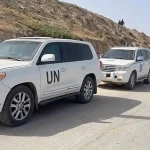
Outside Gaza’s sealed borders, 9,000 truckloads of vital supplies wait in limbo—over half containing food that could provide months of sustenance for the enclave’s 2.1 million desperate residents. The inventory reads like a shopping list for survival: educational supplies, children’s clothing, rice, wheat flour, beans, eggs, pasta, tents, water tanks, breastfeeding kits, and basic hygiene items.
“I ask you,” Laerke challenged, “how much war can you wage with this?”
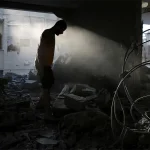
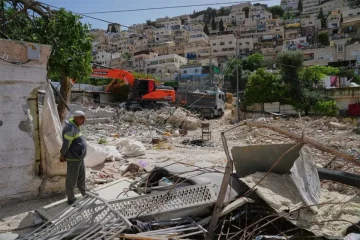
Inside Gaza, the Indonesian hospital in the north stands as a stark symbol of the territory’s devastation, reduced to “just a shell” after 19 months of war. Medical teams work desperately to treat the wounded with virtually nothing at their disposal, lacking even the most basic supplies.
The UN has implemented a stringent system of checks to ensure aid reaches its intended recipients. Supplies are tracked in real time, with regular reports to donors making significant diversion highly unlikely. Even if some diversion were occurring, Laerke emphasised, “it’s not at a scale that justifies closing down an entire life-saving aid operation.”
Meanwhile, the human cost mounts. More than 53,000 people have perished since the war began following Hamas-led attacks on Israel on October 7, 2023. Malnutrition—previously unknown in Gaza—now stalks the population with the specter of famine close behind.
Over 10,000 patients, including approximately 4,500 children, urgently need medical evacuation for specialized care outside Gaza. Only 255 patients have been evacuated since March 18, leaving thousands in desperate need.
The attack on the European General Hospital in Khan Younis this week provided a horrifying example of the dangers facing medical facilities. “That first bombing destroyed two of the buses that we’d assembled to take children,” Dr. Harris recounted. The planned evacuation turned to chaos.
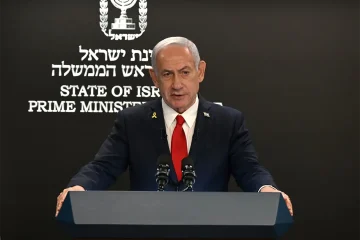
Israeli authorities have proposed an alternative aid distribution platform that would restrict assistance to only certain parts of Gaza, excluding the most vulnerable. After 14 meetings about this scheme, UN officials remain deeply concerned. “It makes starvation a bargaining chip,” Laerke stated bluntly.
UN aid official Tom Fletcher recently called for immediate international pressure to stop what he termed Gaza’s “21st century atrocity”—a call echoed by OCHA’s Laerke: “The situation as it has developed now is so grotesquely abnormal that some popular pressure on leaders around the world needs to happen. We know it is happening, I’m not saying that people are silent, because they are not. But it doesn’t appear that their leaders are listening to them.”
As nightfall brings no respite from violence, the people of Gaza continue to wait for food, for medicine, for safety, for the world to act. Nine thousand trucks of hope sit motionless at the border, while inside, a population suffers what humanitarian workers describe as an entirely preventable catastrophe.
The question remains: how many more must die before the aid flows freely?