THE world responded swiftly and with deep concern following Israel’s dramatic military strike on Iran on Friday, June 13, 2025. The unprecedented attack, which targeted Iran’s nuclear facilities and senior military leaders, immediately drew a chorus of condemnation, calls for restraint, and urgent diplomatic activity across capitals.
United States
The United States distanced itself from the Israeli operation. Secretary of State Marco Rubio emphasised that Washington was not involved and warned Iran against retaliating against U.S. interests or personnel in the region. President Donald Trump convened an emergency cabinet meeting, and U.S. embassies across the Middle East were placed on high alert.
Europe
European leaders expressed grave concern about the potential for a wider conflict. German Chancellor Friedrich Merz reiterated Israel’s right to self-defence but urged both sides to avoid further escalation, warning of “catastrophic consequences” for the region. Germany also heightened security at Jewish and Israeli institutions. UK Prime Minister Keir Starmer and French President Emmanuel Macron echoed calls for restraint, with the European Union urging an immediate return to diplomacy.
Arab States
Arab governments swiftly condemned the Israeli strikes. Saudi Arabia, the United Arab Emirates, Qatar, and Oman denounced the attack as a violation of Iranian sovereignty and warned that further escalation could destabilise the entire region. These nations, some of which host significant U.S. military presences, expressed concern about being drawn into the conflict and called for urgent international mediation.
Asia-Pacific and Others
Australia and other international actors voiced grave concern over the risk of a broader Middle Eastern war and called for dialogue and de-escalation. China and Russia also condemned the Israeli action and called for an emergency session of the United Nations Security Council.
The Attack: What Happened?
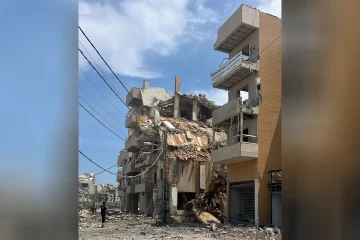
In the early hours of June 13, Israel launched “Operation Rising Lion,” a massive air campaign against Iran. Over 200 Israeli fighter jets struck more than 100 targets, including the Natanz nuclear enrichment facility and sites in Tehran. The operation reportedly killed Hossein Salami, commander of Iran’s Islamic Revolutionary Guard Corps (IRGC), and several senior nuclear scientists.
Iranian Response
Iran responded by launching more than 100 drones toward Israel, which the Israel Defence Forces (IDF) said were being intercepted by air defences. Iran’s Supreme Leader, Ayatollah Ali Khamenei, vowed “severe punishment” for Israel, raising fears of further escalation.
Regional Impact
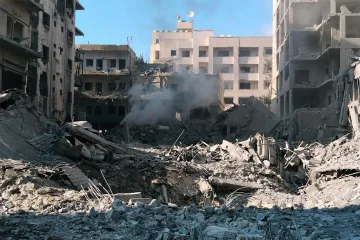
- Damage: The Natanz facility sustained damage, though no radiation leak was reported. Explosions in Tehran and other cities caused significant infrastructure and residential damage.
- Casualties: Several top Iranian military and scientific leaders were killed.
- Civilian Disruption: Airspace closures and flight cancellations rippled across the Middle East.
The Road Ahead
The world remains on edge as Israel signals its campaign may continue and Iran promises retaliation. The risk of a broader regional conflict is significant, with global leaders urging both sides to step back from the brink and return to negotiations. The fate of planned U.S.-Iran nuclear talks, set for this weekend in Oman, is now uncertain.
Summary Table: International Reaction and Key Events
| International Reaction | Details |
| U.S. | Not involved; focus on protecting U.S. interests; emergency cabinet meeting |
| Europe | Support for Israel’s self-defense, but strong calls for restraint and diplomacy |
| Arab States | Condemnation of Israeli strikes, warnings against escalation |
| Asia-Pacific, China, Russia | Support for Israel’s self-defence, but strong calls for restraint and diplomacy |
| Event/Impact | Details |
| Israeli Strikes | 200+ jets, 330+ munitions, 100+ targets; Natanz damaged, senior leaders killed |
| Iranian Retaliation | 100+ drones launched at Israel; air defenses intercepting threats |
| Regional Disruption | Damage in Tehran, disrupted air travel, heightened security across the region |
The world watches anxiously as the crisis unfolds, hoping for restraint and a return to diplomacy amid fears of a wider war.