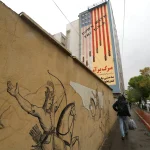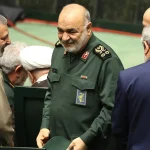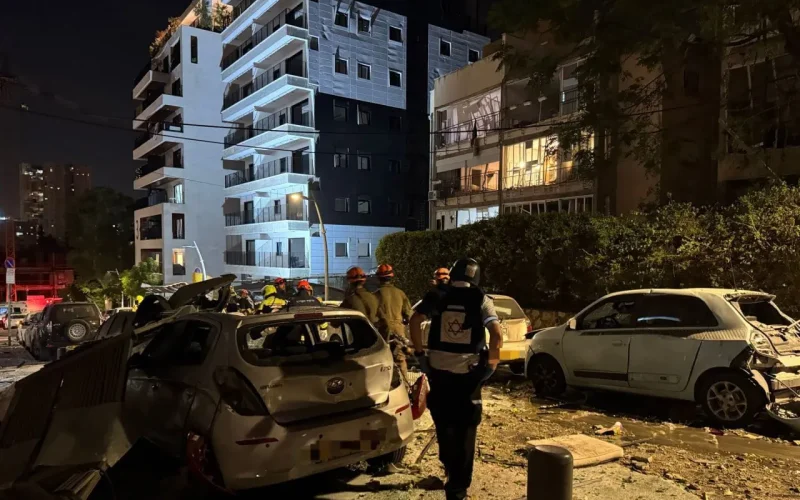
THE dawn of June 15, 2025, shattered any hopes for de-escalation in the Middle East as Iran unleashed its most devastating retaliation yet against Israel. Over 150 ballistic missiles streaked across the sky, accompanied by more than 100 drones in what Tehran dubbed “Operation True Promise III” – a response to Israeli strikes on Iranian nuclear facilities and senior military officials.
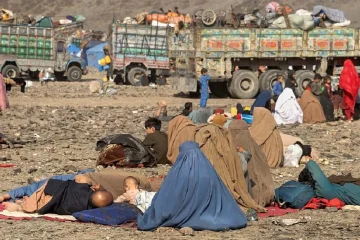
Among the most vulnerable victims of this escalating conflict are the thousands of innocent bystanders who found themselves in the wrong place at the wrong time. According to Israel’s Ministry of Tourism, approximately 40,000 tourists are now stranded in the country, their vacation dreams transformed into a nightmare of uncertainty and fear.
Sarah Chen, a teacher from Singapore visiting Jerusalem’s Old City, represents the plight of many. “We came here for a spiritual journey,” she said, sheltering in her hotel lobby as air raid sirens wailed overhead. “Now we’re checking flight cancellation notices every hour, wondering if we’ll ever get home.”
Airlines have suspended all flights to and from Israel until further notice, leaving travellers with an agonising choice: wait out the conflict in a war zone or seek expensive alternative routes through neighbouring countries. Some desperate tourists are paying thousands of dollars extra for indirect flights through Jordan or Cyprus, while others hunker down in hotels, their savings dwindling with each passing day.
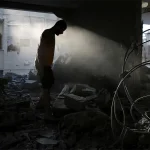
The human toll extends far beyond stranded tourists. In Tehran, Iranian media reports that at least 60 people have died in Israeli strikes, including 20 children killed when residential areas came under attack. Families huddle in makeshift shelters, their daily routines shattered by the constant threat of incoming missiles.
Meanwhile, in Israel, cities like Jerusalem and Tel Aviv have become testing grounds for civil defence systems. Dozens have been injured in missile attacks, and millions more live under the psychological strain of repeated air raid sirens. Schools remain closed, public gatherings are banned, and the government has declared a state of maximum alert.
“My daughter asks me every morning if it’s safe to go outside,” says David Goldstein, a father of two in Tel Aviv. “How do you explain to a seven-year-old that grown-ups are fighting with rockets?”
Economic Devastation
The economic ripple effects of this conflict extend far beyond the immediate combat zones. Israel’s military response has already cost an estimated $1.5 billion, straining the nation’s defence budget. Domestic panic buying has surged, with supermarkets reporting a 300% increase in customer traffic as families stockpile essential supplies. The Israeli shekel has weakened significantly against major currencies.
Iran faces even more severe economic consequences. Israeli strikes have targeted critical infrastructure, including the Pars South gas field – one of the world’s largest natural gas reservoirs – and multiple oil refineries. The damage threatens Iran’s energy sector, which forms the backbone of its economy.
In a desperate move, Iranian lawmakers are considering closing the Strait of Hormuz, the narrow waterway through which 20% of the world’s petroleum passes. Such an action would send shockwaves through global energy markets, potentially pushing oil prices to unprecedented levels.
Global Tremors
The conflict’s impact has already reverberated through international markets. Oil prices have surged by over 10%, reaching levels not seen in months. Stock markets in the United States, Europe, and Asia opened lower as investors fled to safe-haven assets like gold and government bonds. Financial analysts warn that a prolonged conflict could push Israel’s total war costs to $120 billion, further destabilising the regional economy.
The Diplomatic Deadlock
Perhaps most troubling for long-term stability, the violence has completely derailed diplomatic efforts. Nuclear negotiations between Iran and the United States have ground to a halt, with Iran suspending indirect talks and threatening to reduce cooperation with international nuclear inspectors. The very mechanisms designed to prevent this escalation have become casualties of the conflict itself.
Dim Prospects for Peace
As the tit-for-tat strikes continue, prospects for peace appear increasingly remote. Both sides have painted themselves into corners with their rhetoric and actions. Iran’s leadership faces domestic pressure to respond forcefully to Israeli attacks, while Israel’s government argues that decisive action now is necessary to prevent a nuclear-armed Iran.
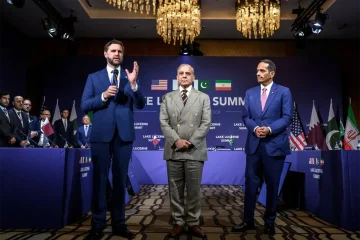
The international community’s calls for restraint have fallen on deaf ears. The United Nations Security Council has held emergency sessions, but geopolitical divisions have prevented any meaningful intervention. Regional powers like Saudi Arabia and Turkey have expressed concern about the conflict’s potential to engulf the entire Middle East, yet concrete steps toward de-escalation remain elusive.
The cycle of retaliation has taken on a life of its own. Each strike justifies the next, each casualty demands revenge, and each day of conflict makes the eventual path to peace more difficult to navigate. Trust, already scarce in the region, has evaporated entirely.
A Region Held Hostage
As the conflict enters its third day, the 40,000 stranded tourists serve as a stark reminder of how quickly regional stability can collapse. Their predicament – caught between cancelled flights and costly alternatives – mirrors the broader Middle East’s dilemma: trapped between escalation and an uncertain path to peace.
The human cost continues to mount on both sides. Children in Tehran and Tel Aviv alike fall asleep to the sound of air raid sirens. Families are separated by cancelled flights and closed borders. Economies that were already struggling now face the additional burden of war expenditures and damaged infrastructure.
Until leaders on both sides find the courage to break the cycle of retaliation, the region will remain hostage to this dangerous escalation. The 40,000 tourists desperately seeking a way home may be the lucky ones – at least they have somewhere else to go. For the millions of Israelis and Iranians who call this troubled region home, there is no alternative but to hope that wisdom will eventually prevail over vengeance.
The question that haunts the region is not whether this conflict will end, but how much more suffering it will take before that ending arrives.