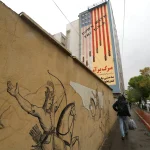
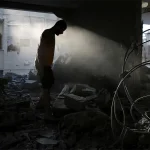
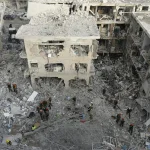
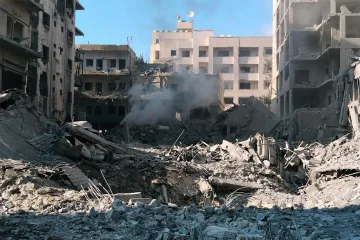
The world awakened Sunday to a fundamentally altered Middle East. In the pre-dawn hours, American B-2 stealth bombers delivered precision bunker-busting bombs to Iran’s most crucial nuclear facilities—Fordow, Natanz, and Isfahan—marking the first direct US military action against Iran’s nuclear program in decades. What began as Israel’s campaign against Iranian nuclear capabilities has now exploded into a direct US-Iran confrontation that threatens to reshape regional power dynamics and global security.
President Trump’s declaration that Iran’s nuclear enrichment facilities were “completely and totally obliterated” represents more than a tactical victory—it signals America’s willingness to abandon decades of diplomatic restraint. The strikes, which Trump hailed as a “spectacular military success,” have crossed a threshold that diplomats and military strategists have long warned against: direct superpower intervention in the Iran-Israel conflict.
Iran’s initial response reveals the calculated nature of its strategy even in the face of devastating losses. Foreign Minister Abbas Araghchi’s condemnation of the strikes as attacks on “peaceful nuclear installations” with “everlasting consequences” suggests Tehran is preparing for a measured but significant retaliation rather than immediate all-out war.
The Iranian leadership faces a critical strategic dilemma. A weak response risks emboldening further American action and undermining Iran’s regional credibility. An excessive retaliation could invite the full force of American military might—a confrontation Iran cannot win conventionally. Tehran’s most likely response will leverage its greatest strategic assets: regional proxy networks, asymmetric warfare capabilities, and economic pressure points.
The Strait of Hormuz: The Economic Weapon
Iran’s most powerful retaliatory tool remains its ability to threaten global energy supplies through the Strait of Hormuz, through which roughly 20% of the world’s oil passes daily. The closure is expected to send oil prices soaring and trigger global economic shockwaves. Iran has previously demonstrated its willingness to use this leverage, and current circumstances make such action more likely than ever.
The economic implications extend beyond energy markets. Iran’s extensive network of proxy militias across Iraq, Syria, Lebanon, and Yemen provides multiple avenues for retaliation against American and Israeli interests. These groups, battle-hardened from years of regional conflicts, offer Tehran plausible deniability while maintaining pressure on its adversaries.
Regional Proxy Networks: The Shadow War Goes Hot
Iran’s “Axis of Resistance”—comprising Hezbollah in Lebanon, various Iraqi militias, the Houthis in Yemen, and Syrian-based groups—represents decades of strategic investment now poised for activation. These proxies have already demonstrated their capabilities against American and Israeli targets, and the nuclear strikes provide justification for unprecedented escalation.
Hezbollah’s estimated 150,000 rockets and missiles pose an existential threat to Israel’s northern border. Iraqi militias have repeatedly targeted American bases and could intensify attacks on the roughly 2,500 US troops stationed in Iraq. The Houthis have already disrupted Red Sea shipping routes and could expand their targeting of commercial vessels and regional infrastructure.
The Nuclear Domino Effect
The destruction of Iran’s nuclear facilities carries implications far beyond the immediate military impact. Iran’s nuclear program represented not just weapons capability but national prestige and regional leverage. The program’s destruction fundamentally alters Iran’s position in regional power calculations and may force a complete strategic recalibration.
Tehran’s options for nuclear program reconstruction face significant obstacles. International sanctions, technological limitations, and the demonstrated American willingness to use force create a fundamentally different operating environment. Iran may be forced to either abandon nuclear ambitions entirely or pursue a more secretive, dispersed approach that could prove less effective but harder to target.
Global Security Implications: Beyond the Middle East
The ramifications extend far beyond regional boundaries. China and Russia, Iran’s key allies, face pressure to respond to American unilateral action. While neither power is likely to engage in direct military confrontation, they may increase support for Iran through economic assistance, advanced weapons systems, or diplomatic protection at international forums.
North Korea, watching American willingness to destroy nuclear facilities, may accelerate its own nuclear program or seek additional security guarantees from China. Other potential nuclear powers may reconsider the costs and benefits of nuclear development in light of demonstrated American preemptive capabilities.
The Diplomatic Vacuum
Perhaps most concerning is the apparent absence of diplomatic alternatives. Iran’s rejection of nuclear negotiations and Trump’s preference for military solutions have eliminated traditional off-ramps from escalation. Without diplomatic channels, both sides may find themselves locked into an action-reaction cycle that proves difficult to control.
The international community’s response will prove crucial. European allies, many of whom opposed American withdrawal from the Iran nuclear deal, face pressure to either support American action or risk transatlantic tensions. Regional partners like Saudi Arabia and the UAE find themselves caught between supporting American action against a regional rival and fearing Iranian retaliation.
The Path Forward: War or De-escalation?
The next 48-72 hours will likely determine whether this confrontation escalates into a broader regional war or finds some form of temporary stability. Iran’s response, Israeli actions, and American follow-through will establish new red lines and rules of engagement that could govern regional security for years to come.
Three scenarios appear most likely: Iran chooses limited retaliation through proxies while seeking face-saving diplomatic solutions; Iran escalates significantly, triggering additional American strikes and potential regional war; or Iran opts for long-term strategic patience, rebuilding capabilities while avoiding direct confrontation.
The stakes could not be higher. The Middle East stands at its most dangerous crossroads in decades, with the potential for miscalculation or uncontrolled escalation threatening not just regional stability but global economic security. What began as targeted strikes on nuclear facilities may well prove to be the opening chapter of a broader transformation in Middle Eastern power dynamics – one whose final pages remain unwritten but whose implications will echo across generations.
The world watches as Tehran calculates its response, knowing that the next move could determine whether diplomacy retains any role in resolving one of the most dangerous confrontations of the modern era.