IT was revealing this week to read reports of Benjamin Netanyahu’s meeting with Donald Trump (his third White House visit since Trump’s inauguration in January). There was no sense that the US president upped the pressure on the Israeli prime minister to soften Israel’s conditions in order to secure a ceasefire. Instead, the pair appears to have discussed the prospect of moving large numbers of Palestinians out of the Gaza Strip to countries that would, as Netanyahu put it, “give Palestinians a better future”.
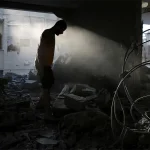
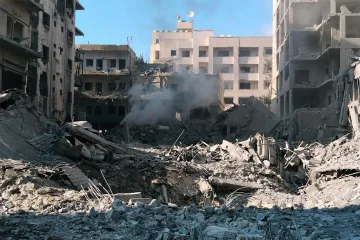
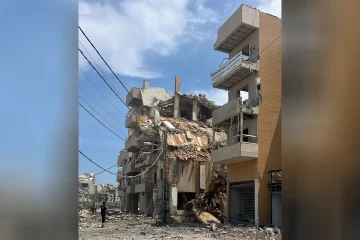
If Israel’s defence minister, Israel Katz, has his way, the future for those Palestinians who want to stay put does indeed look pretty bleak. And the 57,000 people who, according to figures collated by the Hamas-run Gaza health ministry, have lost their lives since the Israeli assault on Gaza began back in October 2023, have no future at all.
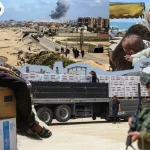
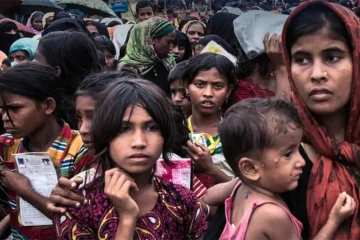
But the plan for the future of Gazan Palestinians that Katz unveiled this week will horrify many, too. It involves the construction of a “humanitarian city” at Rafah, close to the Egyptian border at the very southern end of the Strip. Under the plan, people entering the city will be searched for weapons and checked for affiliation with Hamas. Once in, they will not be allowed to leave, except to depart from Gaza altogether.
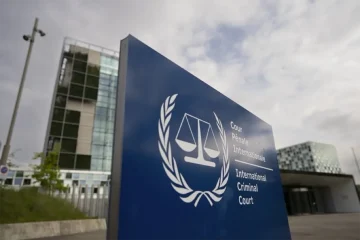
This immediately prompted critics to accuse the Israeli government of ethnic cleansing. James Sweeney, an expert in human rights and international law at the University of Lancaster, believes that, if Israel were to carry out Katz’s plan, there would be a strong case against political and military leaders for war crimes and crimes against humanity. He argues that the plan amounts at the very least to the forcible transfer of civilians prohibited under the Geneva Conventions and the Rome Statute, which underpins the International Criminal Court (ICC).
The snag, as Sweeney sees it, is going to be enforcing international law. While there is an ICC warrant out for the arrest of Netanyahu and his former defence minister, Yoav Gallant, the Israeli prime minister was able to visit Washington without fear of being apprehended. The US doesn’t recognise the ICC and, indeed, the prosecutor who issued the warrant against Netanyahu and Gallant is now subject to US sanctions.
Of course, what happens in Gaza tends to reverberate throughout the region. If hundreds of thousands of Palestinian citizens are moved out of Gaza, it’s likely to be to one of the neighbouring countries. When the idea of a Trump Riviera was first mooted earlier this year, the US president said the Palestinian population could be rehomed in Egypt or Jordan – something both those countries pushed back against with alacrity.
And the powerful Gulf States, which Trump was keen to woo as business partners when he made a tour of the region in May, are also deeply concerned about Israel’s conduct of its military campaign in Gaza. Geopolitics aside, their populations are broadly sympathetic to the Palestinian people, so a plan to force them out of their homes is unacceptable for Gulf leaders.
Scott Lucas, an expert in Middle East politics at University College Dublin, gives us a broader view of the region. He describes what he calls two “kaleidoscope moments” when one event has changed the entire region. The first was the Hamas attack of October 7. This brought to an abrupt end the process of normalisation of relations between Israel and Saudi Arabia. The second was the 12-day war between Israel and Iran, which has further isolated Israel. Lucas believes that for there to be any hope of regional stability and the furthering of Israeli relations with the rest of the region, the war in Gaza must end.
Ali Mamouri, a Middle East scholar at Australia’s Deakin University, doesn’t believe there’s much chance of this happening any time soon. Part of this is political: Netanyahu still depends on the far-right elements of his coalition represented by national security minister Itamar Ben-Gvir and finance minister Bezalel Smotrich. They remain steadfastly opposed to even a ceasefire and want to see Israel expel Palestinians by hook or by crook.
Also, by prolonging the war, Netanyahu can keep delaying his corruption trial (incidentally, Donald Trump has called for the charges to be dropped altogether).
And the idea of full statehood for Palestine remains anathema for Israel, as Netanyahu made clear this week talking with journalists after his meeting with Trump when he made clear his insistence that far from pulling Israeli troops out of Gaza, Israel would keep full control of all security matters there: “Now, people will say: ‘It’s not a complete state, it’s not a state.’ We don’t care,” he said.
Mansour concludes: “The coming weeks will reveal whether Israel chooses the path of compromise and coexistence, or continues down a road that forecloses the possibility of lasting peace.”
Europe must step up over Ukraine
Just as the picture remains bleak in Gaza, the prospects for peace remain very slim in Ukraine. Although given Donald Trump’s mercurial approach to foreign affairs, it’s also fair to say that anything is possible.
This week, the US president decided to recommence US arms supplies to Ukraine, having previously frozen military aid (although he insists his defence secretary, Pete Hegseth, did this, and that he was “blindsided” by the move). His relationship with Putin appears to have soured – for the present at least. He said: “We get a lot of bullshit thrown at us by Putin, if you want to know the truth. He’s very nice all of the time, but it turns out to be meaningless.”
And at the most recent Nato summit in The Hague on June 25, Trump put his signature to a declaration that Russia poses “long-term threat … to Euro-Atlantic security” and that Nato member states retain “their enduring sovereign commitments to provide support to Ukraine”.
But Stefan Wolff, an expert in international security at the University of Birmingham, believes that NATO’s European members cannot bank on the US as a reliable long-term partner. There are a few signs that the US is pressuring Russia to compromise on its maximalist aims, which remain unchanged since it invaded Ukraine in February 2022. So Russia remains the most urgent threat to European security. And it’s a threat that Europe will need to prepare to confront, if necessary, without US assistance.
But there are signs that many European countries are preparing to do just that, Wolff writes. Increased commitments to defence spending are a strong start. As he concludes, “They will not turn Europe into a military heavyweight overnight. But they will buy time to do so.”
Understandably, much of the reporting of the war in Ukraine has focused on the human tragedy unfolding in the war-torn country: the enormous casualty list on both sides, civilians killed or forced from their homes in the fighting, and the Ukrainian citizens forced to live under Russian occupation.
But a new film, which premiered recently at the Tribeca Film Festival, looks at War Through the Eyes of Animals. Janine Natalya Clark, an expert in transitional justice at the University of Birmingham, has done similar. Clark interviewed a number of Ukrainian natural scientists, including botanists, ornithologists, herpetologists (who study reptiles and amphibians) and a marine biologist. She asked them to make sound recordings in their area to reflect on how the war is affecting Ukraine’s flora and fauna.
What emerged was extraordinary and reflects how the conflict has affected the natural world in both positive and negative ways. Clark believes that this information will be invaluable when it comes to rebuilding Ukraine and in securing justice and reparations for the damage done – not just to humans, but to Ukraine’s animals and the habitats in which they live.
In Russia, meanwhile, a controversial measure introduced by the Putin government is dividing public opinion. In some parts of the country, schoolgirls who become pregnant are being paid more than 100,000 roubles (nearly £900) for giving birth and raising their babies.
Jannifer Mathers, a Russia expert at Aberystwyth University, looks at the rise of pronatalism in the face of declining populations and finds it’s not just an issue in Russia, but for many other countries as well, including the US.
World Affairs Briefing from The Conversation UK is available as a weekly email newsletter. Click here to get updates directly in your inbox.
Jonathan Este, Senior International Affairs Editor, Associate Editor, The Conversation
- This article is republished from The Conversation under a Creative Commons license. Read the original article.