AMERICA’S Electoral Battlefield Redrawn Before Votes Are Cast.
The 2026 midterm elections are already being fought – not with campaign rallies or television ads, but with maps, district lines, and legislative manoeuvring that threatens to predetermine outcomes before a single ballot is cast. At the epicentre of this constitutional crisis stands Texas, where President Donald Trump’s aggressive redistricting push has ignited a nationwide battle over the fundamental integrity of American democracy.
The Texas Power Grab
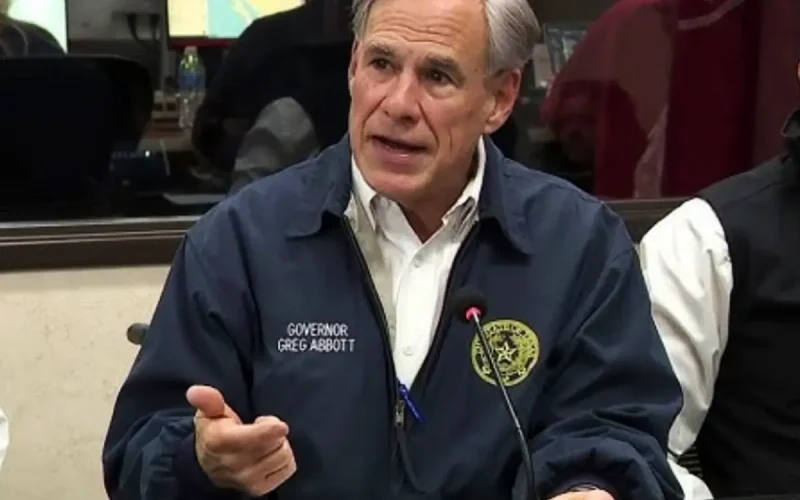
In an unprecedented mid-decade redistricting effort, Trump-backed Texas Republicans under Governor Greg Abbott are attempting to carve out five additional GOP-favoured congressional seats through what election experts describe as extreme gerrymandering. The proposed map systematically targets Democratic incumbents in key urban centres – Austin, Dallas, Houston – and Hispanic-majority districts across South Texas, effectively “cracking and packing” minority voters to dilute their electoral influence.
The stakes could not be higher. These five seats would significantly expand Republican control in the narrowly divided U.S. House of Representatives, potentially making it mathematically impossible for Democrats to regain the majority and serve as a check on Trump’s power should he return to the presidency.
“This isn’t politics as usual – this is a calculated attempt to rig the midterms before they happen,” warns a senior Democratic strategist involved in the redistricting battles. “They’re not just moving lines on a map; they’re silencing millions of voters.”
Democratic Exodus: Breaking the Quorum
In a dramatic escalation that harkens back to Texas’s most contentious political battles, dozens of Democratic state legislators fled the state in August, denying the Republican-controlled legislature the quorum needed to pass the redistricting plan. This extraordinary “quorum break” tactic – deeply rooted in Texas political tradition – represents more than procedural obstruction; it’s a desperate attempt to preserve democratic representation itself.
The fleeing Democrats framed their action as defending core democratic principles against what they characterise as a “corrupt process” orchestrated by Trump to steal congressional seats. Their exodus has drawn national attention to what many view as a constitutional crisis in the making.
The Roberts Court Factor: Judicial Enablement
The current redistricting crisis cannot be understood without examining the role of Chief Justice John Roberts and the Supreme Court in creating the permissive legal environment that enables such aggressive gerrymandering. Roberts’s 2019 decision in Rucho v. Common Cause effectively stripped federal courts of jurisdiction over partisan gerrymandering claims, removing what had been a crucial judicial check on electoral manipulation.
This ruling, combined with the Court’s gradual weakening of Voting Rights Act protections, has left Texas Republicans – and their counterparts nationwide – with virtually no legal constraints on their redistricting ambitions. Critics argue this represents a form of “judicial capture” that has systematically dismantled the safeguards that once protected against extreme partisan map-drawing.
“The Supreme Court didn’t just step back from gerrymandering cases—they opened the floodgates,” explains a constitutional law scholar who has tracked the Court’s election jurisprudence. “What we’re seeing in Texas is the direct result of Roberts’s decision to let politics trump democratic principles.”
Republican Counterpunch: The California Response
Republicans, however, argue they are simply playing by rules that Democrats established and that their actions represent legitimate political strategy rather than democratic subversion. They point to brewing countermoves in Democratic-controlled states as evidence of partisan hypocrisy.
California Governor Gavin Newsom has indeed signalled plans for retaliatory redistricting designed to create additional Democratic seats to offset Texas’s Republican gains. This tit-for-tat escalation threatens to normalize mid-decade redistricting as a standard political weapon, further entrenching partisan control and reducing electoral competition nationwide.
“Democrats spent decades gerrymandering when they controlled state legislatures,” argues a Republican strategist familiar with the Texas effort. “Now they’re crying foul when Republicans use the same tactics. This is about political power, and both parties know it.”
A Democracy Under Siege
What emerges from this redistricting battle is a troubling picture of American democracy under severe stress. The traditional post-census redistricting process, already controversial, has morphed into ongoing electoral warfare where maps are redrawn whenever one party gains sufficient power to do so.
Election experts warn that this cycle threatens to create a system where electoral outcomes are increasingly predetermined by mapmakers rather than voters. The result is the entrenchment of incumbents, the reduction of competitive districts, and the erosion of meaningful democratic choice.
The public appears to be losing faith in the system’s fairness. Polling data suggests declining confidence in both electoral integrity and judicial impartiality, particularly regarding the Supreme Court’s role in election-related disputes. This erosion of trust poses long-term threats to democratic legitimacy itself.
National Implications: The Midterm Preview
The Texas redistricting fight offers a preview of how the 2026 midterms may be won or lost – not through persuasion and turnout, but through the surgical manipulation of district boundaries. If successful, Trump’s Texas gambit could help Republicans build a nearly insurmountable House majority while simultaneously providing a template for similar efforts in other GOP-controlled states.
Democrats face a stark reality: with fewer tools available due to Supreme Court decisions and fewer states under their control, they may be fighting an increasingly uphill battle for congressional representation that reflects actual vote totals rather than gerrymandered geography.
The Path Forward
As this redistricting arms race intensifies, several critical questions emerge: Can American democracy survive a system where electoral outcomes are increasingly predetermined by partisan map-drawing? Will federal courts eventually reassert oversight over the most egregious examples of gerrymandering? And perhaps most importantly, will voters in both parties demand reforms that restore competitive elections and meaningful democratic choice?
The answers to these questions will likely determine not just the outcome of the 2026 midterms but the future trajectory of American representative government itself. What began as a fight over congressional district lines in Texas has evolved into a defining battle for the soul of American democracy – a battle whose outcome may be decided long before voters enter the booth.