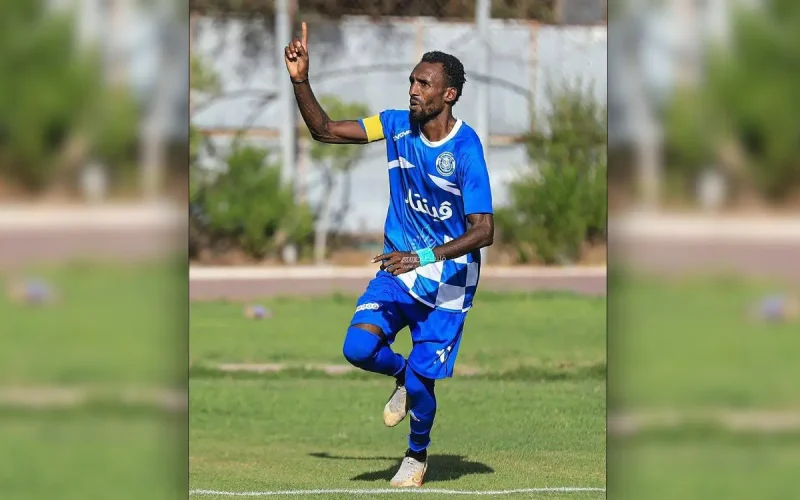
THE football world was shaken this week by news that would reverberate far beyond the boundaries of any pitch. Suleiman al-Obeid, the 41-year-old former Palestinian national team forward beloved as the “Palestinian Pelé,” had been killed while seeking humanitarian aid in Gaza – a tragedy that exposed the uncomfortable intersection of sport, politics, and human suffering.
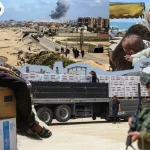
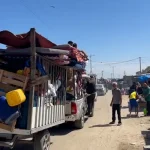
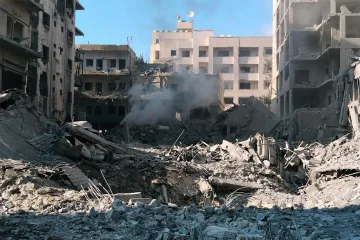
On Wednesday, August 7, 2025, al-Obeid joined a queue of desperate civilians waiting for humanitarian aid in Gaza. It was a scene repeated countless times across the war-torn territory: ordinary people, driven by basic human needs, gathering in the hope of sustenance. Among them stood a man who had once dazzled crowds with his skill, who had carried the dreams of Palestinian children on his shoulders, who had represented his people on football pitches around the world.
The Palestinian Football Association reported that Israeli forces targeted the aid seekers, and al-Obeid was among at least 18 people killed in the strike. In an instant, one of Palestinian football’s brightest lights was extinguished – not on a football field where he had made his name, but in a humanitarian queue where he had sought only to survive.
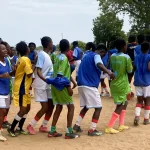
Al-Obeid’s moniker as the “Palestinian Pelé” was more than mere hyperbole. For Palestinians, especially the youth of Gaza, he represented possibility in a place where hope was often in short supply. His rise to prominence as one of Gaza’s brightest football stars, particularly during his time with Al-Shati’a Services Club, had made him a symbol of resilience and aspiration.
The comparison to Brazil’s greatest footballer was both tribute and burden – tribute to his undeniable talent, but burden in what he represented to a people whose sporting heroes often carried the weight of collective dreams. In a territory where freedom of movement was restricted, where opportunities were limited, al-Obeid’s success on the football field became a source of pride and inspiration that transcended sport itself.
When news of al-Obeid’s death spread, UEFA, European football’s governing body, issued what appeared to be a respectful tribute: “Farewell to Suleiman al-Obeid, the ‘Palestinian Pelé’. A talent who gave hope to countless children, even in the darkest of times.”
The statement was carefully worded, diplomatic in its neutrality. It acknowledged the man’s talent and impact while avoiding any reference to the circumstances of his death. For UEFA, it was perhaps an attempt to honour a footballer while staying clear of political controversy.
Salah’s Pointed Challenge
But Mohamed Salah, the Liverpool superstar and Egypt international with over 19 million followers on social media, was not content with diplomatic silence. On Saturday, he responded to UEFA’s tribute with a simple but piercing question that cut through the careful neutrality: “Can you tell us how he died, where, and why?”
Those eleven words carried the weight of accusation and demand for accountability. Salah, who had previously called for an end to massacres in the conflict and for aid to be allowed into Gaza, was essentially challenging UEFA – and by extension, the broader football community – to acknowledge not just who al-Obeid was, but how and why he died.
The Egyptian star’s response quickly gained traction across social media, dividing opinion between those who praised his courage in speaking out and others who felt sports figures should remain apolitical. But for Salah, the question seemed to stem from a fundamental belief that honouring the dead requires honest acknowledgement of their fate.
Al-Obeid’s death was not an isolated tragedy in Palestinian football. According to reports, he was among 321 members of the football community who have been killed during the ongoing conflict – a staggering number that represents entire generations of players, coaches, officials, and fans whose connections to the beautiful game have been permanently severed.
This systematic decimation of Palestinian football infrastructure and personnel raises questions that extend beyond individual losses. When sports facilities become targets, when athletes become casualties, when children who might have followed in al-Obeid’s footsteps are denied that future, the impact reaches far beyond the immediate victims.
Football has always prided itself on being a universal language, a force that can transcend political boundaries and bring people together. FIFA’s motto, “For the Game. For the World,” speaks to this aspiration. Yet al-Obeid’s death highlights the harsh reality that sport cannot insulate itself from the conflicts that rage around it.
The response to his killing – from UEFA’s careful tribute to Salah’s pointed challenge – reveals the tension between sport’s desire for neutrality and the moral demands of witnessing injustice. Can football truly remain apolitical when its participants are caught in the crossfire of political conflict? Can governing bodies honour the dead without acknowledging how they died?
A Legacy Beyond the Pitch
In life, Suleiman al-Obeid was more than his nickname suggested. While comparisons to Pelé spoke to his football ability, his true significance lay in what he represented to Palestinians – proof that talent could flourish even in the most challenging circumstances, that dreams could survive even under siege.
His death while seeking humanitarian aid adds a cruel irony to his story. The man who had brought joy and hope to others met his end in a moment of basic human vulnerability, seeking the necessities of survival that should be guaranteed to all people, regardless of their nationality, politics, or profession.
Questions That Demand Answers
Salah’s challenge to UEFA – “Can you tell us how he died, where, and why?” – resonates because it demands something uncomfortable: that the world looks beyond sanitised tributes to confront difficult truths. It asks whether the football community will remain content with expressing sympathy while avoiding the harder questions about accountability and justice.
The response to al-Obeid’s death will likely be watched closely by Palestinian athletes and supporters, who have long felt that their suffering is acknowledged only in carefully worded statements that avoid naming causes or assigning responsibility. Will this be another moment of diplomatic mourning, or will it catalyse a more honest reckoning with the costs of conflict on sport and its participants?
Perhaps most poignantly, al-Obeid’s death represents not just the loss of what was, but of what might have been. The Palestinian children who looked up to him, who saw in his success a pathway for their own dreams, must now grapple with the reality that even their heroes are not safe from the violence that surrounds them.
UEFA’s tribute mentioned that he “gave hope to countless children, even in the darkest of times.” The question now is what message his death sends to those same children, and whether the football community will do more than offer condolences to address the conditions that led to this tragedy.
A Global Game’s Local Tragedy
Suleiman al-Obeid’s story encapsulates the complex relationship between global sport and local suffering. While football connects people across continents, while stars like Mohamed Salah can reach millions with a single social media post, the beautiful game cannot shield its participants from the ugly realities of conflict.
His death serves as a reminder that behind every international football fixture, every inspiring story of sporting achievement, are real people living in real circumstances—and sometimes dying in them. The “Palestinian Pelé” may have been a nickname that spoke to football greatness, but Suleiman al-Obeid was a man who, in his final moments, was simply seeking aid to survive.
The football world now faces a choice in how it remembers him: with carefully worded tributes that avoid uncomfortable truths, or with the kind of honest acknowledgement that Mohamed Salah demanded. The answer may determine not just how al-Obeid is remembered, but how seriously the global football community takes its responsibility to protect and honour all those who make the beautiful game possible.