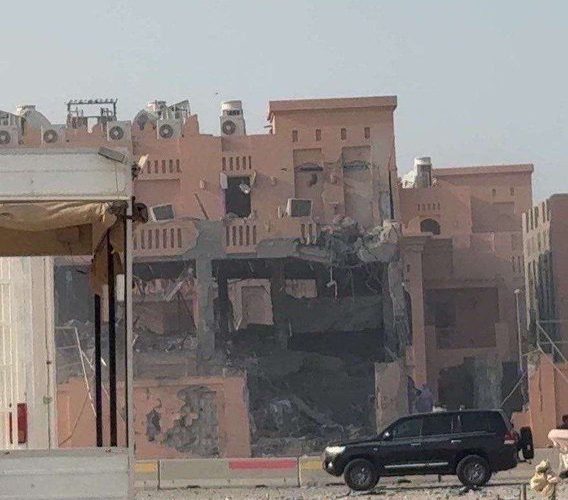
THE diplomatic phones began ringing across the globe within hours. From the Élysée Palace to the United Nations headquarters, world leaders scrambled to respond to news that would send shockwaves through international relations: Israel had conducted its first-ever military strike on Qatari soil.
President Emmanuel Macron was among the first to break his silence, his words cutting through the diplomatic niceties that typically cushion such statements. “This attack is unacceptable,” the French leader declared, his voice carrying the weight of a nation that has long sought to balance relationships across the volatile Middle East. France’s solidarity with Qatar was immediate and unwavering- a clear signal that this strike had crossed a red line in international law.
At the gleaming towers of the United Nations in New York, Secretary-General António Guterres emerged with perhaps the strongest condemnation of all. His usually measured diplomatic tone gave way to unmistakable outrage as he branded Israel’s actions a “flagrant violation” of Qatar’s sovereignty and territorial integrity. For a man who has witnessed decades of conflict and diplomatic failures, Guterres’ words carried particular gravity – this wasn’t just another Middle Eastern skirmish, but an assault on the very principles that underpin international order.
The UN chief’s frustration was palpable as he spoke of Qatar’s irreplaceable role as a mediator in the Gaza conflict. Here was a nation that had spent months facilitating delicate negotiations between sworn enemies, working tirelessly to secure hostage releases and ceasefire agreements. Now, with a single airstrike targeting Hamas leadership in Doha, Israel had potentially shattered those diplomatic channels.
The condemnations cascaded across the region like dominoes falling in perfect succession. Saudi Arabia’s response came swift and sharp, denouncing what they called “brutal Israeli aggression.” The kingdom’s words were carefully chosen but unmistakably threatening, warning of “severe consequences” from Israel’s continued actions. For the Saudis, this wasn’t merely about Qatar—it was about the precedent of attacking Arab soil, something that struck at the heart of regional sovereignty.
Qatar itself responded with barely contained fury. The Foreign Ministry’s statement abandoned all diplomatic pretense, branding the strike a “cowardly Israeli attack” and a “criminal act.” The small Gulf nation, which has punched above its weight diplomatically for years, made it clear that this “reckless behavior” would not be tolerated. The attack had struck not just at buildings in Doha, but at Qatar’s carefully cultivated image as a neutral mediator in global conflicts.
The United Arab Emirates, despite its own complex relationship with Israel following the Abraham Accords, didn’t hesitate to condemn what it called a “blatant and cowardly” attack. The UAE’s statement was particularly significant – it showed that even nations that had normalized relations with Israel had limits to their tolerance. Regional solidarity, it seemed, trumped newer diplomatic arrangements when sovereignty was at stake.
Turkey’s President Erdogan saw in the strike something darker than a simple military operation. His government condemned it as evidence of Israel’s “expansionist policies,” framing the Doha attack within a broader narrative of Israeli aggression that threatened the entire region. Turkey’s call for international pressure to halt the violence resonated with many who saw the strike as a dangerous escalation.
Even the Vatican weighed in, with Pope Leo expressing “serious concern” over the situation’s gravity – a reminder that this crisis had captured attention far beyond the Middle East.
In Jerusalem, Prime Minister Benjamin Netanyahu’s office stood defiant amid the global storm. Taking “full responsibility” for what they called an “independent Israeli operation,” Netanyahu’s team justified the strike as retaliation for recent attacks, including a deadly Jerusalem shooting and the haunting memory of October 7, 2023. But their justifications rang hollow against the chorus of international condemnation.
The implications of this single airstrike stretch far beyond the immediate casualties. Qatar had spent years building its reputation as an indispensable mediator, hosting Taliban negotiations, facilitating prisoner exchanges, and serving as a crucial backchannel between enemies. Now that carefully constructed diplomatic architecture lay in ruins, victim to what many saw as Israel’s short-sighted military calculus.
As emergency diplomatic meetings convened across world capitals, one truth became clear: Israel’s first military operation inside the Gulf state had not just eliminated Hamas targets—it had potentially eliminated the last, best hope for a negotiated end to the Gaza conflict. In a region where trust is the most precious and fragile commodity, Israel had just squandered years of Qatari diplomatic investment with the precision of a single airstrike.
The world’s leaders had spoken with unusual unity and force. Now the question remained: would anyone listen?