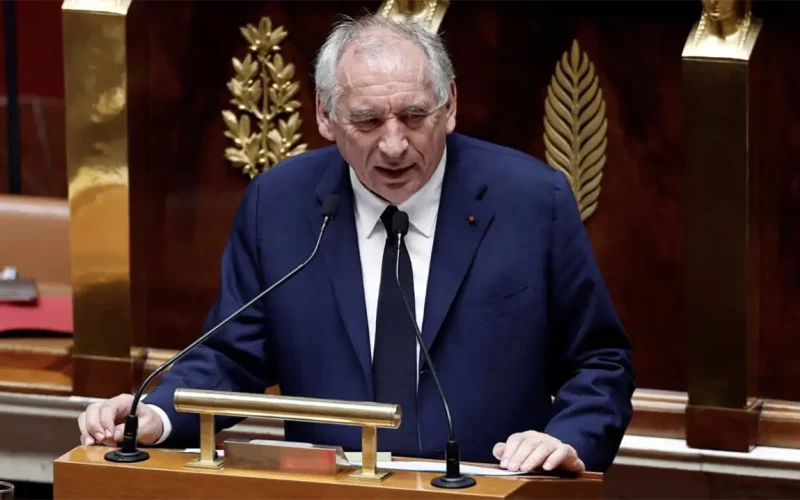
FRANCE has plunged into yet another constitutional crisis with the spectacular collapse of François Bayrou’s government Monday night, marking an alarming new chapter in what has become the Republic’s most turbulent period in modern memory. Prime Minister François Bayrou and his centrist minority government were ousted in a confidence vote in France’s National Assembly, with lawmakers delivering a crushing 364-194 defeat that sent President Emmanuel Macron scrambling to find his fifth prime minister in less than two years.
The Arithmetic of Collapse
The mathematics of Monday’s vote tells the story of a democracy under siege. Bayrou was ousted overwhelmingly in a 364-194 vote against him, paying the price for what appeared to be a staggering political miscalculation in gambling that lawmakers would back his view that France must slash public spending to rein in its debts. The scale of defeat reveals not merely parliamentary arithmetic but the profound fracturing of French political consensus.
Bayrou warned the country is “drowning in debt”, but opposition parties continued to rebuff his proposals for spending cuts, highlighting the impossible equation facing any successor: France’s deficit stands at nearly double the EU’s 3% threshold, with debt exceeding 114% of GDP. Yet any attempt at fiscal discipline triggers immediate political death in a fragmented National Assembly where compromise has become extinct.
The Revolving Door Presidency
Bayrou will be forced to step down after just nine months in office, following in the footsteps of his predecessor Michel Barnier, who lost a no-confidence vote last December. This creates an unprecedented situation where Macron must now search for a fourth prime minister in 12 months, transforming what was once the stable bedrock of the Fifth Republic into a revolving door reminiscent of the chaotic Fourth Republic that collapsed in 1958.
The candidates reportedly under consideration—Defence Minister Sébastien Lecornu or a technocrat—face the same impossible trinity that has destroyed their predecessors: unite a fragmented parliament, pass an austerity budget, and maintain democratic legitimacy. Each represents a different gamble on whether centrist compromise, administrative expertise, or political calculation can succeed where others have failed.
Streets of Rage: The “Block Everything” Uprising
Yet the most ominous development may be unfolding beyond parliament’s walls. The emerging movement “Bloquons Tout” – “Let’s Block Everything” – is calling to bring France to a standstill on September 10 in protest at economic policies, with authorities mobilising 80,000 police to manage potential disruptions and violence.
French authorities are bracing for a day of nationwide protests led by far-left activists, with intelligence officials warning the movement’s decentralised nature makes its scale and impact difficult to predict. This leaderless structure deliberately echoes the 2018-2019 Yellow Vest protests that brought France to its knees, but emerges in a far more volatile context where traditional political mechanisms have demonstrably failed.
The timing is explosive: as parliament collapses, the streets prepare to erupt in coordinated resistance that explicitly aims to paralyse the nation. This represents not merely protest but a fundamental challenge to democratic governance itself, where frustrated citizens increasingly see disruption as the only remaining avenue for political expression.
Economic Storm Clouds Gather
Markets may have reacted calmly on Tuesday since Bayrou’s exit was anticipated, but the underlying economic fundamentals paint a terrifying picture. France faces a sovereign credit rating decision on Friday that could trigger a cascade of financial pressures just as political authority completely evaporates. Business leaders are already warning that the turmoil slows investment and hiring, creating a vicious cycle where political instability feeds economic decline, which fuels further political radicalisation.
The innovation sector’s concerns about delayed investment and hiring reveal how this crisis extends far beyond budgetary arithmetic. France risks losing its competitive edge in emerging technologies precisely when global economic leadership is being redefined around artificial intelligence, green energy, and digital transformation.
The Existential Question
What emerges from this confluence of parliamentary collapse, street uprising, and economic pressure is an existential question about French democracy itself. Hours before losing the confidence vote, Bayrou warned that the country was facing “life-threatening” debt, but the real threat may be to democratic governance as a viable system for managing complex modern societies.
The Socialist Party’s demand that power shift left, the National Rally’s call for snap elections, and the “Block Everything” movement’s rejection of the entire system represent three different paths away from democratic compromise. Each offers the seductive simplicity of ideological purity in place of the messy complexity of governing a diverse, economically strained nation.
As Macron searches for his fifth prime minister, he confronts not merely a political crisis but a civilizational test: can democratic institutions adapt fast enough to address 21st-century challenges, or will they collapse under the weight of their own contradictions? Wednesday’s protests may provide the first answer to that question, written not in parliamentary votes but in the language of the streets.
The Republic stands at a crossroads between democratic renewal and systemic breakdown, with the world watching to see whether one of Europe’s founding democracies can reinvent itself—or whether it will join the growing list of nations where traditional governance has simply ceased to function.