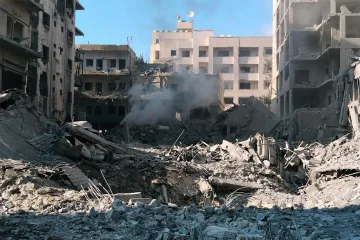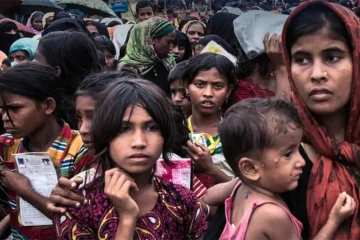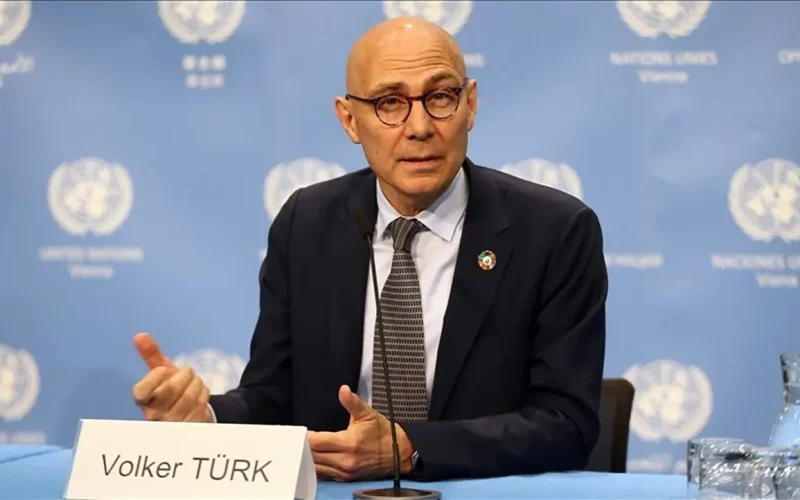
SRI LANKA stands at a historic crossroads to end decades of violence and impunity, the United Nations High Commissioner for Human Rights, Volker Türk, declared as he presented a comprehensive report to the 60th session of the UN Human Rights Council. The High Commissioner’s statement comes amid pledges by Sri Lanka’s government for transformative reforms, accountability, truth, and justice following decades-long political and ethnic conflict.
“Sri Lanka today has a historic opportunity to heal from the cycles of violence and impunity that have dominated for decades. The Government has a clear mandate from across the nation for transformative reforms, accountability, truth and justice,” Türk said.
During a recent visit to Sri Lanka, Türk met with the country’s leadership, who “pledged a fresh direction on long-standing issues.” Yet, he emphasised the critical need for these commitments to be translated into a clear, coherent, and time-bound plan of concrete actions. The High Commissioner’s report identifies key focus areas: delivering justice and accountability, instituting fundamental legal and institutional reforms, and eliminating systemic discrimination and political division.
“First and foremost, my report calls for decisive action by the Government on justice and accountability, which are essential to forging a future of healing, reconciliation and sustainable peace,” Türk underscored.
Highlighting the ongoing human toll, the High Commissioner recounted his visit to a mass grave site at Chemmani where he met grieving families searching for missing loved ones. He shared the story of a woman from a southern province who, even after 30 years, continues to search for her husband. “Independent, transparent and credible investigations are critical to restoring trust,” he said.
The report also underscores the tragic persistence of conflict-related sexual violence, which remains heavily stigmatised. Türk pointed out the compounding impact of impunity, describing it as “a second form of violence that perpetuates cycles of harm.” He insisted that “the demands of victims and survivors must be addressed. Their voices must guide the Government’s policies on accountability, truth, justice and reparation”.
Türk stressed the imperative for formal acknowledgement of violations and abuses by the State and its security forces, alongside non-state armed groups such as the Liberation Tigers of Tamil Eelam (LTTE). “There must be a shared sense of the facts,” he said, welcoming an increased space for memorialization by victims.
Calling for comprehensive reforms, the High Commissioner stated, “There is an urgent need for Sri Lanka to undertake deep constitutional, legal and institutional reforms. This is crucial to ensuring that the tragedies of the past can never be repeated”.
He welcomed the government’s initiative to establish an independent Public Prosecution Office with independent investigators, emphasising the importance of involving civil society in the process. Türk further recommended setting up a judicial mechanism with an independent special counsel to investigate past violations of international human rights and humanitarian law.
The report denounces ongoing systemic issues such as deaths in custody and torture and urges immediate action. It also criticises the continued use of the controversial Prevention of Terrorism Act, despite government pledges to repeal it. Türk called for an immediate moratorium on the law’s use, noting ongoing arbitrary arrests and detentions under its provisions.
Furthermore, the High Commissioner exposed “persistent patterns of intimidation and harassment by security agencies of human rights defenders, victims’ groups and independent journalists,” with those working on enforced disappearances and land disputes especially targeted. He underlined the urgent need for security sector reform, including demilitarisation of the north and east, return of land, and devolution of power.
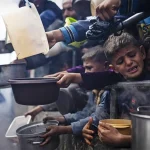
Acknowledging the government’s stated commitment to economic and social justice, Türk painted a grim picture of widespread hardship. He pointed to an economic crisis with poverty rates and food prices nearly doubling in five years, and a dramatic rise in malnutrition and childhood stunting. He called for prioritising support to marginalised communities, including the Malaiyahar Tamil community.
Türk concluded by emphasising the pivotal role of continued international engagement. “My Office stands ready to assist Sri Lanka on this journey,” he said, highlighting the important work of the UN Sri Lanka Accountability Project, which has secured over 105,000 items of evidence crucial for legal processes and truth-seeking. He urged Sri Lanka to seek international aid for mass grave exhumations and other investigations, stating, “Together, the international community can support Sri Lankans to escape from the twin threats posed by persistent impunity, and deep inequality”.
The High Commissioner’s report underscores that while Sri Lanka faces immense challenges, the government’s current mandate and international support offer a unique chance for the country to turn from its troubled past toward a future founded on justice, reconciliation, and human rights.