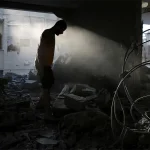
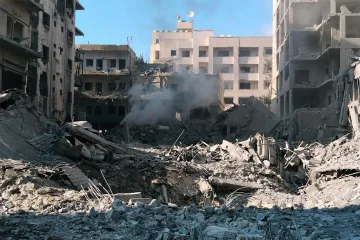
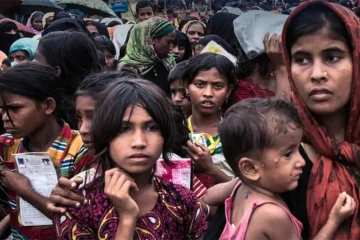
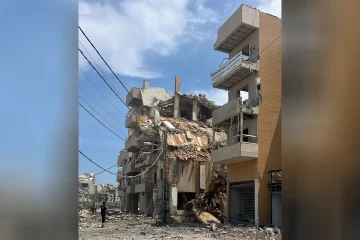
TWO weeks into Gaza’s fragile ceasefire, the World Health Organisation has delivered a stark assessment: despite modest progress on aid flows, the enclave’s shattered health system remains catastrophically inadequate, with 15,000 Palestinians – nearly 4,000 of them children – desperately awaiting medical evacuation.
The numbers reveal the scale of the crisis. Gaza’s 2.1 million residents now depend on roughly 2,100 hospital beds. More than 170,000 people have been injured across two years of devastating conflict. On Thursday, the WHO conducted its first post-ceasefire medical evacuation—just 41 patients and 145 companions—a figure the agency must increase tenfold to meet minimum humanitarian standards.
The Bottleneck
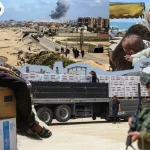
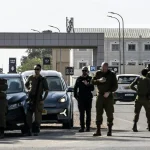
The core problem is access. Only two crossings in southern Gaza—Kerem Shalom and Kissufim—remain open, creating a logistical stranglehold that prevents aid from reaching the famine-stricken north at the scale required.
Dr Rik Peeperkorn, WHO’s representative in the occupied Palestinian territory, was unequivocal in his assessment from Jerusalem on Friday: “We need all routes to open.”
Critical facilities, including Kamal Adwan, Al-Awda, Indonesian and European Gaza hospitals, now lie beyond the “yellow line” marking Israeli forces’ withdrawal zone, rendering them inaccessible and non-functional. Meanwhile, the closed Rafah, Zikim and Erez crossings continue to block what could be vital humanitarian corridors.
A Game Changer Blocked
The most significant missed opportunity, according to Peeperkorn, is the continued closure of West Bank referral hospitals, including those in East Jerusalem. This route represents not just the most cost-effective evacuation pathway but what the WHO representative termed a potential “game changer” for patient care.
The agency is pushing for a multi-pronged evacuation strategy: daily medical transfers through Rafah into Egypt, continued flights through Israel’s Ramon Airport to Jordan, and crucially, the reopening of West Bank hospitals. Yet the current reality falls far short—WHO has secured commitments for just two evacuation flights next week, when daily operations are required.
“We need more countries to step forward to receive patients,” Peeperkorn said, highlighting the international dimension of Gaza’s medical emergency.
Bureaucratic Barriers
Beyond physical access, administrative obstacles continue to delay critical supplies. WHO has compiled a consolidated list of essential medicines and medical devices used in hospitals worldwide, seeking blanket approval to bypass item-by-item reviews that create dangerous delays.
The restrictions on “dual-use” items—equipment theoretically having military applications—present perhaps the most frustrating barrier. CT scanners, MRI machines, X-ray equipment, ultrasounds and spare parts have been “consistently delayed or made very difficult” to import, Peeperkorn said, despite their obvious medical necessity.
A Test for Peace
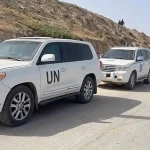
The newly established US-led Civil-Military Coordination Centre, which held its first meetings this week between Israeli authorities and UN partners, now faces a critical test. The mechanism is designed to facilitate rapid aid entry and eventually enable the massive supply flows needed for reconstruction.
Peeperkorn said he wants to be “hopeful” about the Centre’s potential, expecting it to address dual-use restrictions and streamline approvals. But his assessment carried a note of caution befitting Gaza’s history: “We all know that this will be a long and winding road, with a lot of setbacks and obstructions.”
The coming weeks will reveal whether this ceasefire can evolve beyond temporary humanitarian relief into the foundation for genuine recovery—or whether Gaza’s medical emergency will continue to deepen despite the pause in fighting.
For now, thousands of critically injured Palestinians remain trapped in an enclave with devastated healthcare infrastructure, their lives depending on crossings that remain closed and evacuation flights that have barely begun.