THE heavens opened not with rain, but with vengeance.
Hurricane Melissa descended upon Jamaica like an ancient goddess roused to wrath, her fury written in 300-kilometre winds that screamed through the Caribbean night like banshees heralding apocalypse. The island—emerald jewel of the tropics, home to resilient souls who have weathered countless storms—had never witnessed Mother Nature’s rage distilled to such terrifying purity. This was no ordinary tempest. This was elemental chaos incarnate, a reminder that humanity’s dominion over Earth remains a fragile illusion.
The Deluge
The sky turned the colour of bruised plums, swollen and angry. Then it wept—torrentially, catastrophically, as though the heavens themselves were emptying every reservoir of their rage upon the land below. Water fell not in drops but in sheets, in walls, in liquid avalanches that transformed streets into rivers and rivers into raging seas. The very air became water; breathing meant drowning by degrees.
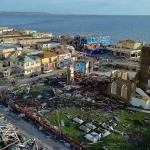
In Montego Bay, that glittering crown jewel of tourism and commerce, Mother Nature drew her sword and cleaved the city in two. Floodwaters surged with predatory intent, swallowing roads, consuming neighbourhoods, rising with relentless hunger until they lapped at second-story windows. The city’s arteries—its roads, its lifelines—became impassable torrents, isolating neighbourhoods into island fortresses where families huddled in the darkness, listening to the howling apocalypse outside their walls.
Across the western parishes, entire landscapes vanished beneath the deluge. Communities that had stood for generations simply ceased to exist above the waterline, swallowed whole by Mother Nature’s aquatic embrace. The flooding was biblical in scale, catastrophic in impact—a liquid erasure of human presence that left only rooftops as tombstones marking where civilisation once thrived.
The Wind’s Savage Symphony
But the water was only half of Melissa’s dual assault. The wind—oh, the wind—arrived as a screaming titan, a force so savage it rewrote the rules of what Jamaicans thought possible. At nearly 300 kilometres per hour, these weren’t mere gusts; they were invisible fists pummeling everything in their path with unrelenting fury.
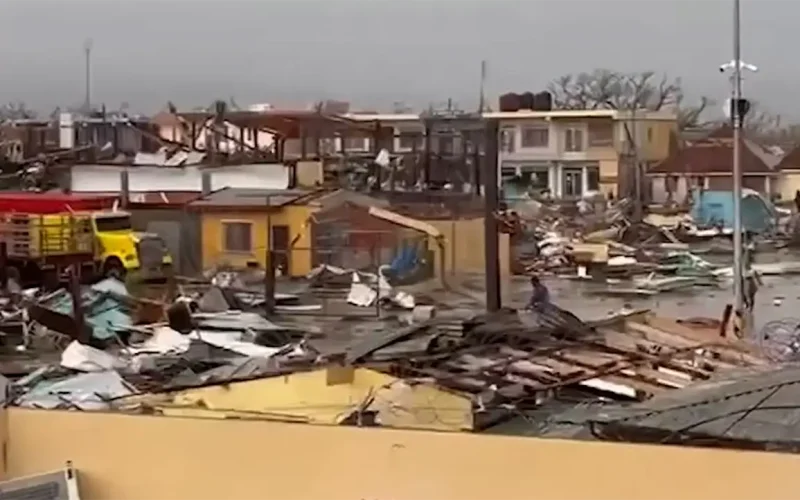
Trees that had stood sentinel for decades were yanked from the earth like weeds, their ancient roots surrendering to forces beyond reckoning. Roofs—those supposedly sturdy shields against the elements—peeled away like paper, exposing terrified families to the full violence of the storm’s rage. Debris became missiles: zinc sheets transformed into guillotines, palm fronds into spears, everyday objects weaponised by nature’s wrath.
The wind spoke in tongues of destruction, howling through the night with voices that chilled souls and shattered nerves. It wasn’t merely loud—it was personal, an assault not just on structures but on sanity itself. Families crouched in interior rooms, hands over ears, eyes squeezed shut, praying to outlast the darkness as their homes shuddered and groaned around them, surrendering piece by piece to the insatiable storm.
Darkness Descends
Then came the darkness—absolute, suffocating, eternal. Three-quarters of Jamaica plunged into blackness as Melissa’s fury severed the island’s electrical lifelines. The power grid, that invisible web connecting modern life, simply ceased to exist. In that darkness, terror multiplied. Without light, without communication, without the reassuring hum of electricity’s presence, Jamaicans faced Melissa’s onslaught in primal isolation.
Cell towers toppled. Phone lines went silent. The digital threads connecting families, lovers, parents and children—all severed in an instant. In the howling void, people screamed names into the wind, hoping desperately for answers that couldn’t come. The inability to reach loved ones, to know if they survived, became its own special torture—uncertainty breeding dread that rivalled the storm’s physical violence.
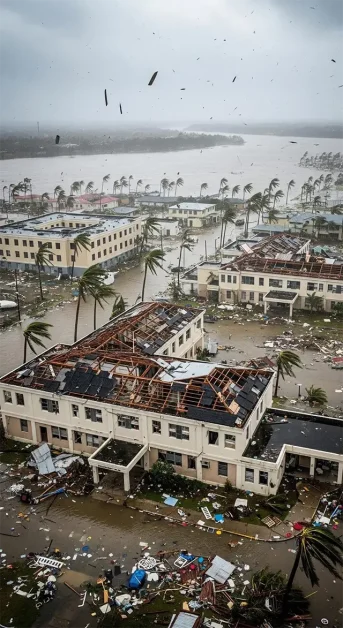
Trapped in their disintegrating homes, water pouring through ceilings, debris blocking every exit, Jamaicans lived through what felt like civilisation’s ending. This was apocalypse made real, nature asserting her dominance with crushing finality, reminding humanity that all our structures, all our technology, all our supposed progress mean nothing when the Earth decides to flex her muscles.
The Wright Family: Resilience Tested Beyond Breaking
In St. Elizabeth’s coastal community, the Wright family’s story crystallises into a portrait of endurance pushed past human limits. Castell Wright, a 57-year-old fisherman with hands weathered by decades of honest labour, stands as a testament to cruel cosmic irony. Just over one year ago, Hurricane Beryl consumed everything—his wooden home, his fishing gear, the accumulated work of a lifetime. With only a pittance from government coffers (150,000 Jamaican dollars, arriving months too late), Castell rebuilt with his own scarred hands. Fish trap by fish trap, plank by plank, he clawed his way back from devastation.
Now Melissa arrives to mock that resilience, to test whether a man can be broken twice. Castell has tied down his zinc roof with rope and determination, stockpiled what food he could afford, and planted his feet with stubborn defiance. He will not abandon his home. He cannot. To leave would be to surrender not just physical space but identity itself—the fisherman who knows these waters, who understands how the tidal drainage sends excess flooding back to the sea, who refuses to become a refugee in his own homeland.
Yet in his voice, there’s exhaustion beneath the bravado. He knows Melissa’s slow, grinding assault—the prolonged rainfall, the persistent flooding—may prove deadlier than Beryl’s quick violence. Water doesn’t need speed to kill; it needs patience.
His relative Runece Wright embodies a different kind of devastation—the slow death of hope deferred. Beryl took her home and her poultry business, leaving her suspended in limbo, unable to fully recover, unable to move forward. When government social workers came with their reassuring promises and compassionate nods, she allowed herself to believe. But promises evaporated like morning mist, leaving only the bitter residue of abandonment.
Now, with Melissa’s waters rising around her once more, Runece’s voice carries the weight of systemic betrayal. She speaks of prayer not with fervent hope but with weary resignation—the last refuge of those whom institutions have failed. Her exhaustion isn’t physical; it’s existential, the bone-deep fatigue of people caught in cycles of destruction without the resources to escape.
The Morning After the Apocalypse
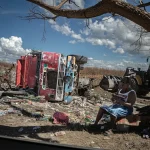
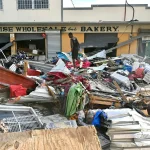
Dawn eventually came, though whether it brought relief or merely illuminated the carnage remained uncertain. As weak sunlight penetrated Melissa’s lingering clouds, Jamaica confronted the totality of nature’s violence.
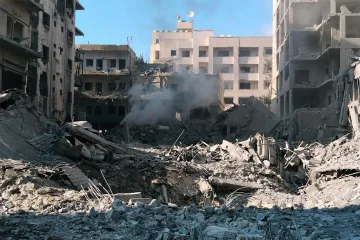
Hospitals lay damaged, their capacity to heal compromised when healing was needed most. Schools—those temples of future promise—stood ruined, their classrooms flooded, their structures compromised. Businesses that provided livelihoods, that kept families fed and dreams alive, were gutted shells. The island’s infrastructure, already fragile from previous storms, had been shattered beyond quick repair.
Eight hundred shelters, prepared with admirable foresight, now overflowed with thousands of displaced souls. Families clutching salvaged photographs and soaked belongings, their entire material existence reduced to whatever they could carry through the floodwaters. Children with eyes too wide, having witnessed things no child should see. Elderly residents who had survived decades of lesser storms, now wondering if this was finally the one that would break them.
The humanitarian crisis stretched beyond immediate survival into a grinding marathon of deprivation. Weeks—perhaps months—of isolation faced rural communities where roads had been devoured by landslides and washing floods. Food supplies would dwindle. Medicine would run short. The saturated earth, unstable and treacherous, threatened secondary disasters: landslides that could bury entire hillside communities while survivors still struggled to recover from the first assault.
The Climate Reckoning
Melissa is no random act of meteorological chance. She is prophecy fulfilled, warning heeded too late, the bill comes due for decades of atmospheric transgression. The science is unambiguous: warming oceans feed stronger hurricanes, climate change intensifies extreme weather, and small island nations like Jamaica find themselves on the front lines of a crisis they did virtually nothing to create.
For ordinary Jamaicans, climate change isn’t abstract discourse or political debate—it’s Castell Wright rebuilding his home with bleeding hands for the second time in a year. It’s Runece Wright’s hollow voice describing empty promises while water rises around her ankles. It’s families huddled in the darkness, wondering not if the next storm will come, but when, and whether they’ll have the strength to survive it.
The Wrights and thousands like them are climate refugees in their own homeland, trapped in a death spiral of destruction and inadequate recovery. Each storm sets them further back, erodes their resilience a little more, brings them closer to that breaking point where endurance finally fails.
The Indomitable Spirit
Yet even now, even after Melissa’s biblical devastation, something refuses to break. In the flooded streets of Montego Bay, volunteers wade through chest-deep water carrying supplies to stranded families. In rural villages, neighbours share their last canned goods, their remaining dry clothes, their dwindling hope. Emergency workers labour around the clock, exhausted beyond measure but driven by duty and compassion.
This is Jamaica’s true strength—not its infrastructure or economy, but its people’s capacity to extend hands to drowning neighbours, to rebuild when rebuilding seems impossible, to find humour in horror and hope in devastation. Eight hundred shelters stand ready because communities prepared, because despite everything, people still believe tomorrow might be better than today.
But resilience, however admirable, shouldn’t be a substitute for adequate support. Spirit alone cannot rebuild shattered homes or restore ruined livelihoods. The daunting road ahead demands more than determination—it requires resources, comprehensive planning, international solidarity, and acknowledgement that Jamaica’s vulnerability is the world’s responsibility.
Nature’s Final Word
Mother Nature spoke through Hurricane Melissa with crystalline clarity: humanity’s lease on this planet comes with terms and conditions we ignore at our peril. She reminded Jamaica—and through Jamaica, the watching world—that our cities are temporary, our infrastructure fragile, our dominance illusory.
The storm has passed, but its trauma remains etched in family stories, in children’s nightmares, in Castell Wright’s scarred hands gripping his rebuilt home. The long work of recovery stretches ahead like an endless road, demanding every ounce of resilience and solidarity these battered communities can muster.
Melissa’s wrath was catastrophic, biblical, and transformative. Yet Jamaica endures. Battered, flooded, cast into darkness—but enduring. Because when nature’s fury finally exhausts itself and the winds fall silent, what remains is the human capacity to stand back up, to extend a hand, to begin again.
The sky may fall. The waters may rise. The winds may howl. But the morning always comes, and with it, the stubborn Jamaican spirit that refuses to surrender, even to Mother Nature herself at her most terrible and magnificent.