THE violence gripping the occupied West Bank has reached a devastating crescendo, with Israeli settlers and security forces killing more than 1,000 Palestinians since the Gaza war ignited two years ago – a death toll that includes 215 children cut down in what UN officials are calling an unchecked reign of terror.
The stark numbers paint a grim portrait of life under occupation: 1,010 Palestinians dead in the West Bank and East Jerusalem, their lives snuffed out as illegal settlement expansion accelerates and attacks on Palestinian communities intensify with what UN human rights officials describe as absolute impunity.
“The attacks have been increasing,” Thameen Al-Keetan, spokesperson for the UN human rights office, told journalists in Geneva on Friday, his voice cutting through the diplomatic niceties with an urgent call for accountability. “These must stop, and there must be accountability.”
Nowhere is the crisis more visible than in Umm Al Khair, where 35 extended Palestinian families live under the constant shadow of demolition orders and settler harassment. Their story reads like a generational nightmare: expelled from their lands in the Negev during the 1948-49 Nakba – the mass displacement of Palestinians – they rebuilt their lives only to face what UN officials call “discriminatory” regulations designed to erase them from the landscape.
Israel considers their homes illegal because they lack building permits – permits the UN says are “almost impossible” for Palestinians to obtain. Meanwhile, Israeli settlers have brazenly erected new outposts connected to the nearby Carmel settlement, expanding their footprint across occupied territory with apparent official blessing.
In September, settlers planted an outpost in the heart of Umm Al Khair itself and launched what the UN describes as an intensified campaign of harassment aimed at forcing residents to flee their ancestral land.
The contrast couldn’t be starker: When a Jerusalem court issued a temporary injunction halting construction and barring settlers from entering the new outpost, Israeli authorities simply ignored it. No enforcement. No consequences.
“Authorities have taken no action to enforce the court order,” the UN human rights office charged, “in stark contrast to the frequent and swift demolitions of Palestinian structures.”
The attacks have surged particularly during the olive harvest season, a time when Palestinian farmers are most vulnerable as they work their land.
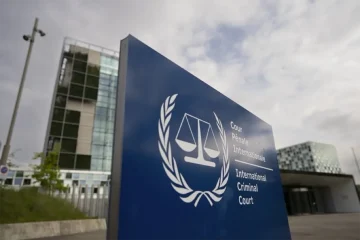
Al-Keetan’s message was unequivocal: Accountability must reach both the settlers launching attacks and the Israeli security forces involved in the violence. He invoked the International Court of Justice ruling that Israel’s presence in the Occupied Palestinian Territory is unlawful and must end.
While a tenuous ceasefire holds in Gaza, allowing thousands of schoolchildren to return to classrooms for the first time in months, the humanitarian catastrophe continues to unfold. Hundreds of thousands of families face winter without adequate shelter, the UN Office for the Coordination of Humanitarian Affairs warned.
Despite improved aid access, UN Secretary-General António Guterres cautioned that conditions remain “far from what is necessary to eliminate famine quickly” or provide Gazans with even “the very, very minimum that is necessary for dignity in life.”
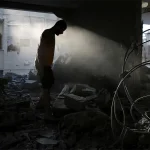
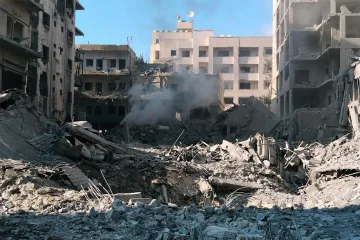
Daily detonations of residential buildings continue to echo through eastern Khan Younis and eastern Gaza City, where Israeli military forces remain deployed, systematically reducing neighbourhoods to rubble.
As international discussion turns to potential stabilisation forces for Gaza, the UN human rights office insisted any such deployment must respect international law and Palestinian self-determination.
“Whether there is a ceasefire or not,” Al-Keetan declared, “international humanitarian law and international human rights law must be respected and civilians must be protected. The human rights of Palestinians in Gaza do not change whether there is a ceasefire or not.”
The message was clear: The guns may occasionally fall silent, but justice – real accountability for violence against Palestinians – remains deafeningly absent.