THE United Nations refugee agency has issued a stark warning: millions of displaced people across conflict zones will face winter with dangerously inadequate protection as international humanitarian funding craters to unprecedented lows.
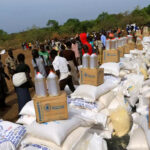
The UN High Commissioner for Refugees (UNHCR) confirmed that plummeting government contributions have forced the agency to slash winter assistance programs precisely when need has intensified. The agency’s emergency winter campaign seeks to raise $35 million – a sum that underscores both the scale of the crisis and the agency’s constrained resources.
“Humanitarian budgets are stretched to breaking point and the winter support that we offer will be much less this year,” said Dominique Hyde, UNHCR’s Director of External Relations, following field visits to Syria and Jordan. The admission marks a rare public acknowledgement of the agency’s diminishing capacity to protect vulnerable populations.
Multiple Crisis Zones Converge
The warning encompasses several deteriorating situations:
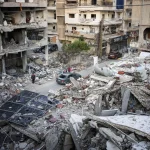
Syria and the Middle East: Over 1 million Syrians have returned since the Assad regime’s collapse, many to homes destroyed by years of warfare. UNHCR estimates 750,000 people risk losing access to essential winter supplies—blankets, insulation, heating—due to funding shortfalls. Returnees face the paradox of fleeing back to a country lacking basic infrastructure to sustain them through harsh weather.
Afghanistan: The country’s humanitarian emergency continues spiralling. Nine in ten Afghans now live in poverty despite the end of four decades of active conflict. The situation has been compounded by the return of 2.2 million Afghans from Pakistan and Iran this year, many arriving “empty-handed” to a country offering few prospects. Recent earthquakes have intensified vulnerability. UNHCR’s response: traditional heating devices costing just $30 per family—illustrating both the modest interventions at stake and the agency’s inability to fund even these.
Ukraine: Displaced populations face their fourth winter of full-scale warfare. Ongoing attacks continue destroying critical infrastructure—gas lines, electrical grids, water systems. With temperatures forecast to drop to -20°C, internally displaced people confront compounding trauma: years of violence, destroyed homes, and now inadequate shelter from the deadly cold.
The Funding Arithmetic
The specific dollar amounts UNHCR cited reveal the crisis in stark terms: $53 for one refugee’s medical care in Jordan, $80 for a thermal kit in Ukraine, $181 for a family winter kit in Syria. These modest figures—juxtaposed against the $35 million funding gap—expose the magnitude of unmet need and the agency’s resource constraints.
Hyde’s appeal to “individuals and private donors” signals a fundamental shift. Traditionally, humanitarian operations relied on government funding. The explicit call for private contributions suggests institutional donors have withdrawn support at levels that threaten core operations.
A Widening Gap
The UNHCR warning crystallises a dangerous trend: as displacement crises multiply and intensify, international willingness to fund humanitarian response contracts. The agency frames this as temperatures and funding simultaneously plummeting—a dual crisis where policy decisions in donor capitals translate directly into exposure, hypothermia risk, and preventable deaths in refugee camps.
The agency’s emphasis on “running out of time and resources” indicates winter preparations are already behind schedule. With cold weather already affecting Afghanistan and approaching other regions, the window for intervention is closing.
This winter will test whether the international humanitarian system can maintain even baseline protections for displaced populations—or whether millions will face the elements with, as Hyde warned, “little to protect them from the bitter cold.”