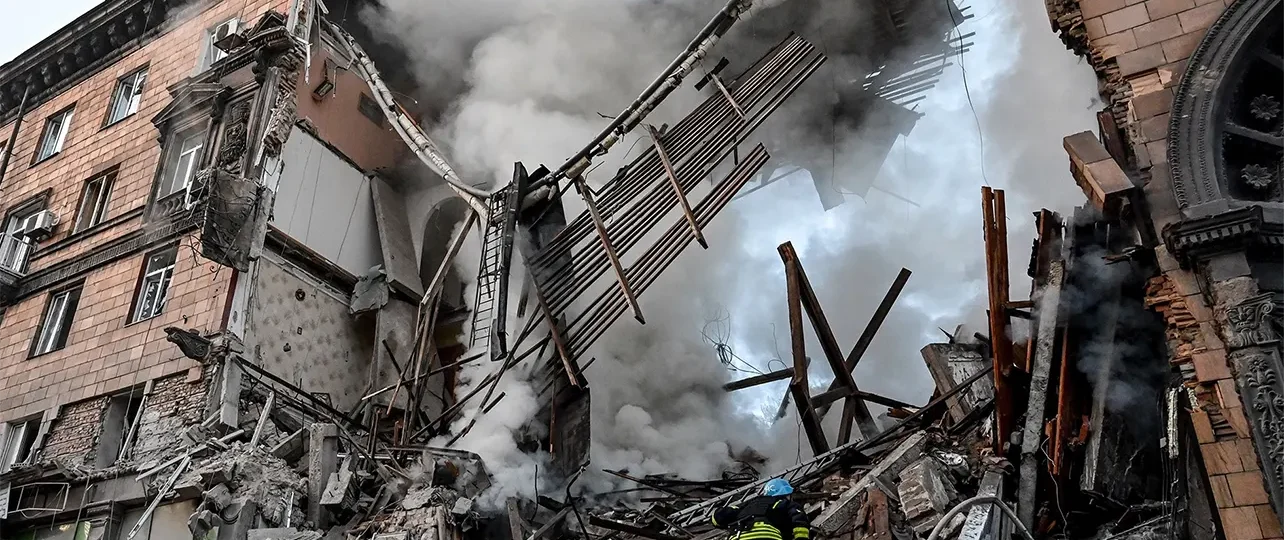

NEWS broke this week that US and Russian officials have been working in secret on a new plan to end the war in Ukraine. The terms make grim reading for Kyiv. Reports suggest the plan requires Ukraine to cede the territory it currently controls in the east of the country and halve the size of its military.
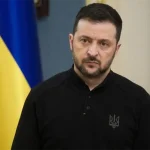
Such a deal would be a major setback for the Ukrainian president, Volodymyr Zelensky. He has declared repeatedly that conditions identical to those outlined in the plan are non-starters for Ukraine. Yet it’s possible he may soon have little choice but to accept them.
Stefan Wolff and Tetyana Malyarenko, who are two regular contributors to our coverage of the war in Ukraine from the University of Birmingham and the Odesa Law Academy, respectively, explain: “Ukraine is having a very difficult time at the moment on various fronts.”
Russian forces seem set to capture the eastern city of Pokrovsk, and they are simultaneously ramping up pressure on several other frontline areas. “For now,” write Wolff and Malyarenko, “the war of attrition clearly favours Russia.” But they do not see Ukraine’s imminent collapse as a foregone conclusion.
In their view, the Ukrainian war effort is threatened more by the continuing fallout from a sweeping domestic corruption scandal, as well as stalling efforts in Brussels to provide additional financial aid to Kyiv. Wolff and Malyarenko worry that talk of Ukraine’s political and military collapse could turn into a “self-fulfilling prophecy”.
The outlook is much more positive over the border in Russia, according to Matthew Alford, a lecturer in politics at the University of Bath. This was the impression he took away from his visit to Moscow earlier this year.
In this account of his trip, Alford recalls seeing no indication that Western sanctions were having any impact on the Russian economy. “Moscow felt safe, orderly and technologically advanced,” he writes, describing how his hotel had a room service robot and people pay for the metro through facial recognition.
More obvious was the deep separation between Russia and the West. Alford recalls a conversation he had with an academic there, who said her students were already starting to learn Chinese instead of English.
This rift was a source of sadness for many of the people Alford met in Moscow. But there was a sense of resolve, too. “It seems all sides have become accustomed to the deathly chill of a new cold war.”
Plans for Gaza
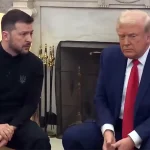
Elsewhere in the world, it has been a busy week for Donald Trump. Following a UN Security Council vote on Monday, the US president now has a legal mandate to implement his plan for a post-war Gaza.
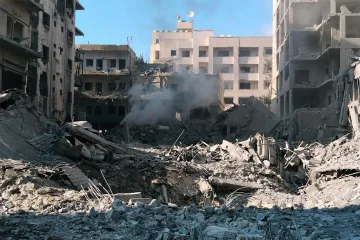
This paves the way for a Trump-chaired transitional authority to oversee the management of Gaza for the next two years. It also authorises the deployment of peacekeepers there, who will form an international stabilisation force to secure the territory.
The plan provides for the “full resumption” of aid into Gaza, while offering Palestinians at least some hope of their own sovereignty in the future. The UN resolution references a “credible pathway to Palestinian self-determination and statehood”, reportedly following pressure from Arab states.
We asked Leonie Fleischmann, a senior lecturer in international politics at City St George’s, University of London, whether Trump’s plan does in fact raise the prospects of Palestinian statehood. She was guarded in her optimism, telling us there is plenty of room for this path to be knocked off course.
In Fleischmann’s view, there are four main barriers to establishing a Palestinian state. The first is that all of the main sticking points to a two-state solution, including the status of Jerusalem and the “right of return” for millions of Palestinian refugees living abroad, have yet to be ironed out.
Second is that meeting the conditions required for a political process towards Palestinian statehood to begin – namely, reforming the Palestinian Authority (PA) in the West Bank – will be no easy feat. The PA is plagued by rampant corruption and is deeply unpopular among the Palestinian people.
Third is Hamas’s rejection of the UN resolution and subsequent refusal to disarm, which Fleischmann says threatens to derail the peace process entirely. And fourth is that the Israeli government remains staunchly opposed to a Palestinian state.
“We are a long way off from concrete discussions of Palestinian statehood,” Fleischmann concludes. But Trump’s plan does provide some hope “that at least the Palestinians in Gaza will be able to begin to rebuild their lives”.
Epstein files
Trump also signed a bill this week ordering the release of investigative files related to the late convicted sex offender Jeffrey Epstein. Their release, which the US president has spent weeks trying to stall, will be welcome news for the many people in Trump’s “Make America Great Again” (MAGA) base who have long wanted to see the documents.
In this piece, Alex Hinton of Rutgers University in the US explains why the MAGA movement is so concerned with Epstein. Hinton, who has been writing about MAGA for The Conversation in the US for years, points to the importance of conspiracy theories to MAGA thinking.
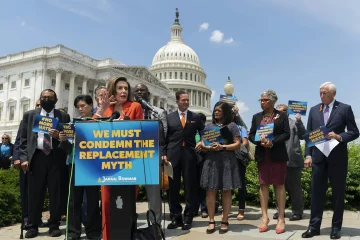
“If you look at Epstein, he’s where many of the conspiracy theories converge: Stop the Steal, The Big Lie, lawfare, deep state, replacement theory,” Hinton says. “Epstein kind of hits all of these – that there’s this elite cabal orchestrating things that ultimately are against the interests of ‘we the people,’ with a sort of antisemitic strain.”
Trump had a personal friendship with Epstein, which has fuelled speculation that the files may contain information that compromises him. But, crucially, Hinton says the files are unlikely to dent loyalty to Trump – regardless of what they say.
“The bottom line is there’s a realisation among many people in Maga that you’ve got to stay with Trump,” he says, adding that the movement will “fade away” without him. “I don’t think there’s going to be a break over this, but it certainly adds strain.”
Sam Phelps, Commissioning Editor, International Affairs, The Conversation
- This article is republished from The Conversation under a Creative Commons license. Read the original article.