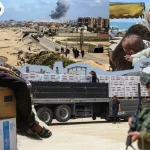
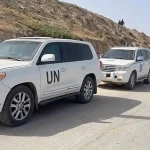
WOMEN in Gaza are shouldering the full weight of survival for their families amid continuing attacks, severe food shortages, and a looming winter crisis, despite a cease-fire now in its second month, the United Nations’ gender equality agency has warned.
Sofia Calltorp, UN Women’s Chief of Humanitarian Action, delivered a stark assessment following her visit to the enclave last week, describing conditions where violence persists, and basic necessities remain catastrophically scarce. Women repeatedly told her: “There may be a cease-fire, but the war is not over.”
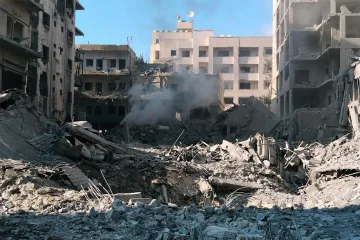
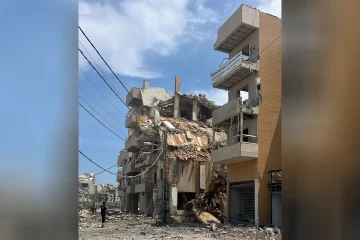
The reality on the ground contradicts any notion of peace. “The attacks are fewer, but the killings continue,” Calltorp said, echoing Monday’s warning from the UN aid coordination office (OCHA) that hostilities, destruction, displacement and casualties persist across the Gaza Strip. UNICEF reported last week that children continue to die in attacks at a rate of two per day since the Hamas-Israel pause began on October 10.
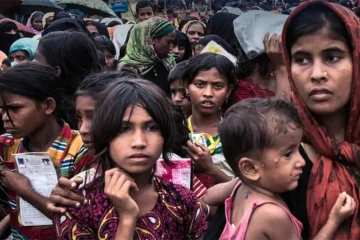
Travelling “from Jabalia in the north to Al-Mawasi in the south,” Calltorp witnessed what she characterised as an existential crisis for Gaza’s women: “To be a woman in Gaza today means facing hunger and fear, absorbing trauma and grief, and shielding your children from gunfire and cold nights. It means being the last line of protection in a place where safety no longer exists.”
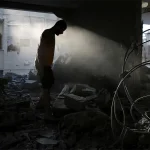
More than 57,000 women now head households in Gaza, left to navigate extreme deprivation alone. Water seeps through makeshift tents, leaving children shivering through the night as winter approaches. One woman returns daily to the rubble of her destroyed home to salvage wood—burning the doors that once sheltered her family just to prepare breakfast for her children.
The economic devastation compounds the crisis. Food prices have quadrupled since the war began in October 2023, with a single egg now costing $2.00—far beyond the reach of women with no income. “It’s completely impossible for many of the women that I met to feed their families,” Calltorp said.
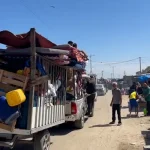
Displacement has become a grinding constant. The women Calltorp interviewed had been forced to move repeatedly—in one case, 35 times since the war began. “Every move means packing the little they have, carrying their children, their elderly parents, choosing between one unsafe place and another.”
The conflict has also created what Calltorp termed a “crisis of women and girls newly disabled by this war,” with over 12,000 now living with long-term war-related disabilities.
Despite conditions that would break most, Gaza’s women expressed determination not just to survive but to rebuild. They told Calltorp they are eager “to work, to lead and to rebuild Gaza with their own hands.”
But survival itself requires urgent intervention. “They need the cease-fire to hold, they need food, they need cash assistance, and they need winterisation supplies, health services and vital psychosocial support,” Calltorp said.
Her final message was unequivocal: “No woman or girl should have to fight this hard just to survive. We need more aid to enter into Gaza systematically and safely, and we need the killings to stop.”