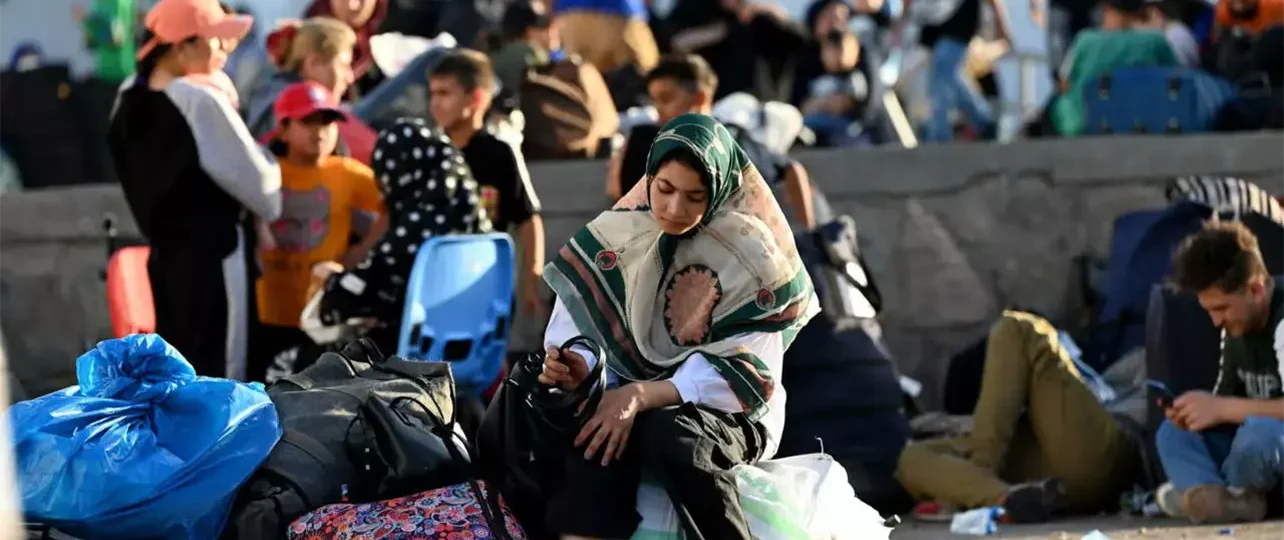

US President Donald Trump’s administration has halted the processing of all immigration applications for Afghan nationals after an Afghan man was identified as the suspected shooter of two National Guard officers.
But Washington’s decision to suspend the immigration cases of tens of thousands of people because of a lone shooter is only the latest example of how Afghan refugees are having their cases politicised by countries that previously promised them safe haven from the Taliban’s Islamic Emirate, particularly those who served alongside foreign forces during the 20-year US-led military intervention in the country.
The suspect in the Washington, DC shooting, 29-year-old Rahmanullah Lakanwal, was evacuated from Afghanistan under the Biden administration following the Taliban’s 2021 return to power, but granted asylum under Trump. Before that, he reportedly served in one of several CIA-run units that faced years of accusations of human rights abuses and potential war crimes.
After almost five decades of conflict and turmoil, Afghans represent one of the largest protracted refugee populations in the world. By the end of 2024, the global refugee population had reached one of the highest levels on record at 36.8 million. Nearly one in every six was from Afghanistan.
As the number of forcibly displaced Afghans rose to more than 10 million globally by June 2025, political narratives hardened. Often, they are cast not as refugees or asylum seekers entitled to protection, but as “deportables” subject to exclusion, criminalisation, and forced return.
Nearly 90% of Afghan refugees reside in Afghanistan’s neighbours Iran and Pakistan, with a significant population of over 100,000 registered Afghan refugees and asylum seekers – primarily those hoping to transit to Europe – also living in Türkiye.
Pathways to permanent legal status for Afghan refugees globally are limited and highly conditional. Most are confined to temporary protection, with access to long-term residency or citizenship often restricted to exceptional circumstances, such as marriage to a citizen or resettlement in a third country.
Following the withdrawal of the US and allied forces from Afghanistan and the subsequent return of the Taliban to power, the US launched one of its largest Afghan resettlement efforts, prioritising individuals who had assisted the US mission, and ultimately admitted close to 200,000 Afghans under various humanitarian pathways. The number of Afghans resettled to EU countries is far smaller. Since 2010, fewer than 5,000 Afghan refugees have been formally resettled as refugees, with slightly larger numbers as asylum seekers, across the EU’s 27 member states.
From solidarity to forced return
Earlier waves of Afghan displacement – particularly during the 1970s – were met with a degree of regional solidarity in Iran, Pakistan, and Türkiye, often framed through shared religious and cultural ties.
Over time, however, these countries have adopted increasingly restrictive immigration and refugee policies, while political narratives have shifted towards scapegoating Afghan refugees, blaming them for domestic economic pressures and national security concerns.
In a recent interview, the Vice-Chair of the Iranian Parliament’s National Security Commission questioned “how long” Iran should continue hosting Afghans, citing their perceived burden on the country’s economic, livelihood, and healthcare systems. Similar rhetoric has been echoed by officials in Pakistan and Türkiye, and often used to justify mass deportations, even in the face of ongoing instability and insecurity in Afghanistan.
In Iran, policies toward Afghans quickly shifted from initial accommodation to increasingly restrictive rules that limited rights and access to documentation.
In 2003, the Iranian government introduced the Amayesh card system – a centralised registration mechanism that replaced all previous documentation for refugees. Since 2007, however, obtaining new Amayesh cards has become increasingly difficult, as the system has shifted its focus primarily to renewing previously issued cards.
These restrictive measures continued even after the Taliban’s return to power in 2021, when newly arrived Afghans were placed into short-term or temporary registration programmes instead of being granted refugee status.
As documentation pathways narrowed, many Afghans were left without any government-recognised status, enabling authorities to frame their mass deportations as the removal of “illegal immigrants” and portray them as a security threat.
Bolstered by these narratives, anti-Afghan sentiment among the public has also intensified in recent years, with social media hashtags such as “Expulsion of Afghans, a national demand” repeatedly trending. Deportations have surged accordingly, rising from roughly half a million in 2022 and 2023 to even higher levels in 2024, alongside increasingly aggressive border enforcement.
Anti-Afghan sentiment in Iran has been further fuelled by nationalist rhetoric following Israel’s bombings in 2025, with government officials vowing to deport up to two million “illegal Afghans”.
Even worse in Pakistan
In Pakistan, Afghan refugees who were once received under the banner of religious and cultural solidarity now face growing hostility and mass expulsions.
For more than four decades, Pakistan has hosted about 1.5 million Afghans under Proof of Registration (PoR) cards and another 1.7 million without documentation.
In recent years, economic hardship, political instability, and heightened tensions along the Durand Line have hardened both public sentiment and state policy. The country continues to rely on the colonial-era Foreigners Act of 1946, which grants broad powers of detention and deportation without due process and leaves refugees vulnerable to arbitrary enforcement.
Pakistani government officials increasingly portray Afghans as security and economic threats, fuelling public xenophobia and justifying restrictive measures.
In late 2023, Pakistan launched the Illegal Foreigners Repatriation Plan, authorising the arrest and deportation of undocumented Afghans, including long-term residents and, in some cases, PoR card holders. By mid-2025, more than 800,000 Afghans had been expelled or “voluntarily” repatriated under coercive conditions.
UN human rights experts warned that these removals may violate the principle of non-refoulement, as many returnees, particularly women and children, face potential persecution and economic deprivation in Taliban-controlled Afghanistan.
Pakistani government officials increasingly portray Afghans as security and economic threats, fuelling public xenophobia and justifying restrictive measures.
In 2025, as clashes escalated along the Durand Line, the public relations wing of the Pakistan Armed Forces released a provocative song referring to Afghans as “Namak Haram” – a term implying betrayal or disloyalty. Against this backdrop, many Afghans now find themselves trapped between a host country that views them as expendable and a homeland that remains unstable and unsafe.
The hard road to Europe
Türkiye, the world’s largest refugee-hosting country, is a signatory to the 1951 Refugee Convention but applies a geographical limitation that restricts full refugee status to individuals fleeing from Europe.
As a result, Afghans in Türkiye are not eligible for full refugee status and are instead granted international protection status (IPS), which offers fewer rights and less stability.
A major turning point in Türkiye’s refugee policy came in 2018, when the Directorate General of Migration Management (DGMM) assumed responsibility for refugee status determination from the UN’s refugee agency, UNHCR. This transfer marked a shift toward a more fragmented and inconsistent asylum system, which has left many Afghans in prolonged legal limbo.
Movement restrictions and the confinement of registered Afghans to designated “satellite provinces” have also forced many to become “undocumented by necessity” in order to live in major cities where economic opportunities are more accessible.
Like Iran and Pakistan, public discourse in Türkiye has also grown increasingly hostile towards refugees. For instance, during the last election, a far-right party released a short film portraying a dystopian future in which Türkiye is governed by Syrians – the country’s largest refugee group.
In the previous election cycle, the leader of the main opposition party similarly inflamed anti-refugee sentiment by declaring that Türkiye was “caught in the Afghan flood” and promising to send all Afghans back if elected.
Türkiye has also dramatically increased deportations and border pushbacks in recent years, denying Afghans the opportunity to claim asylum. While thousands of Afghans have been deported annually for years, the numbers rose sharply in 2022, shortly after the Taliban’s return to power, when nearly 50,000 Afghans were deported within just eight months.
And even the relatively few Afghan refugees who do make it to Europe continue to face a fragmented and restrictive protection landscape.
Although the EU has framed its response in terms of solidarity and human rights, its migration governance has increasingly relied on containment and conditionality.
Since the 2015 refugee crisis, EU migration policy has emphasised deterrence through border management and aid agreements that prioritise migration control over protection.
Despite the EU’s rhetorical commitment to solidarity, durable protection for Afghans in the EU member states remains limited.
Prior to the Taliban’s return to power, cooperation with Afghanistan was guided, and to some extent enforced, by the Joint Way Forward (2016) and its successor, the Joint Declaration on Migration Cooperation (2021). Both agreements included mechanisms that linked development funding to Kabul’s acceptance of deported Afghans from EU member states, despite Afghanistan’s highly volatile security environment at the time – a condition that prompted significant concern among humanitarian organisations.
Following the Taliban takeover, the underlying logic of these frameworks has persisted, appearing in negotiations between some countries and the Taliban, as well as in assistance directed to Afghanistan’s neighbouring states to discourage secondary movements.
Some EU member states have taken concrete steps in 2025 to continue facilitating the deportation of Afghan nationals. For example, Germany has approved the deployment of two Taliban-appointed consular officers to serve at Afghanistan’s diplomatic missions in Berlin and Bonn to facilitate the deportation of Afghan nationals. Austria has also deported an Afghan national and announced that additional deportations will follow.
Despite the EU’s rhetorical commitment to solidarity, durable protection for Afghans in the EU member states remains limited. Between 2010 and 2025, fewer than 5,000 Afghans were formally resettled through the EU Refugee Resettlement Program, while many others face lengthy asylum procedures or secondary transfers under the Dublin Regulation.
The absence of a unified asylum framework has produced uneven responsibility sharing: Germany and France continue to receive most Afghan applicants, whereas other member states maintain near-zero recognition rates. Conditions in frontline countries remain precarious, characterised by overcrowded camps, prolonged detention, and inadequate access to healthcare and legal aid.
And now the US…
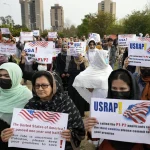
Smaller waves of Afghans have been resettled in the United States through the US Refugee Admissions Program (USRAP) since its establishment in 1980.
The largest influx, however, occurred following the Taliban’s return to power in 2021, when the US prioritised the resettlement of tens of thousands of Afghans under Operation Allies Welcome (the programme that welcomed the suspected Washington shooter), primarily through humanitarian parole or Special Immigrant Visas (SIVs).
While SIV holders and refugees arrived with a clear pathway to lawful permanent residency and eventual citizenship, most parolees were granted only temporary protection. They were expected to apply for asylum to obtain a more durable legal status.
Many of these parolees, particularly those who arrived before 2022, were also granted Temporary Protected Status (TPS), allowing them to live and work legally in the US on a temporary basis.
However, with the change in administration in 2025, the Department of Homeland Security revoked TPS for Afghan nationals, placing nearly 8,000 individuals in legal limbo and at risk of deportation. Moreover, both the SIV programme and USRAP were temporarily suspended in early 2025, and a new travel ban was implemented that included Afghan nationals among those targeted.
Although both programmes had since resumed admitting Afghans, their scope even prior to the Washington shooting remained highly restricted. For instance, the annual ceiling for refugee admissions through USRAP had been reduced to a historic low of just 7,500 individuals, with priority reportedly given to Afrikaners. The SIV programme also faces a considerable backlog.
Following the shooting in Washington, Trump has said that his administration will “permanently pause migration from all Third World Countries,” shortly after he made public statements disparaging Afghans specifically.
What fate awaits returnees?
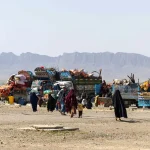
Afghan returnees confront the same deprivations that prompted their departure, now compounded by the costs and constraints of forced or pressured repatriation.
First and foremost, even more than their compatriots who did not or could not leave, they face overlapping socioeconomic, financial, political and climate crises – food insecurity, unsafe water, scarce public services, disaster risk, and declining humanitarian aid – which curtail access to basic goods, healthcare, schooling, and employment.
Reintegration support is minimal; many have depleted assets, incurred unpaid debt, and were unable or not permitted to repatriate savings or livestock, for instance, when leaving Iran or Pakistan.
Property occupation (land or home) on return can trigger violent disputes and secondary displacement.
Perceived access to aid for those returning from Western countries also exposes some to extortion, robbery, or kidnapping.
Many are back to the very conditions of poverty, joblessness, and political repression they fled from. Deprived of a strong social network, largely ethnicity-based, they can’t improve their economic condition.
In addition, returnees face renewed risk of repression since the Taliban’s return to power. The Taliban-led Emirate established in August 2021 has promoted increasingly sweeping restrictions on human rights, freedom, and participation in education, employment, and public life, targeting more specifically girls and women.
Education is restricted to grade 6 for girls. Women have been barred from employment in the public sector and a substantial share of other opportunities, forcing many of them to shift to informal labour or to endure poverty.
Finally, distress and anxiety are substantial, linked to feelings of shame, fear, and guilt for failing in their project of reinstallation and humiliation for being forcefully deported.
Often, the whole family has placed their hope for a better life in the member sent abroad, and has financial expectations, and returnees must deal with their disappointment. Unsurprisingly, intentions to re-migrate remain widespread.
Edited by Ali M. Latifi.
–––––
The New Humanitarian puts quality, independent journalism at the service of the millions of people affected by humanitarian crises around the world. Find out more at www.thenewhumanitarian.org.