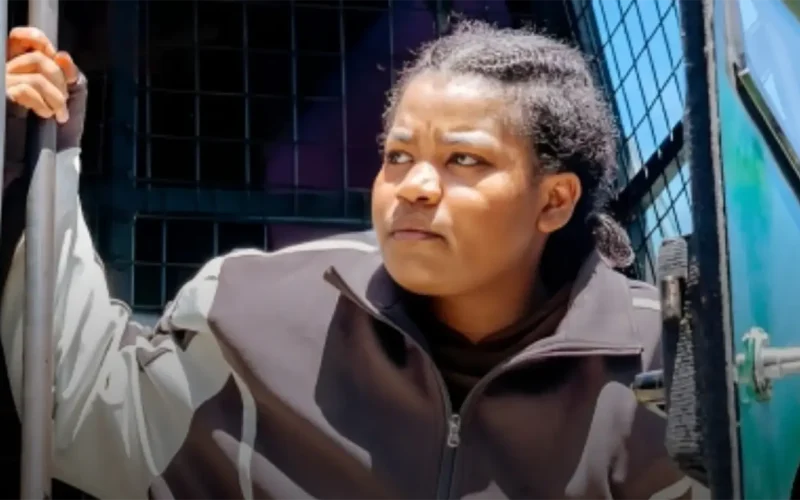
THE story of Jenifer “Niffer” Jovin should haunt all Africans. A cosmetics entrepreneur, she built a business selling beauty products, contributing to Tanzania’s economy and pursuing her dreams in the country she calls home. Her crime? Dancing to a protest song on social media – a few seconds of joy that landed her in the back of a police van, charged with treason alongside over 140 other Tanzanians. For more than two weeks, she languished in prison, facing the death penalty for a TikTok dance.
This is Tanzania in 2025 – a nation where a viral social media challenge becomes grounds for prosecution, where youth seeking change are branded traitors, and where the machinery of state violence has been unleashed with terrifying efficiency on its own people.
While Niffer’s release last week offered a glimmer of hope, her story reveals the depths of Tanzania’s democratic collapse. She is one of 607 people freed so far from an estimated 2,045 arrested after protests surrounding the October 29 election – an election that has plunged East Africa’s most stable nation into its gravest crisis since independence.
An Election That Broke Tanzania
The numbers alone tell a damning story. President Samia Suluhu Hassan claimed victory with 98 percent of the vote in an election where the two main opposition candidates were barred from running. Opposition leader Tundu Lissu – who survived 36 assassination attempts in 2017 – had been imprisoned on treason charges since April for his “No Reforms, No Election” campaign. On election day itself, thousands of mostly young Tanzanians took to the streets, and what followed was not crowd control but carnage.
The death toll remains obscured by deliberate government obfuscation. The opposition Chadema party claims between 1,000 and 2,000 people were killed. The Catholic Church in Tanzania says hundreds died. Human rights organisations report security forces removed bodies from hospitals and streets, transporting them to undisclosed locations in what appears to be a systematic effort to conceal evidence. A CNN investigation documented police shooting unarmed protesters and found satellite evidence of possible mass graves north of Dar es Salaam. If Chadema’s figures are confirmed, this would surpass even the death toll of Kenya’s 2007-2008 post-election crisis – a watershed moment in East African history.
The African Union’s observer mission concluded the election did not comply with democratic principles, citing ballot stuffing, an internet shutdown, excessive military force, and politically motivated abductions. Yet Hassan was sworn in anyway, not in a public stadium as tradition dictates, but in a military parade ground – a symbolic retreat behind the protection of armed forces.
Treason as a Weapon of State Control
The mass treason charges represent something unprecedented in Tanzania’s post-independence history. More than 240 people have faced this charge, which carries the death penalty – teenagers as young as 16, businesspeople, drivers, peasants. Their alleged crime? “Intending to obstruct the election” by causing property damage.
Niffer’s case exemplifies the absurdity and terror of this legal weaponisation. Prosecutors claimed she encouraged youth to prepare for protests through a viral TikTok dance that sampled President Hassan’s voice, urging followers to buy tear gas protection masks from her shop. This was classified as treason – selling safety equipment became evidence of attempting to overthrow the government.
The charges themselves tell a story of state paranoia. Court documents describe a coordinated conspiracy to intimidate the executive branch. But the reality captured in countless videos shows something different: young people, many unarmed, expressing their democratic aspirations and being met with live ammunition.
A Family Affair: Consolidating Power Through Nepotism
Even as international condemnation mounted, Hassan moved to consolidate her grip on power through an extraordinary cabinet reshuffle that has shocked even jaded observers of African politics. In a move that breaks with 60 years of Tanzanian political tradition, Hassan appointed her daughter Wanu Hafidh Ameir as Deputy Minister of Education and her son-in-law, Mohamed Mchengerwa, as Minister of Health. Reports suggest her brother-in-law controls the Finance Ministry, while a family friend who served as a matchmaker for the family now heads the Defence Ministry.
Tanzania, long considered East Africa’s model of meritocratic governance – the antithesis of Kenya’s ethnic patronage politics – has crossed a line no previous president dared approach. Under Julius Nyerere and all his successors, family members remained distant from the cabinet corridors. Now, in a matter of weeks, Hassan has transformed her government into what critics call a family enterprise masquerading as a state.
The timing is telling. These appointments followed not just the disputed election but also widespread allegations of vote-rigging, mass killings, and the systematic persecution of opposition figures. They represent a bunker mentality – a president surrounding herself with those bound by blood and loyalty rather than competence or public accountability.
Political analysts warn that when family ties replace institutional authority, democracy dies quietly. The concentration of power within Hassan’s inner circle signals a shift from institution-based politics to personal rule, echoing patterns seen in Uganda’s Museveni dynasty and Equatorial Guinea’s Obiang regime. The message is clear: trust no one outside the family, because the family controls everything.
Deflection and Denial: The “Foreign Provocateur” Narrative
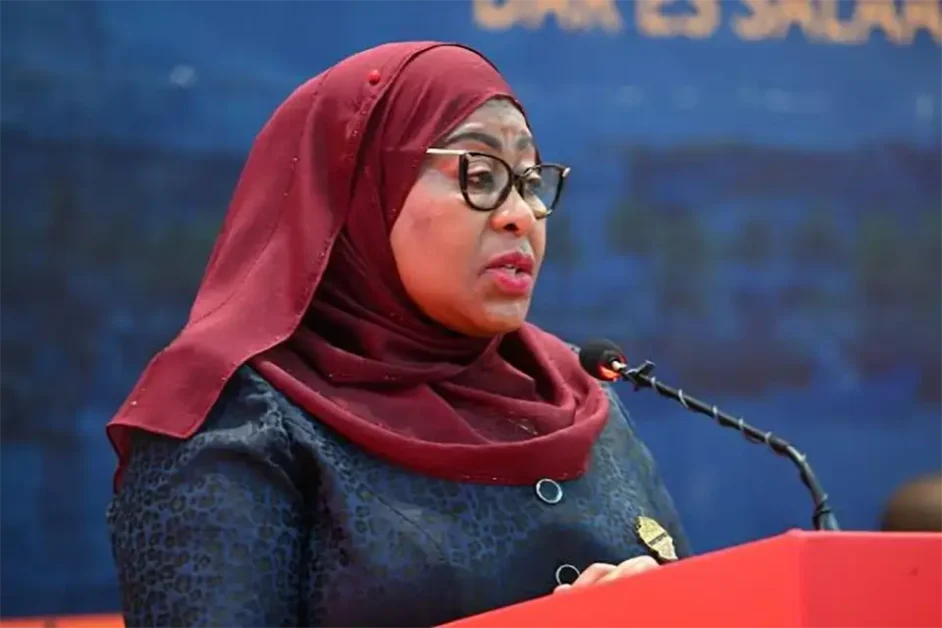
Faced with mounting international pressure, Hassan has responded not with introspection but with defiant finger-pointing. In a recent address to a gathering of elders in Dar es Salaam, she blamed foreign actors for orchestrating the violence, claiming outsiders “have been irritated by Tanzania’s stability” and came “to destroy this country after destroying their own.”
Without providing evidence, Hassan alleged that young protesters were paid by coordinators funded from abroad, coached to “parrot and sing exactly what happened in Madagascar” as part of a plot to topple her government. She characterised the demonstrations not as legitimate protest but as “violence with malicious intentions”—a manufactured coup attempt rather than an expression of popular frustration.
“Who are you?” she demanded of foreign critics, dismissing their concerns as colonial arrogance. “Do they still think they’re still our masters, our colonisers? Why, because of the little money they give us?”
This narrative serves multiple purposes. It delegitimises genuine domestic grievances by casting protesters as foreign pawns rather than citizens with valid complaints. It allows Hassan to position herself as a nationalist defender against neo-colonial interference rather than an authoritarian crushing dissent. And it provides justification for the brutal security response—if the protests were an attempted coup, then lethal force becomes proportional and necessary.
Yet the facts contradict this convenient mythology. The protesters were overwhelmingly young Tanzanians expressing frustration with political exclusion, economic hardship, and the erosion of democratic freedoms. The grievances are homegrown: 52 documented enforced disappearances in the 25 days before the election, the barring of opposition candidates, a political environment that the African Union described as “not conducive to peaceful conduct,” and an election marred by ballot stuffing and irregularities.
Hassan’s claim that foreign agents orchestrated the unrest echoes the rhetoric of authoritarians across the continent and beyond – blame outsiders, deny responsibility, and deflect from uncomfortable truths about popular discontent.
The International Response: Isolation Deepens
The global reaction has been swift and damning. The United States issued travel warnings for Tanzania and expressed “deep concern” over reports of the mistreatment of activists. Two influential U.S. senators called the election results “less than credible.” European Parliament members are pushing to block aid to Tanzania. The UN human rights chief called for investigations into the killings and the alleged concealing of evidence.
This represents a dramatic reversal of fortune for Hassan, who initially garnered international praise when she assumed office in 2021 after the death of John Magufuli. She was seen as a potential reformer who might reverse her predecessor’s authoritarian drift. Instead, critics now argue she has outdone Magufuli in suppressing dissent while maintaining a veneer of respectability that her predecessor never bothered with.
Tanzania increasingly finds itself in the company of pariah states—isolated diplomatically, facing potential sanctions, and watching as investment and tourism decline. The UK Foreign Office advised against all but essential travel, citing shortages of food, fuel, and cash compounded by internet restrictions. This is not the profile of a stable, investment-worthy nation but of a country in crisis.
The Faces Behind the Statistics
Beyond the geopolitics and the power plays are individual tragedies that illuminate the human cost of Tanzania’s democratic collapse. Niffer represents just one story among thousands.
Consider the teenagers – 16 and 17 years old – charged with treason, their futures destroyed before they truly began. Think of the families conducting desperate searches, visiting one police station after another, one hospital after another, seeking loved ones who vanished during the protests. Remember the journalists killed: Master Tindwa of Clouds Media, shot at his home in Temeke, and Kelvin Lameck Mwakangondya of Baraka FM, killed while on duty in Mbeya on election day.
Religious leaders have pleaded for reconciliation. Bishop Benson Bagonza of Tanzania’s Evangelical Lutheran Church warned that treason charges would deepen acrimony: “The only option for the government to keep at least the relative peace now is to grieve with the people instead of arresting and taking people to court.”
The Catholic Church condemned the killings in stark terms, saying Tanzania “has lost its dignity” and that such acts “are a disgrace before God.” Archbishop Jude Thaddaeus Ruwa’ichi’s words carry particular weight in a nation where the Church has historically served as a moral conscience.
A Calculated Retreat: The Presidential “Mercy”
Hassan’s decision to order the Director of Public Prosecutions to review cases and release protesters represents not magnanimity but political calculation. Presenting herself as a “mother and guardian,” she suggested many arrested youth had “simply followed the crowd” or didn’t understand their actions.
This framing is itself insulting – casting politically engaged young people as naive children rather than citizens with legitimate grievances. Yet it provides political cover for mass releases that address international pressure while maintaining the narrative that the government was justified in its initial crackdown.
Of the 2,045 arrested, approximately 1,736 are expected to be released. But this leaves over 140 others still facing the courts, their fates uncertain. And those released bear the scars – both physical and psychological – of weeks in custody, beatings, denial of medical treatment, and the trauma of facing potential execution for exercising basic democratic rights.
The releases do nothing to address the core issues that triggered the protests: the rigged election, the systematic suppression of opposition, the culture of impunity for security forces, and the concentration of power in the hands of Hassan’s family circle.
What Happens Next: Three Possible Futures
Tanzania now stands at a crossroads, with three potential trajectories ahead:
Further Entrenchment: Hassan doubles down on authoritarian control, using family loyalty and security force brutality to maintain power. Opposition figures remain imprisoned or exiled, civil society is crushed, and Tanzania joins the ranks of African states ruled by entrenched family dynasties. International isolation deepens, but Hassan prioritises regime survival over economic prosperity or democratic legitimacy.
Cosmetic Reforms: Under international pressure, Hassan implements superficial changes—more prisoner releases, a powerless inquiry commission, rhetorical commitments to dialogue—while maintaining the fundamental structures of control. Elections continue to be held but remain non-competitive. Opposition exists but is carefully managed and never genuinely threatens the ruling party’s dominance. This represents the most likely near-term outcome.
Genuine Crisis and Potential Change: Economic deterioration, continued international isolation, and persistent domestic resistance create unsustainable conditions. Whether through internal party revolt, security force defection, or a broader social movement, Hassan’s grip weakens. This path offers the possibility of democratic renewal but also risks further violence and instability.
The Stakes for East Africa
Tanzania’s crisis reverberates far beyond its borders. For decades, it served as East Africa’s anchor of stability—a nation that avoided the ethnic conflicts plaguing Kenya, the authoritarianism of Uganda, and the instability of Burundi. If Tanzania can descend into state-sanctioned violence and dynastic rule, no country in the region can claim immunity from democratic backsliding.
The precedent is particularly dangerous for youth movements across Africa. The message sent by Hassan’s government is chilling: express political aspirations and face lethal force; challenge election irregularities and be branded a traitor; use social media for political expression and risk prison or death.
Yet the courage of Tanzania’s young people—who took to the streets knowing the risks, who refused to accept a sham election, who continue to speak out despite repression—also offers hope. They represent a generation unwilling to accept the political norms that previous generations tolerated.
Conclusion: Watching Democracy Die
Jenifer “Niffer” Jovin is free, but Tanzania is not. Her release represents a tactical retreat by a government facing international opprobrium, not a genuine commitment to democratic values or human rights.
More than 140 people remain entangled in a justice system weaponised for political control. Hundreds, perhaps thousands, are dead—their bodies hidden, their families left to grieve without closure, their killers protected by state power. Opposition leaders sit in prison or live in exile. A president surrounded by family members consolidates dynastic control while blaming foreign interference for homegrown discontent.
This is how democracy dies in Tanzania—not with a dramatic coup or revolutionary upheaval, but through a thousand small acts of repression: a social media post classified as treason, a dance interpreted as sedition, a protest met with bullets, an election stripped of meaning, and a cabinet transformed into a family business.
The international community watches, issues statements, and debates sanctions. But for ordinary Tanzanians—the entrepreneur who wanted only to sell cosmetics and contribute to her country’s economy, the teenager charged with treason for throwing a stone, the family searching endlessly for a disappeared loved one—words ring hollow without action.
Tanzania’s crisis is a test not just for Hassan’s government but for the international order’s commitment to democratic values, for regional organisations’ willingness to hold member states accountable, and for citizens’ capacity to resist authoritarianism even in the face of overwhelming force.
The world is watching Tanzania. The question is whether we will do more than watch as another African democracy slips into darkness—or whether we will find the courage to stand with those who, like Niffer, simply wanted to dance, to dream, and to live in freedom.
The choices made in the coming weeks and months will determine not just Tanzania’s future but the trajectory of democratic hope across an entire continent. For the sake of those still imprisoned, those who died seeking change, and those who continue to resist, the world cannot afford to look away.