GENEVA — The UN Refugee Agency announced on Tuesday that four humanitarian leaders from Mexico, Iraq, Tajikistan and Ukraine will receive the 2025 UNHCR Nansen Refugee Awards for their work supporting displaced populations.
The regional winners include a Mexican business executive who has helped employ hundreds of refugees, an Iraqi activist supporting conflict survivors, an Afghan refugee educator in Tajikistan, and a Ukrainian NGO delivering aid in active war zones.
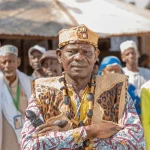
UNHCR will present the awards at a December 16 ceremony in Geneva alongside the Global Laureate, Martin Azia Sodea, a village chief in Cameroon whose community has integrated tens of thousands of refugees from the Central African Republic.
Regional Winners
Pablo Moreno Cadena of Mexico, a senior executive at appliance manufacturer MABE, has led company efforts to hire refugees from Honduras, El Salvador and Guatemala. The initiative has inspired over 600 other Mexican companies to adopt similar practices.
Taban Shoresh, an Iraqi aid worker and genocide survivor, founded The Lotus Flower, a women-led organisation in Iraq’s Kurdistan region. The group has grown from two staff members in 2016 to 150 today, assisting over 100,000 people affected by conflict through education and skills development.
Negara Nazari, an Afghan refugee who arrived in Tajikistan in 2012, established the Ariana Learning Centre after earning an economics degree. The centre has expanded from 20 students in 2020 to over 1,200 learners, including both Afghan refugees and local Tajik children, operating on a pay-what-you-can basis.
Proliska, a Ukrainian NGO founded in 2006, operates in some of Ukraine’s most dangerous areas following Russia’s 2022 invasion. The organisation provides emergency assistance, evacuations and supplies to millions affected by the war, with staff often serving as first responders after airstrikes.
The UNHCR Nansen Refugee Award was established in 1954 to honour outstanding service to refugees, internally displaced people and stateless populations. It is named after Fridtjof Nansen, a Norwegian humanitarian who served as the first High Commissioner for Refugees.