IN the chaos and carnage of Sunday’s horrific antisemitic attack at Bondi Beach – where two gunmen opened fire on a Hanukkah celebration, killing at least 15 people – one image has electrified the world. It shows a man in a white t-shirt sprinting toward danger, not away from it. In grainy but unmistakable footage that has been viewed millions of times, Ahmed al Ahmed launches himself at one of the gunmen, wrestling the rifle from the attacker’s hands before pointing the weapon back at him.
The 43-year-old Syrian Muslim father of two and fruit shop owner was shot multiple times in the confrontation. He remains hospitalised, undergoing multiple surgeries. Yet his act of extraordinary courage has done something perhaps even more remarkable than saving lives – it has forced Australians, and much of the world, to confront the dangerous ease with which entire communities are painted with the broad brush of terrorism.
The Uncomfortable Truth
The perpetrators of this attack were themselves Muslims – a 50-year-old father and his 24-year-old son who authorities say were inspired by Islamic State ideology. The crime was an act of pure antisemitic terror. In any other circumstance, this would have become yet another data point in the narrative that has dominated Western discourse since 9/11: that Islam and Muslims represent an inherent threat.
But Ahmed al Ahmed’s heroism has scrambled that script in ways that cannot be ignored.
Australian Prime Minister Anthony Albanese declared Ahmed an “Australian hero,” stating that what Australians witnessed was “the worst of humanity” in a terrorist act, but we also saw an example of the best of humanity in Ahmed al Ahmed. Even more striking was the response from Israeli Prime Minister Benjamin Netanyahu, who, despite simultaneously blaming the Australian government for supposedly fostering antisemitism, paid tribute to Ahmed, saying, “We saw an action of a brave man – turns out a Muslim brave man, and I salute him – that stopped one of these terrorists from killing innocent Jews.

A Fundraising Phenomenon
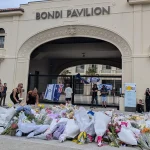
The global response has been overwhelming. A GoFundMe campaign for Ahmed has raised more than A$1.9 million (US$1.26 million), with contributions pouring in from around the world. Billionaire hedge fund manager Bill Ackman was among the largest donors, contributing A$99,999 and sharing the fundraiser. Outside the hospital where Ahmed recovers, complete strangers have left flowers and messages of support.
One visitor captured the moment’s significance perfectly. Veronica Pochuev, who brought flowers with her husband and daughter, explained: “My husband is Russian, my father is Jewish, my grandpa is Muslim. This is not only about Bondi, but this is also about every person.
The Islamophobia Epidemic
Ahmed’s heroism arrives at a critical moment. Since the September 11, 2001, attacks, research has documented how Muslim-American terrorism suspects receive disproportionate government prosecution and media coverage, creating the impression that Muslim-American terrorism is more prevalent than it actually is. The reality tells a different story: since 9/11, the Muslim-American community has helped security and law enforcement officials prevent nearly two of every five al Qaeda terrorist plots threatening the United States, with tips from the Muslim-American community representing the largest single source of initial information to authorities.
Yet the stereotypes persist. Muslims are routinely portrayed as uncivilised and, in the post-9/11 era, as a securitisation threat to the Western world. This has real consequences: After 9/11, ordinary Muslims became targets for abusive and sometimes violent retaliatory attacks across Europe and North America, including verbal abuse, forcible removal of women’s hijabs, and random assaults that left some Muslims hospitalised.
The assumption that Muslims are inherently violent or sympathetic to terrorism has become so normalised that significant proportions of Western publics view Muslim practices as threatening—for instance, 39% of French respondents, 30% of British, and 16% of Germans consider wearing the hijab a threat to European culture.
The Muslim Response: Unity Against Terror
What often goes unreported in Western media is how consistently Muslim communities condemn terrorism. The Australian National Imams Council, the Council of Imams NSW, and the Australian Muslim community released a statement saying they “unequivocally condemn the horrific shootings in Bondi. They added that such acts of violence have no place in society and called for unity, compassion, and solidarity.
This was not an isolated response. The Palestinian Foreign Ministry condemned the shooting and reiterated its “firm rejection of all forms of violence, terrorism and extremism, which contradict humanitarian values. Muslim organisations worldwide issued similar statements of grief and condemnation.
Ahmed’s father, Mohamed Fateh Al Ahmed, who recently arrived in Sydney from Syria, spoke with pride about his son’s actions. “My son is a hero. He served in the police, he has the passion to defend people,” he told ABC News, explaining that when Ahmed “saw people lying on the ground and the blood, quickly his conscience pushed him to attack one of the terrorists and take away his weapon.
The Data Doesn’t Lie
Research consistently debunks the stereotype of Muslims as inherently violent. When asked if “attacks on civilians are morally justified,” responses were almost identical across religious lines: French public (one per cent) versus Muslims in Paris (two per cent); German public (one per cent) versus Muslims in Berlin (0.5 per cent); and British public (three per cent) versus Muslims in London (two per cent).
Evidence collected by the US government shows that white supremacist extremists, not Muslim extremists, pose the greatest domestic terrorism threat in the United States. Yet media coverage of violent extremism remains starkly different depending on the perpetrator’s identity: when the perpetrator of a violent act is white, media coverage is more likely to portray the crime as an isolated event, while when a perpetrator is Muslim or non-white, the crime is more likely to be characterised as an act of terrorism.
A Moment of Moral Clarity
Ahmed al Ahmed’s actions represent something profound: a Syrian Muslim refugee risking his life to save Jewish Australians celebrating Hanukkah. In doing so, he embodied the opposite of everything Islamophobia claims about Muslims. He demonstrated that courage, compassion, and moral clarity transcend religious identity.
His story has resonated particularly powerfully within Jewish communities. One Israeli commentary suggested that Ahmed al Ahmed belongs in the moral family tree of the “Righteous Among the Nations”—the highest honour Israel bestows on non-Jews who risked their lives to save Jews during the Holocaust.
At the National Menorah Lighting in Washington, D.C., Rabbi Levi Shemtov, director of American Friends of Lubavitch, asked all those present to “please pray for the recovery of Ahmed al-Ahmed, someone who is not a member of the Jewish community, but gave up his safety and well-being to stop one of the gunmen.
The Challenge Ahead
Ahmed’s heroism cannot erase the tragedy of what happened at Bondi Beach. Fifteen people are dead, including a 10-year-old child, two rabbis, and a Holocaust survivor. Dozens more are wounded. The trauma will last for years.
But his actions have created an opportunity for a necessary conversation. They force us to confront the cognitive dissonance between our stereotypes and the reality that Muslim communities are as diverse, complex, and capable of extraordinary moral courage as any other.
Australia has witnessed an almost five-fold rise in antisemitic incidents since October 7, 2023, including firebombing, arson, graffiti, and hate speech. At the same time, Muslims in Australia and worldwide face their own epidemic of discrimination and violence rooted in blanket suspicion.
The truth that Ahmed al Ahmed’s courage illuminates is that hatred and violence come from specific individuals and ideologies—not from entire religious communities. The perpetrators of the Bondi attack were Muslims. So was the man who risked everything to stop them.
A Father’s Pride
From his hospital bed, still recovering from multiple gunshot wounds and facing additional surgeries, Ahmed told reporters: “What can I even say? I went through a tough time [that] only God knows about. He asked for prayers and sent positive messages to Australians.
His father’s words may be the most fitting conclusion. Mohamed Fateh al-Ahmed said, “I want the whole world to remember the name of my Muslim son: Ahmed, son of Mohammad Fatih Al-Ahmed. He is the one who risked his life, attacked the terrorist, and could have died in order to protect others and stop the killing.
The world is remembering. The question is whether it will also learn.
Ahmed al Ahmed remains in St George Hospital in Sydney, where he continues to recover from gunshot wounds sustained while disarming one of the Bondi Beach attackers. The investigation into the attack continues, with authorities treating it as an act of antisemitic terrorism.