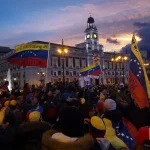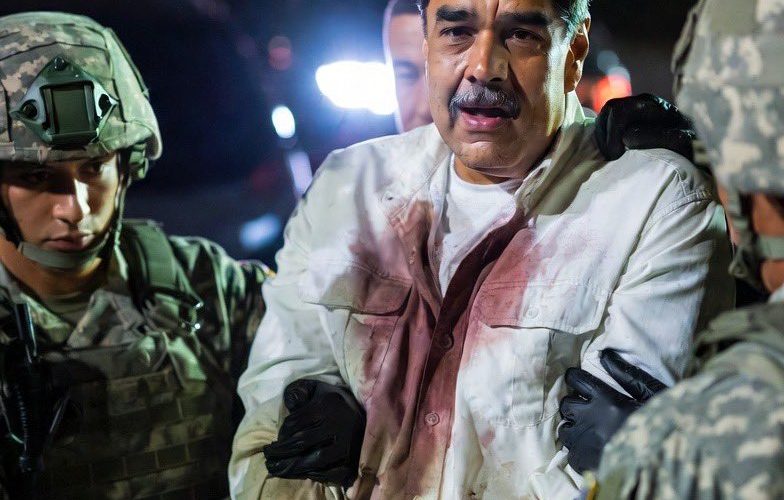
THE international community reacted with shock, condemnation, and alarm to Saturday’s extraordinary U.S. military operation that saw multiple sites in Venezuela’s capital bombed and President Nicolás Maduro and his wife forcibly removed from the country to face criminal charges in New York.
Latin America United in Condemnation
Brazilian President Luiz Inácio Lula da Silva condemned the U.S. bombings and capture of Maduro as crossing “an unacceptable line,” warning that attacking countries “in flagrant violation of international law, is the first step toward a world of violence, chaos, and instability, where the law of the strongest prevails over multilateralism.” Lula’s statement invoked painful historical memories, noting the U.S. attacks recall the “worst moments of interference” in Latin American politics, threatening peace across the region.
Colombian President Gustavo Petro called for immediate United Nations and Organization of American States meetings, describing what he witnessed as missile bombardments. His government reiterated “its conviction that peace, respect for international law, and the protection of life and human dignity must prevail over any form of armed confrontation.”
Chilean President Gabriel Boric Font condemned the strikes, calling for a peaceful resolution to the crisis and reaffirming Chile’s commitment to international law and multilateralism rather than violence and foreign interference.
Cuban President Miguel Díaz-Canel denounced “the criminal attack by the U.S.” on Venezuela, calling for urgent condemnation from the international community for what he described as “State terrorism against the brave Venezuelan people.”
Global Powers Denounce “Armed Aggression”
Russia’s foreign ministry denounced what it called “an act of armed aggression against Venezuela” by the U.S., calling any “excuses” given to justify such actions “untenable.” The ministry statement affirmed solidarity with the Venezuelan people and support for protecting the country’s national interests and sovereignty.
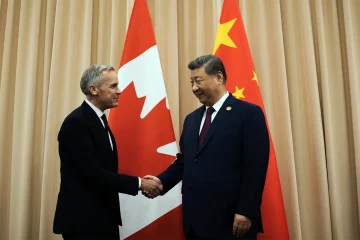
China expressed deep shock and strongly condemned the U.S. attacks on Venezuela, while advising its citizens to avoid travel to the country due to the deteriorating security situation.
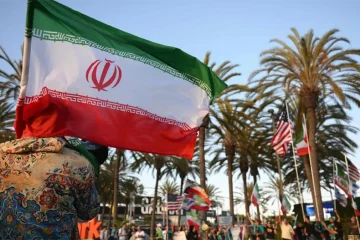
Iran’s foreign ministry strongly condemned “the American military attack on Venezuela and the flagrant violation of the national sovereignty and territorial integrity of the country.”
Belarus President Alexander Lukashenko “categorically condemned” the strikes and the Belarusian Ministry of Foreign Affairs said the U.S.’ “armed aggression” was a “direct threat” to international peace and security.
European Divisions and Caution
French Foreign Minister Jean-Noël Barraud stated that the U.S. operation and Maduro’s capture contradict the principles of international law. France accused the United States of violating Venezuela’s sovereignty through armed aggression.
European Union High Representative Kaja Kallas called for restraint, saying international law and the UN Charter must be upheld, while reiterating the EU’s position that Maduro’s government “lacks legitimacy.”
Germany’s Federal Foreign Office expressed grave concern about the situation, though stopped short of explicit condemnation.
United Nations “Deeply Alarmed”
United Nations Secretary-General António Guterres was “deeply alarmed” after the U.S. strikes, with his spokesman stating: “Independently of the situation in Venezuela, these developments constitute a dangerous precedent.” The statement emphasized the importance of full respect for international law, including the UN Charter, expressing deep concern “that the rules of international law have not been respected.”
Venezuela has requested an emergency meeting of the UN Security Council, with Colombia and other nations supporting the call.
The Operation and Its Aftermath
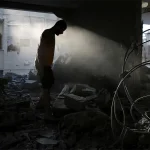
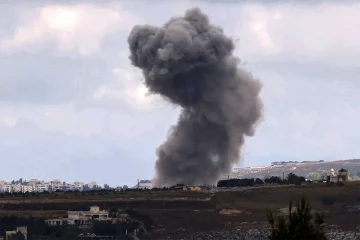
In the early hours of Saturday morning, the United States launched airstrikes on multiple locations across northern Venezuela, including the capital city of Caracas. At least seven explosions were heard in the capital, with strikes hitting Fort Tiuna military installation, La Carlota airport, and La Guaira port.
A Venezuelan ruling party leader told The Associated Press that Maduro and his wife Cilia Flores were at their home within the Fort Tiuna military installation when they were captured, calling it “a kidnapping of the president and the first lady of the country.”
Venezuelan Attorney General Tarek William Saab reported that innocent civilians were killed in the strikes, though exact casualty figures have not been released. Venezuelan Vice President Delcy Rodríguez demanded “immediate proof of life” from the Trump administration, stating the government doesn’t know the whereabouts of the detained leaders.
President Trump announced the operation on Truth Social, calling it a “large scale strike” and confirming that Maduro and his wife were “captured and flown out of the country.” U.S. Attorney General Pam Bondi said the couple would face charges including narco-terrorism, cocaine importation conspiracy, and weapons possession.
U.S. Justification and Political Division
The Trump administration has justified the operation by designating Maduro as the leader of the Cartel de los Soles, which it classified as a foreign terrorist organization in November 2025. Secretary of State Marco Rubio has maintained that Maduro is “NOT the President of Venezuela” but rather “the head of the Cartel de Los Soles, a narco-terror organization.”
The operation has exposed deep divisions in Washington. Senator Brian Schatz, a member of the Senate Foreign Relations Committee, warned against U.S. military involvement in Venezuela, posting that the United States has “no vital national interests in Venezuela to justify war.”
Massachusetts Rep. Jim McGovern called it an “unjustified, illegal strike on Venezuela,” while Sen. Andy Kim said the strike “sends a horrible and disturbing signal to other powerful leaders across the globe that targeting a head of state is an acceptable policy for the U.S. government.”
Regional Consequences and Uncertainty
Trinidad and Tobago’s Prime Minister Kamla Persad-Bissessar emphasized that her country “is NOT a participant in any of these ongoing military operations” and “continues to maintain peaceful relations with the people of Venezuela.”
With Maduro’s removal, Venezuela faces profound uncertainty. Under Venezuelan law, Vice President Delcy Rodríguez would assume power, though her lack of military backing and reports of her possible departure to Russia complicate the succession. Other regime figures like Diosdado Cabello, who also faces U.S. indictment, remain powerful forces within the Venezuelan government and military apparatus.
The strikes represent a dramatic escalation in the Trump administration’s pressure campaign, which has included deploying the aircraft carrier USS Gerald R. Ford to the Caribbean, intercepting oil tankers, and conducting at least 35 strikes on suspected drug vessels that have killed over 115 people since September 2025.
As the world processes this unprecedented act — the forcible removal of a head of state through military action — questions multiply about the future of Venezuelan sovereignty, regional stability, and the international order itself. What remains clear is that Saturday’s events have sent shockwaves through diplomatic capitals worldwide, with most of the international community viewing the operation not as a victory for justice, but as a dangerous precedent that threatens the foundations of international law.