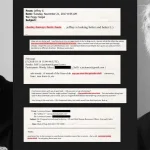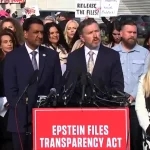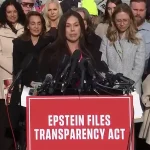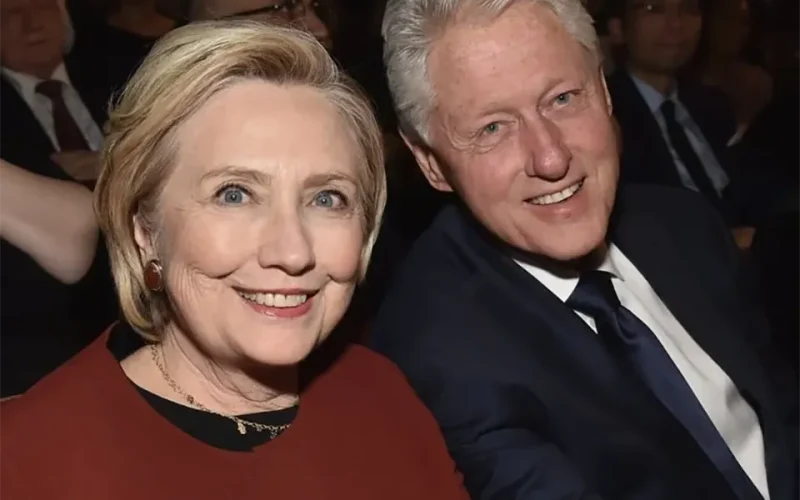
IN an extraordinary act of defiance that could land them in prison, former President Bill Clinton and former Secretary of State Hillary Clinton refused to appear before Congress, releasing a blistering letter accusing House Oversight Committee Chairman James Comer of weaponising his power for partisan purposes while the nation faces mounting crises.
The standoff marks an unprecedented escalation in the Republican-led investigation into the late convicted sex offender Jeffrey Epstein, with Comer announcing contempt of Congress proceedings will begin next week – a rarely invoked enforcement tool that carries up to one year in prison and fines of up to $100,000.
A Letter That Pulls No Punches
The Clintons’ eight-page letter, released publicly on Tuesday, represents one of the most forceful rebukes of congressional authority by any former first couple in American history. Writing directly to Comer, they painted a damning picture of what they described as America’s democratic backsliding under the current administration.
“This past year has seen our Government engage in unprecedented acts, including against our own citizens,” the Clintons wrote, cataloging what they view as authoritarian measures: masked federal agents seizing people from homes and workplaces, scientists deported without due process, January 6 rioters pardoned and celebrated as heroes, national security agencies dismantled, and universities threatened into surrendering free speech rights.
The letter’s most striking passage came early, framing their refusal as a principled stand: “Every person has to decide when they have seen or had enough and are ready to fight for this country, its principles and its people, no matter the consequences. For us, now is that time.”
Accusations of Selective Enforcement
The Clintons levelled devastating criticisms at Comer’s handling of the Epstein investigation, accusing him of abandoning the inquiry in favour of political theatre. “You subpoenaed eight people in addition to us. You dismissed seven of those eight without any of them saying a single word to you,” they wrote, adding that in an entire year of investigation, only two people have been interviewed.
They accused Comer of a double standard, noting he remained silent when former President Donald Trump, now the sitting president, took the same position about congressional subpoenas just three years ago. “You claim your subpoenas are inviolate when they are used against us, yet were silent when the sitting President took the same position,” the letter stated.
The former first couple also challenged Comer’s refusal to use his oversight powers against the Justice Department, which they say has failed to release all Epstein files as required by law. “You have done nothing with your oversight capacity to force the Department of Justice to follow the law and release all its Epstein files, including any material regarding us as we have publicly called for,” they wrote.
The Contempt Threat and Political Fallout
Speaking to reporters after Bill Clinton failed to appear for his scheduled Tuesday deposition, Comer emphasised the bipartisan nature of the subpoenas. The subpoenas were approved unanimously by voice vote in July 2025 by both Republicans and Democrats on the Federal Law Enforcement Subcommittee.
“Bill Clinton did not show up, and I think it’s important to note that this subpoena was voted on in a bipartisan manner by this Committee,” Comer said, adding that not a single Democratic member of the Oversight Committee attended the deposition.
The chairman insisted no wrongdoing is alleged against the Clintons. “No one’s accusing the Clintons of any wrongdoing. We just have questions,” Comer told reporters.
However, the Clintons’ letter suggests they see the inquiry as purely political persecution. “We are confident that any reasonable person in or out of Congress will see, based on everything we release, that what you are doing is trying to punish those whom you see as your enemies and to protect those you think are your friends,” they wrote.
A Constitutional Standoff
The Clintons’ lawyers argued in a separate legal letter that the subpoenas are invalid and legally unenforceable, untethered to any legitimate legislative purpose. They noted their clients had already provided the limited information they possess about Epstein and his associate Ghislaine Maxwell.
The former president’s relationship with Epstein has been well documented throughout the 1990s and early 2000s. According to the committee, Epstein visited the Clinton White House at least 17 times during his presidency, and Clinton flew on Epstein’s private plane more than 25 times after leaving office. Clinton has never been accused of any criminal wrongdoing and has expressed regret for the association after Epstein’s crimes became known.
The Clintons offered to provide sworn written statements instead of appearing in person—the same accommodation Comer granted to seven of the other eight subpoenaed individuals. Comer rejected this offer, insisting on closed-door depositions.
“You accepted the least from those who know the most but demand the most from those who know the least,” the Clintons charged. “To say you can’t complete your work without speaking to us is simply bizarre.”
A Warning About Congress and History
In perhaps the letter’s most defiant passage, the Clintons warned Comer that his pursuit of contempt charges would backfire, suggesting they would welcome the opportunity to make their case publicly. “Despite everything that needs to be done to help our country, you are on the cusp of bringing Congress to a halt to pursue a rarely used process literally designed to result in our imprisonment,” they wrote.
They pledged to defend themselves not just legally but in the court of public opinion. “We also will defend ourselves in the public arena and ensure this country knows exactly what you are doing and why you are doing so, instead of helping the American people who need this Congress’s work and protection,” the letter stated.
The letter concluded with three stark warnings to Comer about the consequences of his actions: “Continue to mislead Americans about what is truly at stake, and you will learn that Americans are better at finding the truth than you are at burying it. Continue to pursue autopilots instead of penning laws Americans need, and you will learn that you are signing away any remaining chance of being on the right side of history. Continue to abet the dismantling of America, and you will learn that it takes more than a wrecking ball to demolish what Americans have built over 250 years.”
What Comes Next
The House Oversight Committee is expected to vote on a contempt resolution next week. If approved, it would advance to the full House for a vote on whether to recommend the matter to the Justice Department for prosecution. Hillary Clinton is scheduled for a Wednesday deposition and faces similar contempt proceedings if she fails to appear.
The Justice Department would then have to decide whether to prosecute—a politically fraught decision given that the Clintons are challenging the very legitimacy of the subpoenas. Recent precedents suggest varying outcomes: Steve Bannon and Peter Navarro were sentenced to prison for defying January 6 committee subpoenas, while the Biden-era Justice Department declined to prosecute Attorney General Merrick Garland after he was held in contempt by Republicans.
Notably, Comer indicated the committee would not attempt to compel testimony from President Trump, despite photographs showing him socialising with Epstein, saying Congress cannot force a sitting president to testify.
No former president has ever been successfully compelled to testify before Congress, though several have done so voluntarily. The Clintons’ refusal sets up a constitutional confrontation that could test the limits of congressional subpoena power and potentially reach the Supreme Court.
For now, both sides appear dug in, with the Clintons framing their defiance as a matter of principle in defence of democratic norms, while Republicans insist they are simply seeking answers about the government’s handling of one of the most notorious criminal cases in modern American history.