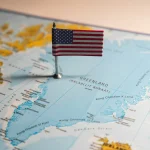

THE foundations of the Western alliance are being stress-tested in ways unimaginable even during the Cold War’s darkest hours. President Donald Trump’s Saturday ultimatum – demanding eight European nations accept escalating tariffs until the United States acquires Greenland – has thrust NATO into uncharted territory where the language of partnership has been replaced by the vocabulary of coercion.
This is not a negotiation between allies. It is an ultimatum that treats sovereign democracies as obstacles to be overcome rather than partners to be consulted.
The Mechanics of Pressure
The tariff scheme reveals calculated escalation. Beginning February 1, an additional 10% levy hits imports from Denmark, Norway, Sweden, France, Germany, the Netherlands, Finland, and Great Britain – all nations already bearing existing Trump tariffs. By June 1, that burden climbs to 25%, with no sunset provision except American acquisition of Danish territory.
The economic weapon is aimed at democracies that collectively represent America’s oldest and most steadfast security partners. These are nations that stood with Washington through two world wars, the Cold War standoff, and the post-9/11 conflicts in Afghanistan and Iraq. Now they face punishment for defending principles the Atlantic alliance was built to protect: sovereignty, territorial integrity, and the right of peoples to self-determination.
The European Response: Unity Under Fire
The reaction from European capitals has been swift and unambiguous. British Prime Minister Keir Starmer’s response was particularly striking in its directness, calling tariffs against NATO allies pursuing collective security “completely wrong.” This is from a leader whose nation has cultivated the “special relationship” with Washington for eight decades.
European Commission President Ursula von der Leyen and European Council President Antonio Costa issued identical statements pledging “full solidarity” with Denmark and Greenland, warning that such tariffs “would undermine transatlantic relations and risk a dangerous downward spiral.” The coordinated messaging signals that Brussels views this not as a bilateral dispute but as an assault on European sovereignty itself.
Cyprus has convened an emergency meeting of EU ambassadors for Sunday—a rare weekend mobilisation that underscores how seriously the bloc treats this threat. The unity displayed so far represents Europe’s recognition that if territorial demands backed by economic coercion succeed against Denmark, no member state is safe from similar pressure.
The Legal and Constitutional Questions
Trump’s tariff threat operates in a constitutional grey zone that the Supreme Court is currently examining. The president has offered no legal justification for tariffs explicitly designed to compel territorial transfer—a purpose that appears to stretch emergency economic powers beyond any historical precedent.
Trade expert William Reinsch warns that Trump’s decision to target specific EU nations differently could convince the European Parliament that recently negotiated trade agreements are “pointless” since the president is already circumventing them. The threat doesn’t just undermine current deals; it calls into question whether any negotiated framework can survive presidential whim.
The Greenland Question: Security or Expansion?
Trump frames his Greenland ambitions through the lens of security, citing the strategic Arctic location and valuable mineral reserves. Yet his argument founders on basic facts. The United States already operates Pituffik Space Base in Greenland with approximately 200 personnel, and a 1951 treaty permits Washington to deploy as many forces as desired. Greenland is covered by NATO’s Article 5 collective defence provision.
What additional security does ownership provide that these existing arrangements do not? Many European officials have concluded that this push reflects territorial ambition rather than strategic necessity—a 19th-century expansionist impulse colliding with 21st-century alliance structures.
EU foreign policy chief Kaja Kallas captured the geopolitical irony: “China and Russia must be having a field day. They are the ones who benefit from divisions among allies.” At the moment, Beijing and Moscow work to fracture Western unity, and Washington is accomplishing their objective for them.
The Democratic Deficit
A Reuters/Ipsos poll reveals that fewer than one in five Americans support acquiring Greenland. The residents of Greenland itself—an autonomous territory with its own parliament and the right to pursue independence—have made clear they have no interest in American governance. Protesters demonstrated Saturday in both Denmark and Greenland against Trump’s demands, calling for the territory’s right to determine its own future.
This is diplomacy disconnected from democratic will on both sides of the Atlantic. European nations are being economically punished for respecting the sovereignty of their own people and allies, while the American public shows little enthusiasm for the territorial expansion being pursued in their name.
The Moment of Truth
Senators Jeanne Shaheen and Thom Tillis, bipartisan leaders of the Senate NATO Observer Group, warned that “continuing down this path is bad for America, bad for American businesses and bad for America’s allies.” Their intervention signals that Trump’s approach lacks even full support within his own government.
Europe now faces a defining choice. ING Research’s Carsten Brzeski counsels patience: “Just ignore it and wait and see.” He notes that Europe has already demonstrated it won’t accept everything, making the tariff threat “actually a step forward compared to the threatened military invasion.”
But can democracies truly ignore ultimatums backed by economic warfare? And what precedent does capitulation set for future demands?
The transatlantic alliance has survived crises of confidence before – Suez, Vietnam, Iraq, Snowden. But those were disputes over policy, intelligence sharing, or military strategy. This is different. This challenges the foundational principle that sovereign democracies do not coerce territorial transfers from allies through threats of economic punishment.
What Comes Next
The emergency EU meeting on Sunday will reveal whether European unity holds under direct pressure. The Supreme Court’s eventual ruling on presidential tariff authority will determine whether constitutional constraints still apply to executive economic warfare. And the American public will ultimately decide whether territorial expansion through alliance coercion represents the national interest.
What’s clear is that the Western alliance stands at an inflexion point. For seventy-five years, the Atlantic partnership has rested on shared values: democracy, rule of law, and mutual respect for sovereignty. Those principles are now being tested not by external adversaries but by the internal contradictions of demanding territorial submission from allies.
The architecture of the postwar order—NATO, the transatlantic trade relationship, the assumption of American leadership exercised through partnership rather than diktat—is being fundamentally challenged. Whether it survives this moment will depend on whether both sides of the Atlantic remember that alliances built on shared values cannot be maintained through coercion.
History will record how democracies responded when asked to choose between economic pain and territorial integrity. The answer will define the Atlantic relationship for generations to come.