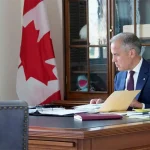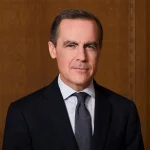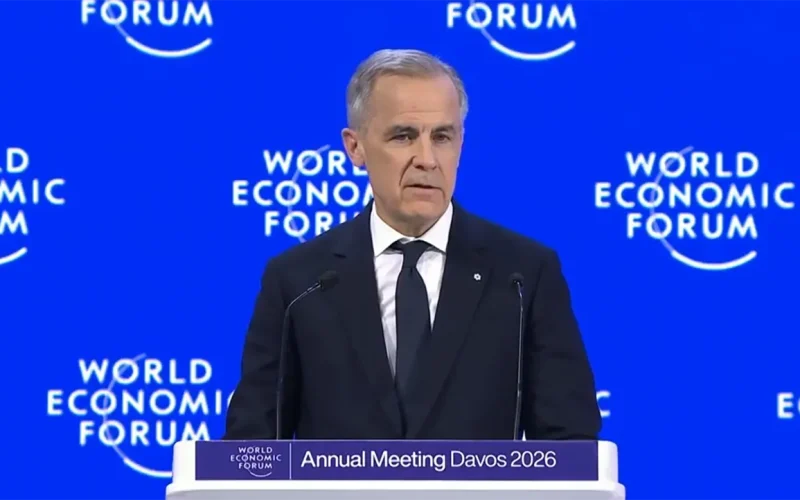
IN a remarkable display of diplomatic candour that sent ripples through the World Economic Forum, Canadian Prime Minister Mark Carney delivered what may prove to be a defining speech of the post-American era, declaring that the decades-old bargain underpinning Western global dominance has irretrievably collapsed.
Speaking to assembled global leaders, Carney stripped away the diplomatic niceties that typically characterise international discourse, offering instead a stark autopsy of the rules-based order that has governed global affairs since 1945.
“We knew the story of the international rules-based world order was partially false,” Carney stated bluntly, acknowledging what many developing nations have long argued: that the system’s architects exempted themselves from constraints they imposed on others. “This fiction was useful,” he continued, crediting American hegemony with providing genuine public goods – open sea lanes, financial stability, and collective security. “So we placed the sign in the window. We participated in the rituals, and we largely avoided calling out the gaps between rhetoric and reality.”
Then came the epitaph: “This bargain no longer works.”
A Rupture, Not a Transition
Carney’s assessment grew more dramatic. “Let me be direct, we are in the midst of a rupture, not a transition,” he declared, citing how recent crises in finance, health, energy, and geopolitics exposed the vulnerabilities of extreme global integration.
But the speech’s sharpest edge was reserved for current American policy. Without naming President Trump directly, Carney outlined how “great powers have begun using economic integration as weapons” – deploying tariffs as leverage, financial infrastructure as coercion, and supply chains as exploitable vulnerabilities.
“You cannot live within the lie of mutual benefit through integration when integration becomes the source of your subordination,” he said.
The New Reality: Strategic Autonomy
The Canadian leader painted a picture of a fragmenting world order, where middle powers are rapidly concluding that self-reliance has become imperative. “A country that can’t feed itself, fuel itself, or defend itself has few options,” Carney observed. “When the rules no longer protect you, you must protect yourself.”
This drive toward strategic autonomy – in energy, food security, critical minerals, finance, and supply chains – represents a fundamental rewiring of global economic relationships. Canada’s recent major trade agreement with China exemplifies this pivot.
Yet Carney was clear-eyed about the costs. “A world of fortresses will be poorer, more fragile, and less sustainable,” he warned. The transactional approach now dominating great power relations carries its own trap: “Hegemons cannot continually monetise their relationships. Allies will diversify to hedge against uncertainty.”
Sovereignty Redefined
Perhaps most significantly, Carney described a fundamental shift in how nations conceive of sovereignty itself. Once grounded in shared rules and institutions – the WTO, the UN, the framework of collective problem-solving – sovereignty is now “increasingly anchored in the ability to withstand pressure.”
It’s a world where the multilateral architecture that benefited Western nations for decades is giving way to something harder, more defensive, and ultimately more unpredictable.
The speech represented a rare moment of public honesty about international relations, delivered by a leader whose country has long been America’s closest ally. That Carney felt compelled to speak so directly suggests the depth of the strategic reassessment now underway in capitals across the developed world.
Whether this marks the twilight of American influence or merely a painful adjustment period remains to be seen. But Carney’s Davos address will likely be remembered as the moment when polite fiction gave way to uncomfortable truth.
Carole Cadwalladr (@carolecadwalla) January 20, 2026