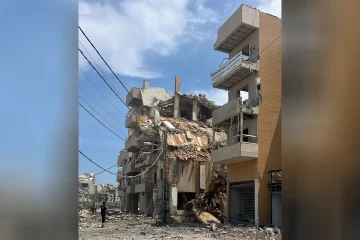
NEARLY two and a half years of conflict in Gaza have obliterated one of the region’s greatest achievements – its education system – leaving 60 percent of school-aged children without access to in-person learning, the UN Children’s Fund has warned.
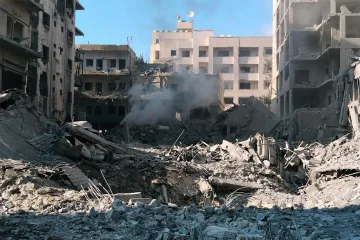
More than 90 percent of Gaza’s schools have been damaged or destroyed in what UNICEF spokesperson James Elder called “an assault on the future itself.”
“Before this war on children, Palestinians in Gaza had some of the highest literacy rates in the world,” Elder said. “Today, that legacy is very much under attack.”
The devastation has erased years of educational progress in a territory where nearly half the population is under 18. Schools, universities and libraries lie in ruins across the enclave.
UNICEF is urgently seeking $86 million to reach 336,000 children through its “Back to Learning” programme this year—roughly equivalent to global coffee spending in two hours, Elder noted. The cost per child is $280 annually, including mental health support.
Working with the Palestinian Ministry of Education, UNRWA and other partners, UNICEF is establishing temporary learning centres that also provide health, nutrition and sanitation services in the “often inaccessible and dangerous” territory.
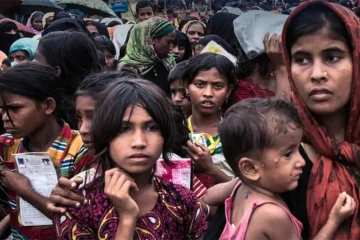
Demand far exceeds capacity. Elder recounted visiting Gaza two weeks ago, where “dozens of parents outside learning centres” pleaded for spots for their children. Every centre maintains long waiting lists.
Many temporary classrooms consist of tents—cold in winter, “scorchingly hot” in summer, Elder said. But children “can’t wait for that brick and mortar.”
Elder stressed that restoring education “must sit at the very top of Gaza’s recovery agenda,” calling it “lifesaving” work.
The UNICEF official also highlighted the critical need to reopen the Rafah border crossing between Egypt and southern Gaza, which has remained largely closed since May 2024 despite ceasefire terms. He called Rafah a “lifeline” for medical evacuations, family reunification and essential services.
Israel has reportedly agreed to reopen the crossing following the recovery on Monday of remains belonging to Ran Gvili, among more than 250 hostages taken by Hamas and other Palestinian groups during the Oct. 7, 2023, attack on southern Israel.
UN Secretary-General António Guterres on Monday urged all parties to implement subsequent phases of the US-brokered ceasefire “in good faith, and without delay,” including sustained humanitarian access through Rafah.
Elder said he maintains daily contact with Palestinians “desperate” for the crossing to open, noting the separation of countless families. “There is a great desperation in a personal sense for families,” he said.