THE cascading release of Jeffrey Epstein files has triggered a political earthquake across Europe and the Middle East, bringing down senior officials and forcing unprecedented criminal investigations. Yet in the United States, where Epstein operated for decades and maintained his most extensive connections, no comparable reckoning has materialised – raising questions about accountability and the politicisation of justice.
The scandal has extracted its heaviest price abroad. In Britain, two major figures have fallen: Prince Andrew, stripped of his royal titles and evicted from his residence by King Charles III in October 2025, and Peter Mandelson, who resigned from the House of Lords in February 2026 and faces criminal investigation for alleged misconduct in public office.
Mandelson’s downfall has been particularly spectacular. The veteran Labour politician, once dubbed the “Prince of Darkness” for his Machiavellian political skills, was appointed UK ambassador to Washington in December 2024 despite known ties to Epstein. He was fired in September 2025 after emails revealed he maintained contact with Epstein after the financier’s 2008 conviction for soliciting prostitution from a minor.
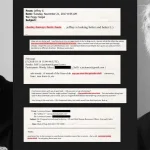
The latest document releases proved catastrophic. Emails show Mandelson allegedly leaked market-sensitive government information to Epstein during the 2008 financial crisis, including advance notice of a €500 billion EU bailout. He appeared to inform Epstein when then-Prime Minister Gordon Brown would resign, writing “Finally got him to go today” the day before Brown stepped down. The Metropolitan Police launched a criminal investigation, Mandelson resigned from both the Labour Party and the House of Lords, and his downfall has left Prime Minister Keir Starmer fighting for political survival.
Norway presents an equally striking case. Crown Princess Mette-Marit, mentioned over 1,000 times in the files, maintained extensive contact with Epstein from 2011 to 2014, calling him “sweetheart” and “crazy friend” in emails sent years after his conviction. The revelations, released as her son faced trial for rape charges, have sparked public debate about whether she can become queen. Former Prime Minister Thorbjørn Jagland has been charged with aggravated corruption related to alleged gifts and travel from Epstein.
In Dubai, Sultan Ahmed bin Sulayem was replaced as chairman and CEO of DP World, one of the world’s largest logistics companies, after the files revealed a years-long friendship including sexually explicit exchanges and business dealings. Major investors, including Canada’s La Caisse pension fund, suspended investments until the company addressed the situation.
By contrast, no US political figure has faced comparable consequences. President Donald Trump appears in the files more than 1,000 times, according to searches by members of Congress. The documents include unverified sexual assault allegations, details about his relationship with Epstein, and a 2006 statement to police that “everyone has known he’s been doing this” – contradicting Trump’s repeated claims of ignorance about Epstein’s conduct.
Former President Bill Clinton is extensively mentioned in flight logs and communications. Commerce Secretary Howard Lutnick and other administration officials appear in the files. Businessman Leslie Wexner, identified in some documents as an Epstein co-conspirator, remains free from investigation despite his name initially being redacted from public releases.
The disconnect between international accountability and American impunity has become a focal point of partisan combat in Washington, crystallised in Attorney General Pam Bondi’s contentious congressional appearances.
Bondi’s Fiery Defence
Bondi’s testimony before the House Judiciary Committee on February 11 devolved into shouting matches and partisan warfare. With Epstein survivors seated directly behind her, she faced a barrage of questions about the Justice Department’s handling of the files—including why victims’ names were left unredacted while alleged co-conspirators like Wexner were initially protected.
The attorney general refused to apologise to survivors when asked by Rep. Pramila Jayapal to turn and face them, calling it “theatrics.” When pressed by Rep. Thomas Massie—a Republican co-sponsor of the transparency act—about redaction failures, Bondi accused him of having “Trump derangement syndrome” and being a “failed politician.”
Rather than address substantive questions, Bondi pivoted to defending Trump, praising the stock market, and attacking Democrats. She provided no clear answers about potential prosecutions, repeatedly deflected by blaming the Biden administration, and confirmed there was no “client list” to which underage girls were trafficked—walking back her own earlier suggestions to Fox News that such a list existed.
The hearing exposed the politicisation of the Epstein investigation. Bondi openly aligned herself as Trump’s “chief protector,” and subsequent revelations showed the Justice Department tracked which files members of Congress searched—a surveillance operation that drew bipartisan condemnation, with House Speaker Mike Johnson calling it “inappropriate.”
The handling of the Epstein files has become a case study in how political loyalty trumps accountability in contemporary American politics. The Justice Department missed its December 19 deadline, released documents with heavy redactions that violated the transparency act, and exposed victims’ information while protecting powerful figures.
Congress forced the release through the Epstein Files Transparency Act, passed in November 2025. Yet even with over 3 million pages now public, the administration claims its legal obligation is complete – despite acknowledging 6 million pages potentially qualify for release. Democratic lawmakers dispute this, noting missing FBI victim interviews, draft indictments, and hundreds of thousands of emails from Epstein’s computers.
The partisan divide is stark. Republicans largely defended the administration’s approach during Bondi’s hearing, while Democrats accused the Justice Department of protecting the powerful. Trump himself has oscillated between promising transparency during his 2024 campaign and later claiming Epstein controversies were fabricated by Democrats.
A December 2025 Reuters poll found only 23% of Americans approved of Trump’s handling of the Epstein case. A January 2026 CNN poll showed 49% were dissatisfied with the extent of file releases.
International Investigations Continue
While the US has initiated no criminal investigations of prominent figures based on the files, international probes multiply. Norway’s parliament authorised a broad inquiry into foreign ministry officials. Latvia opened an investigation into the possible recruitment of Latvian nationals for sexual exploitation. Slovakia’s national security adviser resigned. The Metropolitan Police in Britain are investigating Prince Andrew for potentially sharing confidential documents with Epstein.
US House Democrats announced they would conduct “full investigations” into the Justice Department’s monitoring of congressional searches, with calls for the DOJ inspector general to intervene. But these focus on process, not the underlying question of Epstein’s American co-conspirators.
Context: Those Mentioned
The files reference hundreds of individuals across politics, business, academia, and entertainment. Most contacts were professional or social without criminal implications. Being mentioned does not indicate wrongdoing.
However, certain patterns emerge. Epstein cultivated relationships with the powerful through a combination of philanthropy, networking, and financial advice. He positioned himself as a connector, introducing contacts across industries and continents. The files show him facilitating meetings between Dubai’s bin Sulayem and Israeli officials, discussing investments with Norwegian royalty, and maintaining extensive correspondence with British politicians.
For some, like Mandelson and bin Sulayem, the exchanges were deeply compromising. For others, including many American figures, the exact nature of relationships remains opaque due to redactions and the administration’s decision to halt releases.
The Reckoning’s Geography
The divergent outcomes reflect different political systems and cultures. Parliamentary democracies like Britain and Norway face immediate pressure when scandals emerge – opposition parties can force votes of confidence, and public figures lack the constitutional protections and party discipline that shield American officials.
The UAE’s authoritarian system moved swiftly to contain damage to its international business reputation, replacing bin Sulayem within days of investor withdrawals. In the US, by contrast, partisan polarisation means accountability depends on which party controls investigative machinery – and the party in power shows no interest in pursuing its own.
Bondi’s performance exemplified this dynamic. Rather than serving as an impartial chief law enforcement officer, she positioned herself as Trump’s defender, turned investigative hearings into forums for attacking Democrats, and made clear that loyalty to the president superseded any obligation to pursue justice wherever it led.
The question haunting the Epstein scandal is not whether powerful Americans were connected to a sex trafficker – the files demonstrate conclusively that many were. It is whether those connections will ever be subject to the same scrutiny, investigation, and accountability that have toppled royalty and politicians from London to Dubai to Oslo.
As Mandelson faces criminal charges, Crown Princess Mette-Marit confronts questions about her fitness to be queen, and bin Sulayem loses his corporate empire, American political and business elites mentioned in the same files continue their careers uninterrupted. The survivors seated behind Bondi during her testimony represent an accountability that, in the United States, remains conspicuously absent.
The international community has shown that Epstein’s network of power and influence can be challenged. Whether America will follow suit – or whether partisan tribalism and institutional protection will prevail – remains the unanswered question as the scandal enters its second year under Trump’s administration.