GHANA’S government is racing against time to limit the cascading damage from what has become one of the country’s most disturbing digital exploitation scandals, as hundreds of secretly recorded intimate videos of Ghanaian women continue to circulate online despite official efforts to contain their spread.
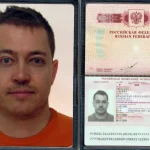
The crisis centres on Vyacheslav Trahov, a Russian national who allegedly used Ray-Ban Meta smart glasses – wearable cameras disguised as ordinary eyewear – to secretly film sexual encounters with between 300 and 400 women across Ghana, Kenya, and South Africa. Operating under the online persona “Yaytseslav,” Trahov reportedly monetised the footage through Telegram channels, turning what victims believed were private encounters into a sprawling commercial exploitation enterprise that spanned multiple African nations.
A Predator’s Continental Trail
What makes this case particularly disturbing is not just its scale, but its systematic, transnational nature. Trahov’s activities in Ghana were part of a deliberate pattern that also victimised women in Kenya and South Africa, suggesting a calculated operation rather than isolated incidents. In Kenya, where he reportedly employed the same methodology—using hidden cameras in smart glasses to record intimate encounters without consent—the scandal has provoked similar outrage and demands for criminal investigation.
The Kenyan public’s fury mirrors Ghana’s response, with prominent figures calling on the Directorate of Criminal Investigations (DCI) to take immediate action. Kenya’s Computer Misuse and Cybercrimes Act 2018, particularly Section 17 on unauthorised data access and sharing, provides legal grounds for prosecution, while Article 31 of Kenya’s Constitution explicitly protects privacy rights—both potentially violated by Trahov’s alleged activities.
The multi-country dimension of Trahov’s exploitation reveals a troubling reality: he appears to have treated African nations as hunting grounds, moving between countries while building a vast library of non-consensual intimate content for commercial sale. This pattern raises uncomfortable questions about sex tourism’s evolution in the digital age, where exploitation is not just physical but technological, and the evidence of violation becomes a renewable profit source.
A Government Scrambling to Respond
Ghana’s response has been swift but faces formidable challenges inherent to the digital age: once content reaches the internet, containment becomes nearly impossible. The Ministry of Gender, Children and Social Protection, working alongside the Cyber Security Authority, has launched a coordinated effort centred on three pillars—legal prosecution, digital containment, and victim protection.
The Cyber Security Authority announced a formal investigation into Trahov’s activities, invoking Section 67 of Ghana’s Cybersecurity Act, 2020 (Act 1038), which specifically criminalises the non-consensual sharing of intimate images with the intent to cause emotional distress. The law carries teeth: conviction could mean 3-10 years imprisonment, signalling the government’s determination to treat this as serious criminal conduct rather than a mere privacy violation.
Yet the government faces a paradox that has bedevilled authorities worldwide in similar cases: the very act of drawing attention to the videos, even to condemn them, risks amplifying their distribution. Officials have walked a careful line, acknowledging the crisis while pleading with Ghanaians to resist the temptation to view or share the footage.
The Dignity Dilemma

Perhaps the most delicate aspect of Ghana’s response has been its effort to protect the dignity of victims while preventing their further victimisation through viral sharing. Government statements have emphasised that the women—many of whom may not yet know they were recorded—are victims of a sophisticated criminal operation, not willing participants in public content.
The Ministry of Gender has issued pointed appeals to Ghanaians’ collective conscience, urging citizens to consider the devastating impact on victims whose private moments have been weaponised for profit and public consumption. These appeals carry particular weight in Ghana’s socially conservative context, where the exposure of intimate content can carry severe social, professional, and even physical consequences for women.
“Every share, every view, compounds the violation,” officials have stressed, attempting to reframe consumption of the videos as complicity in exploitation rather than mere curiosity or entertainment.
The transnational nature of Trahov’s activities adds another layer of complexity to victim protection. Women in both Ghana and Kenya now face similar trauma, their violations linked in a shared scandal that has attracted international attention. The knowledge that their exploitation was part of a systematic, multi-country operation may deepen the psychological harm, transforming individual violations into evidence of organised predatory behaviour.
Technical and Legal Hurdles
Ghana’s efforts face significant technical obstacles. The decentralised nature of platforms like Telegram, which has become a haven for illicit content due to its encryption and relatively lax content moderation, makes takedown efforts challenging. Unlike centralised social media platforms that respond to government requests, Telegram’s architecture and operational philosophy prioritise user privacy over regulatory compliance.
Moreover, Trahov’s use of wearable camera technology highlights a troubling evolution in non-consensual recording. Traditional “revenge porn” typically involves consensual recordings shared without permission; Trahov’s alleged methodology represents something more insidious—victims never consented to being recorded in the first place. The sophisticated disguise of recording equipment in ordinary eyewear makes detection nearly impossible, raising broader questions about the regulation of wearable surveillance technology.
Legal experts note that while Ghana’s Cybersecurity Act provides a framework for prosecution, enforcement across borders remains complex. Trahov’s current whereabouts are unclear, and even if located, extradition processes can be lengthy and uncertain, particularly involving Russia, which has no extradition treaty with Ghana—or with Kenya, for that matter.
A Regional Crisis Demanding Regional Response
Ghana is not alone in confronting Trahov’s alleged activities, and the multi-country scope of his exploitation has prompted calls for a coordinated African response. In Kenya, the outcry has been equally fierce, with the public demanding that authorities treat this as a serious criminal matter deserving of full investigative resources. Yet coordination between nations remains challenging, with different legal frameworks, varied investigative capacities, and the absence of established protocols for handling transnational digital exploitation cases.
South Africa’s legal landscape adds further complexity to any regional response. The country’s one-party consent rule under the Regulation of Interception of Communications Act (RICA) theoretically permits individuals to record encounters they participate in, though the Protection of Personal Information Act (POPIA) may offer grounds for action based on non-consensual distribution. No confirmed investigations have been reported from South African authorities, though Trahov’s alleged activities there follow the same disturbing pattern.
The varying legal responses across the three countries highlight a fundamental challenge: while Trahov’s exploitation was transnational, the legal systems confronting it remain stubbornly national. This disconnect creates opportunities for perpetrators to exploit jurisdictional gaps and legal inconsistencies, moving between countries as circumstances demand.
Some legal experts and women’s rights advocates have begun calling for the African Union or regional economic communities to develop coordinated frameworks for addressing transnational digital exploitation. Such frameworks could establish protocols for information sharing between national law enforcement agencies, harmonise relevant laws to close exploitative gaps, and create mechanisms for joint investigations and coordinated prosecutions.
Broader Implications
The Trahov scandal has ignited broader conversations about digital exploitation, sex tourism, and the intersection of technology and consent across Africa. Women’s rights advocates argue the case exemplifies how technology has created new vectors for sexual exploitation, particularly targeting women in developing countries where legal protections may lag behind technological capabilities.
The fact that Trahov operated across multiple African countries, apparently with impunity until the scandal broke, raises uncomfortable questions about how foreign nationals engage with African women and whether existing frameworks adequately protect against technologically-enabled exploitation. His apparent calculation—that he could victimise hundreds of women across multiple countries without consequence—speaks to broader issues of accountability and justice in an interconnected world.
The government’s response—while necessary—also highlights the limited power of national authorities to address transnational digital crimes. As one legal analyst observed, “Ghana can prosecute, but can it prevent? Can it truly protect? These are different questions with much harder answers.” The same could be said for Kenya, or any other country confronting the borderless nature of digital exploitation.
The Long Road Ahead
For now, Ghana’s government continues its dual strategy: pursuing legal action against Trahov while imploring citizens to break the chain of distribution. Whether these efforts can meaningfully contain the damage remains uncertain. The Kenyan government faces identical challenges, with both nations discovering that legal frameworks designed for earlier eras struggle to address exploitation that is simultaneously intimate and industrial, local and global, physical and digital.
What is clear is that for hundreds of women in Ghana and Kenya, the violation is ongoing with every view, every share, every moment their private lives remain a public spectacle. The scandal serves as a sobering reminder that in the digital age, protection of human dignity requires not just laws and enforcement, but collective ethical responsibility—something no government can legislate, only appeal for.
It also serves as a wake-up call for African nations to recognise that digital exploitation respects no borders, and that effective response may require unprecedented levels of regional cooperation, legal harmonisation, and technological capacity-building. Trahov’s alleged crimes victimised women in multiple countries; justice for those women may require multiple countries working together in ways they never have before.