THE handcuffs that closed around Peter Mandelson’s wrists on a grey London Monday represent something far larger than the fall of one veteran political operator. They mark the second arrest of a major British public figure in the space of days over ties to Jeffrey Epstein— and they throw into sharp relief a question that grows more uncomfortable by the hour: why is the reckoning happening exclusively on one side of the Atlantic?
Within a single week, Prince Andrew and now Mandelson – a man who shaped modern British politics for three decades – have been taken to London police stations on suspicion of misconduct in public office. The charges carry a maximum sentence of life imprisonment. These are not the cautious, deniable shuffles of bureaucratic embarrassment. They are seismic.
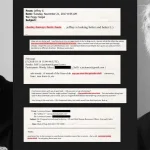
Mandelson’s fall is particularly brutal in its symmetry. He was appointed British Ambassador to Washington in late 2024 – the most prestigious posting in Britain’s diplomatic service – in part because of his ability to navigate the Trump White House. He delivered early, securing Britain a tariff deal. Then the U.S. Department of Justice released emails that changed everything. They showed Mandelson sharing sensitive government information with Epstein while serving as a minister as far back as 2009. The relationship was deeper, longer, and more operationally entangled than anyone had publicly admitted.
Prime Minister Keir Starmer, who appointed him, now faces an existential political crisis of his own making. Parliament has ordered the release of vetting documents. A minister confirmed Monday that they would begin appearing in early March. Whatever those documents contain, the political damage is already severe: Starmer’s government is the entity that passed Mandelson’s communications to police, triggering the very investigation that has now consumed his ambassador, destabilised his government, and raised questions about whether he was deceived or simply chose not to look.
The Transatlantic Silence
Here is where the analysis must turn uncomfortable. Epstein’s network was not a British phenomenon. He was American. His crimes were committed largely on American soil and in American waters. His client list, by every credible account, was heavily populated with American financiers, politicians, academics and entertainers. The Justice Department files that were destroyed by Mandelson were American government documents.
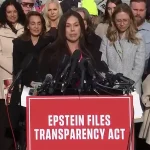
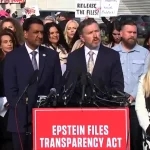
Yet in the United States, there have been no equivalent arrests. No serving or former official has been marched from their home. No political figure of comparable stature to Mandelson or Prince Andrew has faced criminal investigation. The files were released — and then, in terms of institutional consequence on American shores, largely absorbed into the political noise.
The contrast is not merely striking. It is, for anyone watching with clear eyes, an indictment of the different ways the two countries are processing the same underlying scandal. Britain, for all its traditional deference to establishment figures, is putting its most powerful men in the back of police cars. America, which produced Epstein, funded him, flew on his planes and visited his islands, has thus far produced no equivalent accountability.
The question of why – whether it reflects prosecutorial caution, political protection, the particular vulnerabilities of British public office law, or something more troubling about whose names remain in sealed documents – is one that neither Washington nor the American press has answered with anything approaching the urgency the moment demands.
Mandelson, meanwhile, is in a London police station. The establishment he helped build is unravelling around him. And across the ocean, the silence holds.