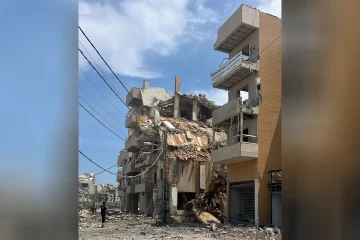
THE US and Israel have launched another war against Iran. This one is different from the 12-day war last June that primarily targeted Iran’s nuclear programme. The goal this time is regime change. Israeli Prime Minister Benjamin Netanyahu has finally found a US government willing to go down the path of all-out aggression against Iran that he’s been advocating for for decades.
By Eric Reidy
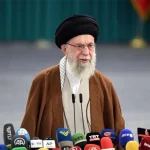
The Iranian regime has been decapitated. Ayatollah Ali Khamenei is dead, as are other senior figures. But whether the regime will fall is very much an open question. Iran’s strikes on countries throughout the region that host American military bases and provide other strategic support show how the situation could quickly spin out of control, turning into a devastating regional conflagration.
Amid the extreme uncertainty of what will follow, one thing is clear: This war is not intended to benefit the Iranian people, regardless of what Donald Trump and Netanyahu say.
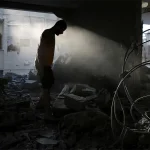
Israel would be happy with a weak and divided Iran. If that means a bloody civil war and eventual partition, Israeli leaders will not blink. They have already demonstrated in the Gaza Strip their capacity to burn a society to the ground in their ceaseless and misguided effort to ensure their state’s supposed security at the expense of the safety, rights, and lives of Palestinians, Lebanese, Yemenis, and others throughout the Middle East.
The US wants compliant leadership in Iran that will give it access to oil and other resources while being obsequious to US power and interests regionally and globally, or perhaps to just show off its power and its ability to act entirely without constraint and forethought about what will happen next.
What we’ve already seen in Gaza and Venezuela is that the Trump administration has limited interest and capacity for follow-through. It lays out lofty goals and then – as soon as media attention drifts away after the first headline-grabbing moments – allows things to continue down some ill-defined path of least resistance.
If trillion-dollar wars and prolonged occupations in Afghanistan and Iraq failed to impose the US’s will on those countries, why is there any reason to believe a US-Israeli air war, accompanied by an attempt to play puppetmaster from far away, will have any chance at succeeding in Iran?
The fact that Hezbollah continues to exert influence in Lebanon, and Hamas in Gaza – although both significantly diminished – also shows that even though the US and Israel have succeeded in killing Khamenei and many of Iran’s senior leaders and military commanders, the Iranian regime and its Revolutionary Guards could very well sustain these substantial blows and still find ways to persist.
If trillion-dollar wars and prolonged occupations in Afghanistan and Iraq failed to impose the US’s will on those countries, why is there any reason to believe a US-Israeli air war, accompanied by an attempt to play puppetmaster from far away, will have any chance at succeeding in Iran?
Two axes of evil
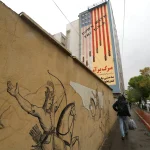
The Iranian regime has undoubtedly been a murderous and destructive actor throughout the Middle East. For decades, its violence, repression, and ruthlessness formed a perfect foil for America’s supposed noble intentions and goodness. Perhaps most significantly in Syria, its support – directly and through proxies – abetted the al-Assad regime’s violent retaliation against the revolution that began in 2011. Along with Russia’s later intervention, this enabled Bashar al-Assad to cling to power for another 13 years by burning the country to the ground.
However, the illusion that the United States is a force for good trying to counterbalance Iran’s pernicious influence and actions in the Middle East revealed itself for what it truly is long ago. The collective influence of US wars and policies in the region over the past three decades can best be described as ruinous.
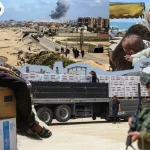
The estimated death toll in the region from the wars the US has initiated or been a combatant in since 11 September 2001 stands at nearly one million – including over 430,000 civilians killed – according to the Costs of War Project at Brown University. Most recently, the US has backed Israel’s war in Gaza with more than $21.7 billion in military aid and weapons transfers over its first two years, providing unfettered support to a brutal military campaign that an independent UN Commission of Inquiry, numerous human rights organisations, and scholars of atrocity crimes have determined to be a genocide.
As in all wars, it is the people who will pay the heaviest price as their legitimate aspirations for a better system are co-opted and subverted by Israeli malice and the destructive whims of America’s own tyrant.
Looking at the collective record, the unavoidable truth is that there was not one axis of evil but two, and innumerable people – and their hopes, dreams, and aspirations for better lives, both individually and collectively – have been crushed in between.
As in all wars, it is the people – in this case, Iranians who have good reasons to want political change after decades of the regime’s violent internal repression – who will pay the heaviest price as their legitimate aspirations for a better system are co-opted and subverted by Israeli malice and the destructive whims of America’s own tyrant. As one Iranian opposition group opposing the regime has warned: “foreign bombs and missiles are not messengers of democracy but seeds of destruction and dependence”.
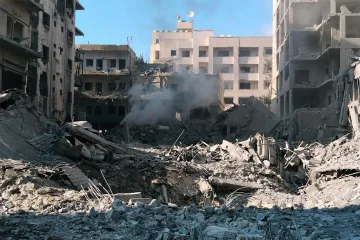
The bombing of a girls’ school in southern Iran that has reportedly killed around 150 children gravely and tragically underscores that point.
In search of a third path
For other Americans wrestling with how to respond to our government’s actions, Adam Shatz recently wrote in the London Review of Books: “[W]hat I mostly feel these days, as I look at the disaster unfolding in America and its horrifying repercussions throughout the world, is an intense sense of shame. Shame isn’t a pleasant emotion, but any honest reckoning with what my country has become has to start with it.”
In the lead-up to the US invasion of Iraq in 2003, hundreds of thousands of Americans protested in cities and towns across the country as the Bush administration rolled out its fraudulent campaign to try to prove the necessity of an unnecessary war.
Today, the Trump administration has done away with the campaign of public persuasion, opting instead to offer only the most cursory justifications of this war’s necessity. As with all that Trump does, the consent of the governed and the procedures of law have been gleefully flaunted.
Americans may be too inwardly focused on the morass within the country’s borders to be roused to significant action or to muster a sustained anti-war movement before the next Trump-induced crisis diverts attention and energy in yet another direction.
Will this new war on Iran precipitate enough shame and anger to once more bring significant numbers of people into the streets to register their dissent?
Protests have already begun, although the numbers, at least initially, do not appear to be overwhelming. Americans – all-too-often insulated and innocently oblivious to the consequences of our government’s actions around the world – may be too inwardly focused on the morass within the country’s borders to be roused to significant action or to muster a sustained anti-war movement before the next Trump-induced crisis diverts attention and energy in yet another direction.
But this war is yet another dramatic demonstration of how the American government under Trump is dangerously out of control, and people around the world are watching to see how Americans will respond – perhaps without too much hope.
Despite the increasing elite capture of politics and the accelerating authoritarianism of the Trump regime, the US is still a representative democracy. The elected Democratic opposition, however, is clearly not up for the task of trying to meaningfully reel in the Trump administration before it wreaks further capricious destruction on Iran and beyond. That task then must fall on Americans outside of government whose consciences are stirred by this administration’s despotic tramplings around the globe.
What is desperately needed is a third path forward beyond the opposing American-Israeli and Iranian-aligned forces that have been crushing the people of the region between them for far too long – one that takes the improvement of people’s individual and collective lives as a starting point, rather than treating them as chaff that can be fed to the shredder in a contest over power and resources for the betterment of none.
–––––
The New Humanitarian puts quality, independent journalism at the service of the millions of people affected by humanitarian crises around the world. Find out more at www.thenewhumanitarian.org.