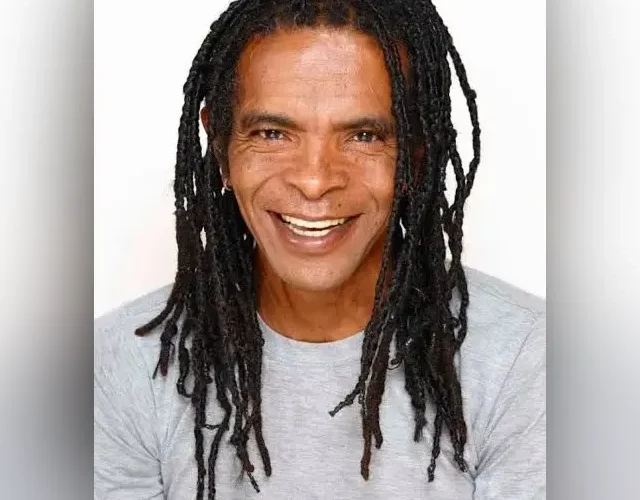
WITH profound grief and an even deeper sense of gratitude, South Africa bids farewell to one of its most cherished sons – a man who turned the rhythms of ordinary life into extraordinary art, and who made an entire nation feel truly seen.
Silamour ‘Soli’ Philander, beloved entertainer, gifted storyteller, and enduring cultural voice, passed from this world on 4 March 2026, after a courageous battle with cancer. He was 65 years old. South Africa will not easily find another like him.
Soli was born on 19 January 1961 at Somerset Hospital, Cape Town, to Frederick and Shahieda Philander, and grew up in Elsies River – a community that would shape his humour, his heart, and his art for the rest of his life. His upbringing was one of beautiful complexity: a Muslim mother and a Christian father, a household where two sons were raised in each faith, where difference was not division but richness.
He sang in the choir at the church in Balvenie Avenue, and carried with him always the moral compass his mother instilled with quiet but unyielding conviction.
“My mother brought us up with a tremendous sense of right and wrong. We may not have had much money, but none of her kids would commit a crime.”
These were not just words. They were a life lived.
A Star Found His Stage
After matriculating from John Ramsay Secondary School in Bishop Lavis in 1979, a year at the University of the Western Cape confirmed what many already sensed: Soli Philander was born to perform. Destiny arrived early when a lead actor fell ill, and the young Philander stepped into the breach — and was an instant sensation.
By 23, he had already amassed considerable experience across theatre and cabaret. His career began at The Space Theatre in Cape Town, where he performed in productions including Political Joke, The Car Cemetery, The Final Sting of the Dying Wasp, and Telling Tales. He did children’s educational theatre. And then came the role that would take him across the world.
Joining the Baxter Theatre’s landmark production of Waiting for Godot, Soli toured South Africa, performed in London, and stood on stages in America — a young man from Elsies River, carrying the Cape with him wherever he went.
A Gallery of Unforgettable Voices
Soli was not merely an actor – he was a creator of worlds. Back home, he devised, wrote, directed, and performed the beloved cabaret character Rosie September, wowing Johannesburg audiences at No. 58 and the Oxford Hotel. His credits across stage, screen, and radio read like a map of South African culture itself: Comedy of Errors, Romeo and Juliet, The Blacks, The Boabab Tree, Elke Ou Storie, and his celebrated one-man show Take Two.
On television, he presented MNet’s Liriekeraai, hosted Vat A Kans, and became a household name through his natural wit and effortless charm on the South African edition of Are You Smarter Than a 5th Grader? He appeared in Arendsvlei, Dias Santana, Hooten & the Lady, Devil’s Peak, and The Umbrella Men: Escape from Robben Island — each role a testament to a performer who could inhabit any world with authenticity and grace.
His voice was equally at home on radio – first on Punt Geselsradio’s Afrikaans show Gorrelpunt, and then for two years on 567 Capetalk’s Airborne – a voice that felt like company, like warmth, like home.
The Gift He Gave
What made Soli irreplaceable was not simply his talent – it was what he did with it. His humour carried the rhythms, languages, and spirit of the Western Cape. He gave voice to everyday people, to the Cape Flats, to communities too often unheard, and brought their stories – their laughter, their dignity, their resilience – into the national conversation.
He did not perform at audiences. He performed for them, with them, as one of them. And in doing so, he reminded South Africans of something essential: that our shared humanity is always worth celebrating, and that laughter, honestly told, is one of the most profound forms of love.
“Soli Philander brought laughter, insight and warmth to audiences everywhere in our country. He possessed the rare gift of making people laugh by reminding us of who we are.”
— Gayton McKenzie, Minister of Sport, Arts and Culture
A Light That Will Not Dim
Soli faced his illness with the same spirit he brought to everything – with courage, with warmth, and with the quiet dignity of a man who had lived fully and honestly. He is survived by his family, his colleagues, and the countless South Africans whose lives he touched through his extraordinary art.
The stage is quieter now. The microphone is still. But the laughter he gave us, honest, warm, deeply human, will echo in the hearts of a nation for generations to come. His voice lives on in every story that dares to tell the truth with a smile.
Rus sag, Soli.
Jou lag sal vir altyd by ons bly.
Rest well, Soli. Your laughter will be with us, always.