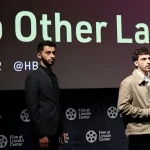
The SAFTAs did not tiptoe back. After last year’s inexplicable no-show — the industry’s equivalent of a lead actor simply not arriving on set – the 19th Annual South African Film and Television Awards came roaring back to Midrand’s Gallagher Convention Centre on Saturday evening with the energy of a township telenovela season finale. There were tears. There were gasps. There were outfits that will require explanation to future generations. And, yes, there was Bonko Khoza.
The dual-ceremony format was maintained: the technical Craft Awards streamed quietly on YouTube on Friday, the night the real work was recognised, before Saturday’s main show went live on Mzansi Magic (DStv Channel 161) and SABC 2. This year’s theme – ‘One Story’ – was admirably earnest, a declaration that South African storytelling is one organism, one tradition, one defiant act of cultural self-preservation. The industry dressed accordingly: some magnificently, some questionably, and at least two people in ways that suggested they had misread the memo entirely.
The battle lines were drawn before a single winner was announced. This was, above all, a reckoning between the old world and the streaming new order. MultiChoice – through DStv and Showmax – arrived with 225 nominations in its pocket like a man walking into a buffet with a wheelbarrow. Netflix, Showmax Originals, and a dozen hungry production houses circled the Golden Horns like seagulls at Muizenberg. By the time the dust settled, some had gorged. Others went home hungry.
“It hasn’t really sunk in yet. You receive the nomination, and you just go ‘Thank you.’ But it’s been 19 years in the industry — and it’s the 19th SAFTAs.”
Zenande Mfenyana, Best Supporting Actress in a Telenovela
THE WINNERS: WHO WENT HOME WITH GOLDEN HORNS
Let us begin where the evening truly soared. Bonko Khoza – a man already in possession of a face that belongs on cinema billboards across three continents – walked away with Best Actor in a Telenovela for his work in iThonga, where he plays not one but two twin brothers, Banele and Sanele. One is righteous. One is not. Both are magnificently portrayed. ‘I’m trying to go global,’ Khoza had said ahead of the ceremony. If the judges had anything to say about it, the world had better clear space.
The evening’s most emotional moment, however, belonged to Zenande Mfenyana. After nineteen years in the South African television industry – a career that has seen her pour herself into character after character with a generosity that borders on recklessness – Mfenyana finally claimed her first Golden Horn, taking Best Supporting Actress in a Telenovela for her role as Thumeka Mabandla in Inimba. She brought her sibling on stage. She thanked her daughter, watching from home. ‘Mommy did it,’ she said to the cameras, and there was not a dry eye in the building, or indeed in any living room where South African mothers were watching. The speech was so beautifully human that even the streaming platforms briefly felt something.
First-time winner Nelisiwe Sibiya snatched Best Actress in a Telenovela – also for iThonga – with the barely-contained joy of someone who has been waiting precisely this long. ‘I don’t think I’m going to sleep for the next six months,’ she told reporters afterwards. Her energy was so infectious it nearly constituted a public health event. This is a performance and a performer worth watching.
Gail Mabalane – first-time SAFTA nominee, long-overdue industry recognition – claimed Best Actress in a TV Drama for her portrayal of Zenzi Mwale in Unseen Season 2. That a woman of Mabalane’s calibre had not previously received a SAFTA nomination says more about the awards’ historical blind spots than about her talent. She rectified that oversight with characteristic grace. Aubrey Poo took Best Actor in a TV Soap, and Anele Matoti added Best Supporting Actor in a Telenovela to the iThonga haul.
For Scandal! – the evergreen institution that simply refuses to exit the building – Best TV Soap was a vindication, while Inimba triumphed in both Best Achievement in Scriptwriting and the public-voted Most Popular TV Soap or Telenovela category. That public vote matters: it is the one award that cannot be lobbied for, only loved for. And South Africans loved Inimba.
| CATEGORY | WINNER |
| Best Actress in a Telenovela | Nelisiwe Sibiya — iThonga |
| Best Actor in a Telenovela | Bonko Khoza — iThonga |
| Best Supporting Actress in a Telenovela | Zenande Mfenyana — Inimba |
| Best Supporting Actor in a Telenovela | Anele Matoti — iThonga |
| Best Actress in a TV Drama | Gail Mabalane — Unseen Season 2 |
| Best Actor in a TV Soap | Aubrey Poo — Generations: The Legacy |
| Best TV Soap | Scandal! |
| Most Popular TV Soap/Telenovela (Public Vote) | Inimba |
| Best Achievement in Scriptwriting | Inimba |
THE STREAMING WARS: MZANSI CONTENT REASSERTS ITSELF
The larger story of the 19th SAFTAs was the ongoing and increasingly heated battle between traditional broadcasters and streaming giants. MultiChoice arrived with 225 nominations – a number that could fill a small municipal stadium. Led by kykNET’s 74 nominations, Mzansi channels’ 33, and M-Net’s 30, the DStv empire made its territorial claims plain. Showmax Originals added 66 more. Against this onslaught, the SABC and eTV mounted brave but modest challenges.
What the nominations told us, and what the winners confirmed, is that South African content is entering a maturation phase. The most-nominated productions — iThonga with 10 nods, Reyka Season 2 with 9, White Lies with 8 – are not vanity projects or format imports. They are home-grown stories told with increasingly sophisticated craft. The fact that Reyka was up for International Emmys tells you that the global screen conversation is beginning to include South African voices, not as novelties, but as peers.
The Fix, Showmax’s dystopian body-horror film led by Kelsey Egan, arrived with 11 nominations — the most of any movie. Its presence alone signals that South African film is no longer content to be provincial, nor should it be. When your country’s feature films screen at international genre festivals and win Dangerous Visions Awards in Chattanooga, you do not tiptoe. You arrive.
“It’s time we raise the flag high to show them what South Africa has got to offer.”
Bonko Khoza, Best Actor in a Telenovela
IN MEMORIAM: THE POSTHUMOUS TRIBUTES
No awards season passes without the industry pausing to account for those it has lost. The 19th SAFTAs were marked by posthumous recognition for two beloved performers. Presley Chweneyagae — the actor whose face introduced the world to South African cinema through Tsotsi all those years ago — received a posthumous Best Actor in a TV Drama nomination for his work in Cobrizi. His absence from the industry leaves a gap that no amount of award-giving can fill. The nomination, however, ensures his final screen work is seen with the attention it deserves.
Michelle Botes, a figure of immense elegance and craft who anchored South African television drama for decades, was posthumously nominated for Best Supporting Actress in a TV Drama for Tuiskoms. The industry’s acknowledgement of her final performance was a moment of genuine tenderness in an evening otherwise defined by competition.
THE RED CARPET REPORT: WINNERS, SINNERS & THE TRULY BEWILDERING
Let us address the carpet. Stretching before the Gallagher Convention Centre like a runway that had taken itself extremely seriously, the SAFTAs red carpet is South Africa’s most reliable annual theatre of fashion ambition and fashion catastrophe in roughly equal measure. This year did not disappoint on either front. Your correspondent, armed with a critical eye, a generous heart, and a mild intolerance for questionable fabric choices, presents the definitive verdicts.
| VERDICT | WHO | THE AFRICAN MIRROR VERDICT |
| ✓ WINNER Nelisiwe Sibiya | The Arrival | She walked the carpet like a woman who already knew she was going to win — which, given what followed, suggests either extraordinary prescience or a very good stylist. The gown was immaculate. The confidence was architectural. When you play a leading lady in the most-nominated telenovela of the year, you dress accordingly. |
| ✓ WINNER Bonko Khoza | Unapologetically Sharp | A man who plays twins manages to contain multitudes, and so does his tailoring. Khoza arrived in a look that announced global ambitions without abandoning local roots — the kind of elegance that says ‘I am coming for the international market, but I have not forgotten where I am from.’ The cut was immaculate. The presence: unmistakable. |
| ✓ WINNER Zenande Mfenyana | Nineteen Years, One Night | After two decades of industry servitude, Mfenyana earned the right to wear anything she pleased, and she appeared to exercise this right with considerable joy. The outfit had a festive, unapologetic exuberance that matched the energy of her acceptance speech perfectly. Sometimes the fashion is the biography. |
| ✓ WINNER Gail Mabalane | Quiet Authority | First-time nominee, first-time winner, and dressed with the composed certainty of someone who has been preparing for this moment privately for years. No theatrics in the fabric — just clean lines and the quiet devastation of a woman who knows exactly what she is doing. The best red carpet look is one that makes you feel the person, not the dress. |
| ✗ SINNER The Sequin Incident | Gravity-Defying Ambition | We shall not name the individual, because this publication has standards and also legal counsel. What we will say is that the quantity of sequins deployed on Saturday evening by at least one attendee constituted a public dazzlement risk. The fabric appeared to have been borrowed from a discontinued mirror-ball warehouse. Points for bravery. None for subtlety. |
| ✗ SINNER The Inexplicable Cape | Villain Origin Story | Somewhere between the red carpet’s beginning and its end, a person arrived wearing what can only be described as the interior monologue of a very confused couturier. The cape — there was a cape — billowed in a direction that defied both fashion and physics. The overall effect was of someone who had googled ‘awards ceremony’ and then googled ‘superhero’ and attempted to split the difference. |
It must be said — because fairness demands it — that the overall carpet standard at the 19th SAFTAs represented an improvement on previous years. The industry is dressing with greater confidence, greater individuality, and, in the case of the better looks, a genuine sense that South African fashion has a voice worth hearing on the international red carpet. The stylists, the designers, and the couture houses responsible for the evening’s triumphs deserve their own Golden Horn category. Consider this a formal proposal to the NFVF.
THE BIGGER PICTURE: AN INDUSTRY TALKING TO THE WORLD
Step back from the sequins and the speeches, and what emerges from the 19th SAFTAs is a portrait of an industry in genuinely productive ferment. The streaming wars have not killed South African television — they have, if anything, raised the production stakes and forced local creatives to compete at a level previously unimaginable. When Reyka Season 2 garners nine nominations and an International Emmy track record, when The Fix opens at MIPAfrica and wins awards in Tennessee, when a telenovela set in the KwaZulu-Natal construction mafia has the country’s most talked-about actor playing twins with precision and fire — something is happening here that deserves more than a night of applause.
The SAFTAs, for all their occasional logistical eccentricity — including the inexplicable absence last year — serve a function that goes beyond industry back-patting. They constitute an act of cultural self-recognition. In a country navigating extraordinary pressure, economic uncertainty, and the daily weight of its own history, the stories South Africans tell about themselves matter enormously. The SAFTAs say: we see these stories. We see the people who make them. We are watching, and we are grateful.
The Golden Horn, that three-headed statuette representing collective effort, community, and individual achievement, is not simply a prize. It is a small, golden argument that South African creativity is worth the investment — financial, emotional, and artistic. On Saturday evening at Gallagher Convention Centre, that argument was made, clearly and beautifully, 19 times over.
The SAFTAs do not merely celebrate television. They celebrate the act of a nation looking at itself and choosing not to look away.
VERDICT: THE AFRICAN MIRROR SCORECARD
Show of the Night: iThonga — ten nominations, multiple wins, a performance from Bonko Khoza that should travel far beyond these borders.
Revelation of the Night: Nelisiwe Sibiya — a first-time winner whose acceptance joy was the evening’s most infectious moment.
Heart of the Night: Zenande Mfenyana — because nineteen years of service deserve a Golden Horn, and now it has one.
Overdue Recognition: Gail Mabalane — first nomination, first win, and the industry looking slightly sheepish about what took so long.
Institution of the Night: Scandal! — still here, still winning, still the soap that refuses to be cancelled by time itself.
Fashion Night: Broadly triumphant, with specific exceptions that shall remain protected by editorial mercy.