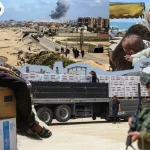
NEARLY a month into a rapidly escalating military campaign, Israel’s war on Lebanon has crossed a threshold that no ceasefire communique or diplomatic platitude can paper over. More than one million people — one in every five residents of this fractured, resilient republic — have been forced from their homes since 2 March, when a wave of intense Israeli strikes triggered mass evacuation orders across the south, the Bekaa Valley, Beirut and beyond. The numbers are still rising.
This is not a humanitarian footnote to a military operation. It is the operation’s most visible consequence — and Lebanon, a country already on its knees from economic collapse, political paralysis and the long shadow of previous wars, does not have the institutional capacity to absorb the blow alone.
A COUNTRY WITHIN A COUNTRY ON THE MOVE
The displacement cuts across the geography of the entire nation. From the southern border districts pulverised by Israeli airstrikes to the northern reaches of the Bekaa, families are moving — and then moving again. The UN Refugee Agency (UNHCR) reports that many of the people it encounters daily are experiencing displacement for the second or third time. Several have returned to the same school shelters where they sought safety during the 2024 conflict cycle.
That detail — families navigating war by memory, by the muscle knowledge of which gymnasium floor offers the least drafts — speaks to something the casualty figures do not: the normalisation of violence for an entire generation of Lebanese civilians.
“They simply want to go home. Our duty is to help them until they can do so safely.”
UNHCR Representative in Lebanon
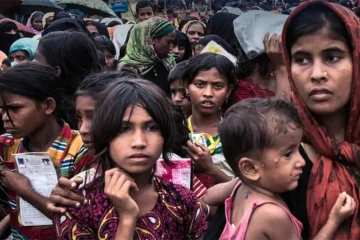
More than 136,000 of the displaced are now crammed into 660 collective shelters — the overwhelming majority of them schools — filled far beyond their designed capacity. Overcrowding, inadequate sanitation, shared classrooms stripped of dignity, and the almost total absence of privacy have created environments where protection risks multiply daily. Women and girls face heightened exposure to gender-based violence. Older people and those living with disabilities struggle to manage basic functions on classroom floors designed for children.
STRIKES IN THE HEART OF BEIRUT
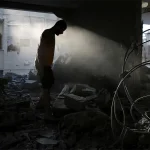
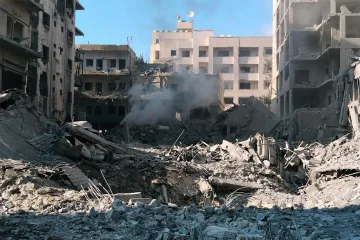
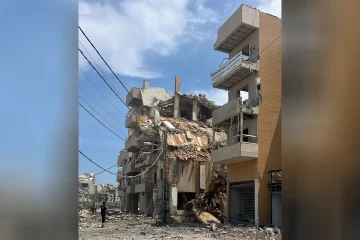
What makes this phase of the conflict particularly alarming — and analytically distinct from prior rounds — is the geographic reach of Israeli military targeting. Last week, strikes hit central Beirut, including the densely populated neighbourhoods of Zokak Blat and Bashoura. These are not frontier zones. They are urban residential areas where displaced families from the south had sought refuge, operating on the assumption that the capital itself offered some buffer.
One strike landed a single city block from a school sheltering displaced families — a school the UNHCR Representative had visited with the Governor of Beirut only days before. The psychological calculus has shifted: there is no safe address left. Families live under conditions of ambient terror, and the psychosocial damage — particularly to children who have now spent formative years cycling between displacement, fear and institutional living — will outlast any eventual ceasefire by decades.
THE INFRASTRUCTURE OF ISOLATION
Israel’s strikes have not been limited to population centres. Key bridges in Lebanon’s south have been destroyed, severing entire districts from the rest of the country. More than 150,000 people are effectively isolated — cut off from supply chains, medical services and humanitarian corridors. For aid organisations attempting to respond at scale, the destruction of physical infrastructure is a force multiplier of suffering.
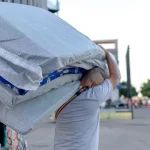
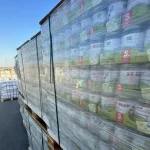
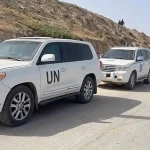
UNHCR has delivered over 198,000 essential relief items and has supported more than 27,000 people with protection services, including psychosocial support, counselling and targeted assistance for the most vulnerable. At a shelter in Saida hosting over 1,000 people, the agency has worked alongside central and local authorities, NGOs and volunteers to run recreational and learning programmes for the 400 children living there. These interventions restore fragments of routine and agency. But they are fragments.
| One strike landed a single city block from a school sheltering displaced families — there is no safe address left in Lebanon. |
A COUNTRY ALREADY AT BREAKING POINT
Any honest analysis of Lebanon’s humanitarian crisis must reckon with the baseline from which this war erupted. Lebanon entered this conflict already hollowed out. The 2019-2020 economic implosion wiped out the savings of the middle class. The 2020 Beirut port explosion killed over 200 people and levelled entire neighbourhoods. Political deadlock has left the state without the governance infrastructure to mount a credible emergency response at scale. The Lebanese pound has collapsed. Public services — electricity, healthcare, education — have been operating in a state of managed degradation for years.
Into this context, Israel has now injected a displacement crisis of one million people. The pressure on families and the residual social systems that remain functional is not linear — it is exponential. UNHCR’s initial emergency appeal stands at more than $60 million. That figure, the agency warns, is a floor, not a ceiling. Without it, overcrowding will worsen, protection risks will increase, and distress will metastasise into community tension.
INTERNATIONAL LAW AND THE SILENCE OF ACCOUNTABILITY
The UNHCR statement is carefully calibrated in the register of humanitarian diplomacy — its purpose is to mobilise resources, not to assign legal culpability. But the facts it documents speak in a language that international humanitarian law cannot ignore. Strikes on densely populated urban areas. The destruction of civilian infrastructure — bridges — that isolates 150,000 people. Strikes within metres of active civilian shelters. These facts will eventually find their way into legal records.
For now, the international community’s response has been characterised by a familiar pattern: expressions of concern, calls for restraint, and the slow drip of humanitarian funding that arrives too late and falls short of what is needed. Lebanon’s government-led emergency response, outlined in a Flash Appeal to the United Nations, represents an attempt to structure international solidarity. Whether that solidarity will materialise at the speed and scale the crisis demands remains the defining open question.