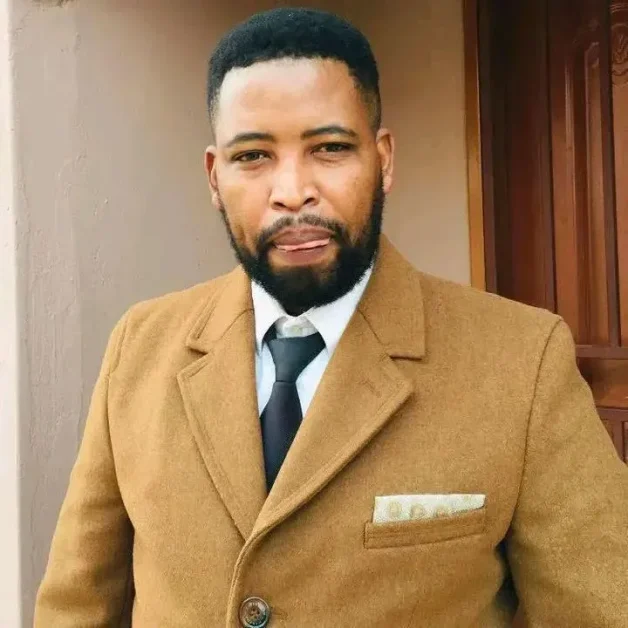
THERE is a particular cruelty in dying on the cusp of joy. Not in the middle of grief, not in the depths of struggle – but right there, at the threshold of the most beautiful morning of your life, with the flowers ordered, the guests invited, and love standing patient on the other side of the door.
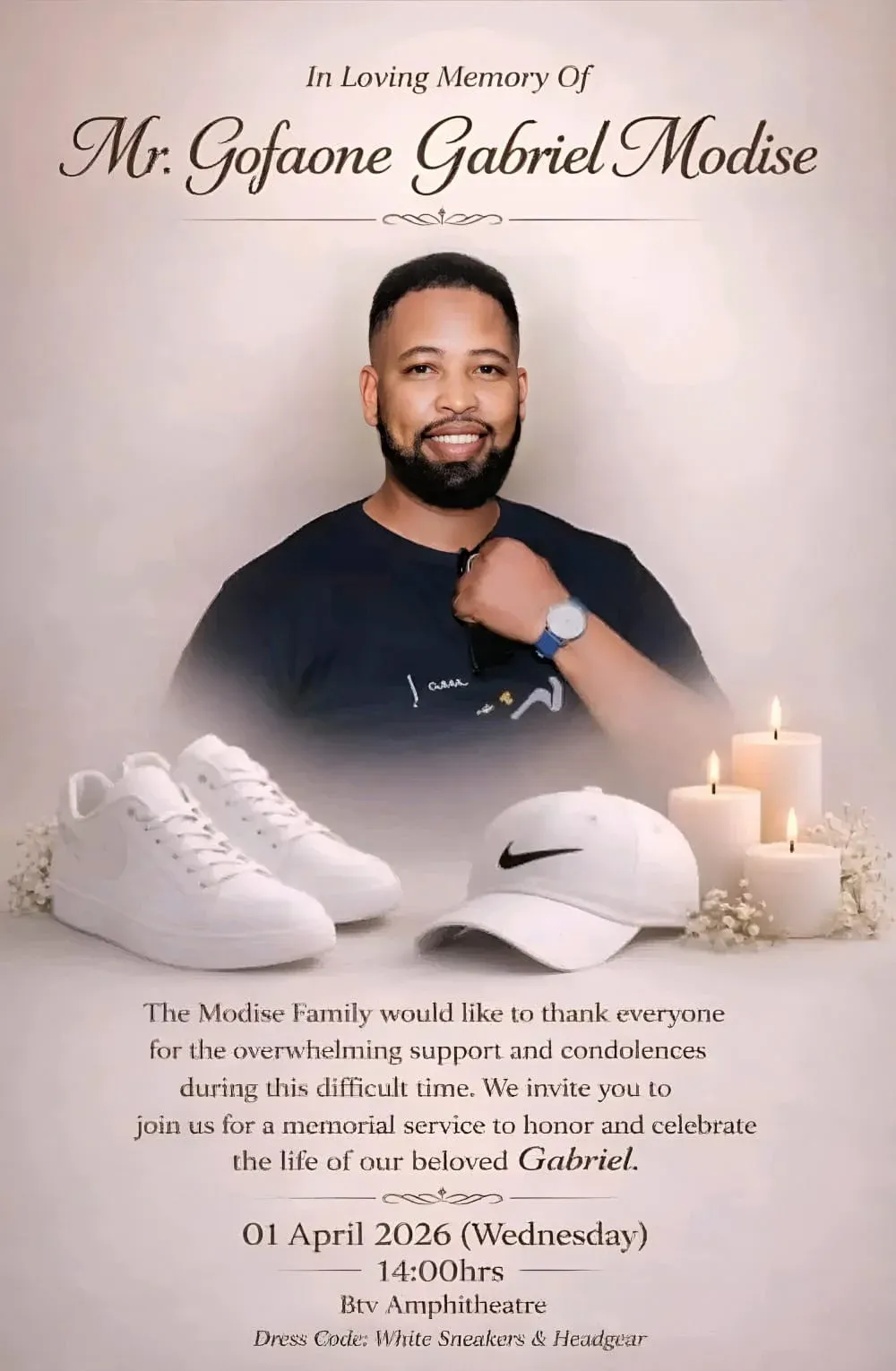
That was the precise geography of Gofaone Gabriel Modise’s passing – a man taken from us on Sunday, 29 March 2026, only days before he was to stand at the altar and pledge his life to the woman he loved. Botswana has lost before. Africa has buried its storytellers before. But few losses carry this particular ache: the silencing of a voice still mid-sentence, the stopping of a heartbeat still mid-song.
Gabriel – known and loved across the nation as “Phunya”, the iconic character he breathed into magnificent life through BTV’s landmark drama series Botshelo-Jo – was not merely an actor. He was a vessel. He carried the laughter, the sorrow, the contradiction and the dignity of ordinary Batswana into living rooms across the country, and he did so with the kind of effortless authenticity that cannot be taught in any drama school on earth. It is either given to you or it is not. It was given to Gabriel in abundance.
The Man Behind the Mask
But to reduce Gofaone Gabriel Modise to a television character – even one as beloved as Phunya – would be to flatten a man of profound complexity and quiet power. His work as Artistic Director of the Tsoga Africa creative collective told a deeper story: here was a builder, not merely a performer. Here was someone who understood that culture is not decoration but architecture – the load-bearing wall of a people’s identity.
Through Tsoga Africa, Gabriel did something radical in the most understated way: he created space. Space for young artists who were told there was no market for what they carried inside them. Space for stories rooted in Setswana soil and cosmology, stories that did not need to borrow their grammar from elsewhere to be considered legitimate. Space for the kind of theatre and performance that blends cultural memory with contemporary urgency – that speaks to a grandmother and her grandchild in the same breath.
He mentored. He coached. He sat with young creatives in rooms that had no budgets and helped them find the art anyway. Colleagues describe him with a consistency that is itself a form of testimony: humble, warm, determined, generous. A man who never wore his talent as armour or his reputation as a weapon. A man who simply showed up – on set, in workshops, at rehearsals, in community halls – and gave everything he had.
A Love Story Interrupted
And then there is the love story. We cannot write about Gabriel Modise and pretend that dimension does not exist, because it is precisely the dimension that makes his passing unbearable in its specificity.
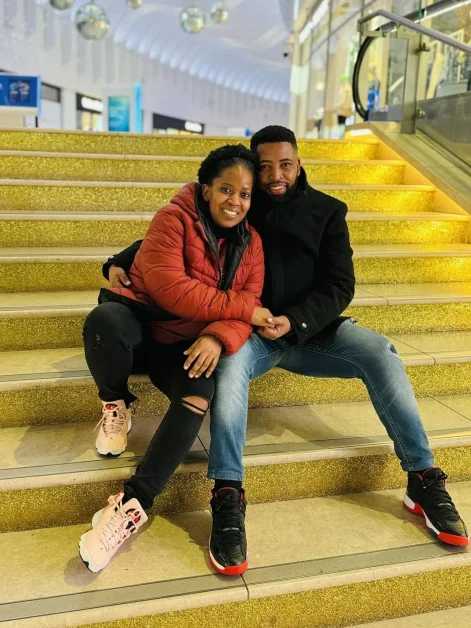
He found love. Real love – the kind that reshapes a person at the cellular level, the kind that makes the world feel newly purposeful. He had chosen his partner. He had made his promise. And in a world that too often punishes tenderness and rewards cynicism, Gabriel Modise stood in the full light of his vulnerability and said: I will marry this person. I am ready to build a life together.
Days before that promise could be kept, illness – the prolonged battle he had been quietly fighting – finally took what was not its to take. A wedding became a funeral. A celebration became a mourning. A beginning became a forever-goodbye. We think of her – the woman who loved him and was to be his wife – and we hold her grief with both hands. We think of the family who watched him weaken in hospital, who hoped and prayed and kept the worst thought at bay. We think of the young artists whose creative compass he was. And we grieve them all.
What Botswana Must Now Do
Grief, if it is to mean anything, must metabolise into commitment. The African Mirror believes that Botswana’s creative community – its writers, actors, directors, cultural administrators, and policymakers – owes Gabriel Modise something beyond a beautiful obituary. It owes him continuation.
Continue funding the kind of theatre Tsoga Africa represents. Continue investing in television drama that holds up a mirror – not a fantasy – to the Botswana people. Continue giving young artists the platforms that Gabriel spent his life creating almost single-handedly. Let the institutions that were always going to honour him eventually do so now, and urgently, and in ways that outlast the news cycle.
A cultural activist’s greatest fear is not death. It is erasure. It is doing the work of a lifetime and watching it dissolve into the indifference of institutions that were never truly listening. Gabriel Modise deserves better than erasure. The body of work he leaves – the roles, the productions, the mentees, the cultural infrastructure he quietly assembled — is the inheritance of a nation. It must be stewarded accordingly.
A Pan-African Farewell
From The African Mirror, from the Global South Media Network, from every corner of this continent that understands what it means to lose a cultural custodian – we mourn Gabriel Modise not as a national tragedy alone, but as an African one.
Africa is not short of talent. It never has been. What it is sometimes short of is the architecture to contain that talent – the institutions, the resources, the platforms, the political will to say: our stories matter, our artists matter, their lives matter before they die and not only after. Gabriel was one of the rare ones who built that architecture himself, brick by brick, with little more than conviction and craft.
He was, in the truest sense, a man of the people – not because he performed populism, but because he genuinely believed that the stories of ordinary people were the most extraordinary stories on earth. He was right. Phunya taught us that. Tsoga Africa taught us that. Gabriel Modise taught us that.
Rest, Phunya. You played your part beautifully — on stage, off stage, and in every life you touched.
And to your beloved — we see your loss. Africa holds you in its arms tonight.