
AS Tuesday’s deadline loomed over a war zone stretching from the Persian Gulf to southern Lebanon, American and Iranian negotiators were quietly studying the outlines of a peace plan that neither side had yet endorsed – and both retained the capacity to shatter at a moment’s notice.
The proposed framework, brokered by Pakistan after an intense night of shuttle diplomacy, calls for an immediate halt to hostilities followed by broader peace negotiations to be concluded within 15 to 20 days. It is, by any measure, an ambitious timeline for a conflict that has already killed more than 3,500 Iranians – including at least 244 children – injured thousands more, driven oil prices above $108 a barrel, and drawn in proxy forces across four sovereign states.
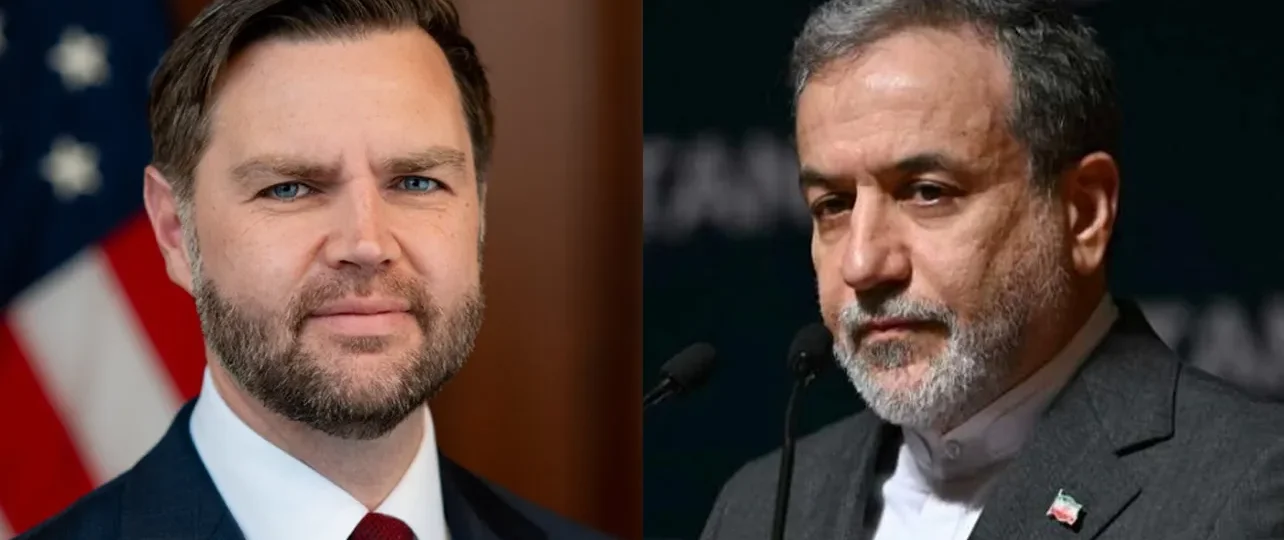
But for all the diplomatic energy invested overnight – Pakistan’s Army Chief Field Marshal Asim Munir reportedly worked the phones through the night, connecting U.S. Vice President JD Vance, special envoy Steve Witkoff and Iranian Foreign Minister Abbas Araqchi – Monday brought no breakthrough. It brought fresh airstrikes.
“This is one of many ideas, and he has not signed off on it. Operation Epic Fury continues.”
White House official, 6 April 2026
THE HORMUZ GAMBIT
At the heart of the standoff lies the Strait of Hormuz – the 33-kilometre-wide chokepoint through which approximately one-fifth of the world’s oil and natural gas flows. Iran effectively sealed it in February, retaliating against the opening U.S.-Israeli bombardment. Since then, the Strait has functioned less as a waterway than as a hostage: Tehran’s most potent non-nuclear leverage over a global economy already rattled by the conflict.
President Donald Trump, in a post on his Truth Social platform on Sunday laden with invective, threatened to rain destruction on Iranian energy and transport infrastructure if Tehran failed to reopen the Strait by 8:00 PM Eastern Time on Tuesday. The ultimatum has since been rowed back slightly by the White House – the ceasefire proposal is “one of many ideas,” an official noted – but the deadline stands, and Operation Epic Fury, the U.S. military’s operational name for the campaign, has not been suspended.
Iran’s response has been equally calibrated. A senior Iranian official told Reuters on Monday that Tehran will not reopen the Strait as part of a temporary ceasefire. The country’s Foreign Ministry spokesperson, Esmaeil Baghaei, warned that negotiations are “incompatible with ultimatums and threats.” Iran has also formally rejected what it characterised as an “excessive” 15-point American demands package, signalling that any deal would need to be substantially recast to earn Tehran’s signature.
WAR RAGES AS DIPLOMATS WHISPER
The contrast between diplomatic activity and battlefield reality could not be starker. Even as Pakistan’s Field Marshal Munir was brokering back-channel contacts, fresh aerial strikes were reported across the region on Monday — now more than five weeks into a war that began when the United States and Israel launched coordinated attacks on Iran.
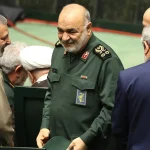
Israel announced responsibility for the death of Majid Khademi, the intelligence chief of Iran’s Islamic Revolutionary Guard Corps, confirming that targeted assassinations continue in parallel with ceasefire talks. Iranian state media confirmed his death. Israeli Defence Minister Israel Katz, in a statement that underscored how far both sides remain from a genuine cessation, threatened to destroy Iranian infrastructure and “hunt down” its leadership one by one.
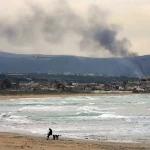
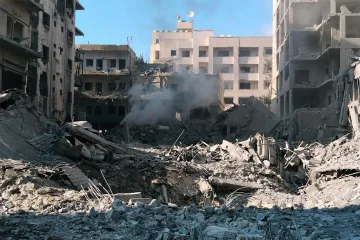
Two Iranian petrochemical complexes were struck on Monday. Firefighting crews contained a blaze at the South Pars complex in Asaluyeh — the vast gas field Iran shares with Qatar, whose mid-March targeting by Israel set off a particularly dangerous escalatory spiral. A second fire at the Marvdasht petrochemical complex was also brought under control. No casualties were reported at either site, though the power supply infrastructure supporting South Pars was severed.
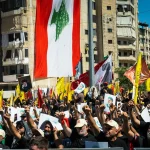
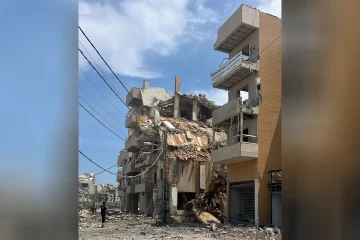
Iran has demonstrated a persistent, if diminished, capacity for retaliation. Weekend strikes on petrochemical facilities and an Israeli-linked vessel across Kuwait, Bahrain and the UAE served as a pointed counter-narrative to Trump’s repeated claims that Iranian missile and drone capabilities have been neutralised. At least four Israelis were killed in a missile attack on a Haifa residential building overnight — bringing the civilian fatality toll in Israel to 23. Lebanon’s dead number 1,461, including at least 124 children, as Israeli ground operations in the south compound the humanitarian crisis.
“Iran’s demands should not be interpreted as a sign of compromise, but rather as a reflection of its confidence in defending its positions.”
Esmaeil Baghaei, Iranian Foreign Ministry Spokesperson
THE ANATOMY OF A STALEMATE
What makes this conflict particularly intractable is that both parties have legitimate reasons to fight and credible reasons to stop — but the sequencing of concessions remains irreconcilable. Washington wants the Strait reopened before talks advance. Tehran insists the Strait stays closed until Washington demonstrates a genuine commitment to a lasting settlement, not a temporary de-escalation that leaves Iran strategically exposed.
Anwar Gargash, adviser to the president of the United Arab Emirates, articulated a third layer of complexity when he warned that any settlement must guarantee Hormuz access — but that a deal failing to rein in Iran’s nuclear programme and its missile and drone arsenal would simply set the stage for “a more dangerous, more volatile Middle East.” The Gulf states, having absorbed the economic shockwaves of five weeks of conflict, are not prepared to accept half-measures in exchange for a temporary calm.
The humanitarian cost of this strategic chess game is already catastrophic. Rights group HRANA, based in the United States, has documented at least 3,540 deaths in Iran, with Iranian weekend strikes adding to the toll on the other side. Thirteen American service members have been killed; hundreds more wounded. The data centre at Sharif University of Technology in Tehran — home to Iran’s national artificial intelligence platform — was struck in a U.S.-Israeli attack over the weekend, signalling that the conflict is now targeting the informational and technological substrate of the Iranian state.
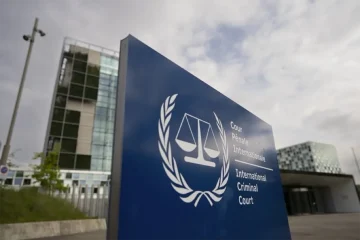
Legal experts have noted that Trump’s threats to strike civilian infrastructure — power plants, bridges, population centres — would, if carried out, likely constitute war crimes under the Geneva Conventions, which prohibit attacks on civilian objects. The International Criminal Court, however, lacks jurisdiction, as neither the United States, Israel, nor Iran is a party to the Rome Statute.
WHAT TUESDAY WILL TELL US
Trump is expected to speak on the ceasefire proposal at a press conference on Monday afternoon. Whether he endorses, shelves or dramatically reframes the Pakistani-brokered framework will tell markets and military planners more about the next 72 hours than any diplomatic communiqué. Brent crude had retreated modestly on news of the talks, trading around $108.67 a barrel — a measure of how desperately energy markets want an off-ramp, and how little confidence traders have that one is imminent.
What is clear is that the conflict has entered its most dangerous inflexion point to date: a moment when both sides are still fighting with full intensity, while simultaneously engaged in the most substantive peace contacts yet seen. In these circumstances, the gravest risk is not that diplomacy fails — it is that one more airstrike, one more assassination, one more missile on a residential neighbourhood, forecloses the space for it entirely.
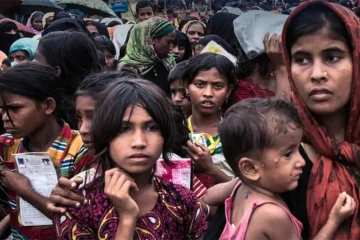
For Africa and the Global South — which have borne the energy price inflation, the food security pressures and the refugee displacement generated by this conflict without bearing its causes — Tuesday’s deadline carries its own weight. The continent is not a party to this war. It is, as it so often is, a hostage to it.